- General Videos
- Music
- Economics
- Health
- Travel & Events
- History
- Psychology
- Spirituality
- Movies
- News & Politics
- Kmtyw Combat Sciences
- Ɔbenfo Ọbádélé Kambon Videos
- Ɔbenfoɔ Kamau Kambon: Black Liberation Philosophy
- Science, Tech, Engineering and Math
- Permaculture
- Self-Sustainability
- Living Off Grid
- Yoruba Language Learning
- Education
- Mmɔfra Adesua
- Nana Kamau Kambon Playlist
- Livestream
- Komplementarity Kouples and Revolutionary Singles
- Abibitumi Film Series
- Decade of Our Repatriation
- Live
Economics
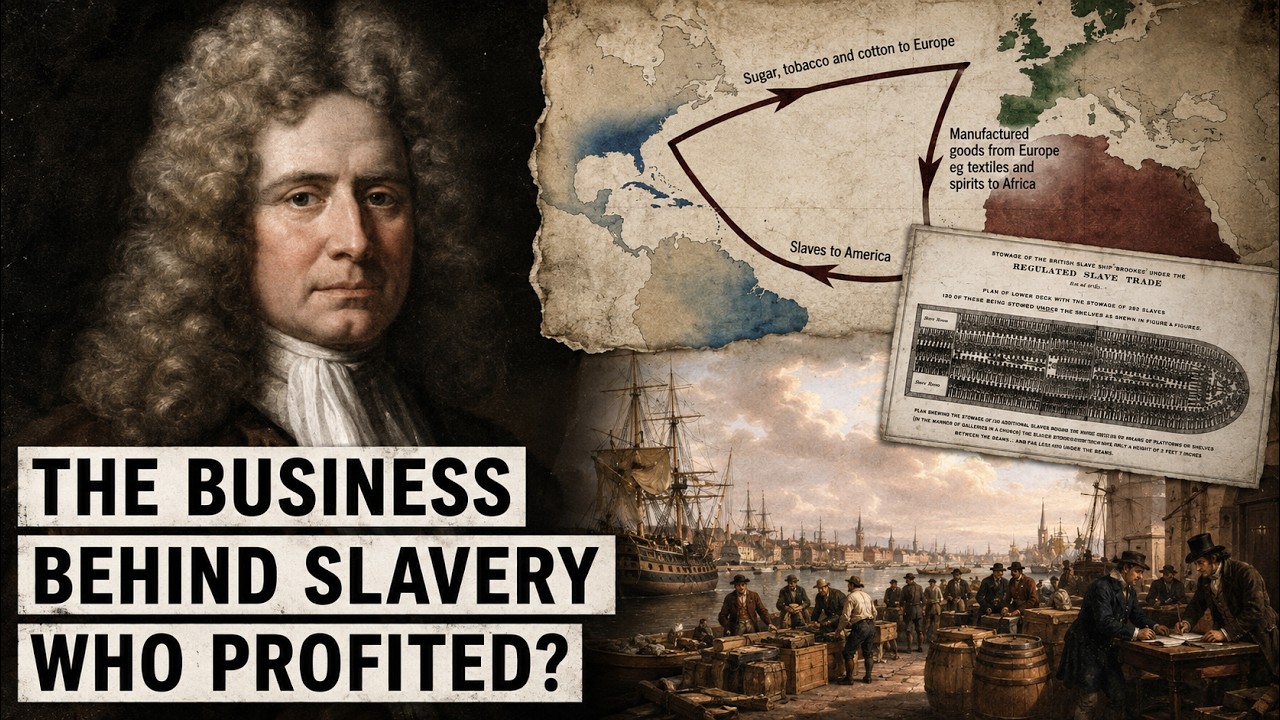

The Atlantic slave trade wasn't just a moral catastrophe — it was the most profitable business operation in human history. For over three centuries, a vast financial machine connected three continents, generating wealth that built cities, funded banks, bankrolled the Industrial Revolution, and created dynastic fortunes that are still compounding today.
In this video, we follow the money. From the Portuguese trading posts of the 1400s to the boardrooms of Lloyd's of London. From the sugar plantations of Jamaica, where enslaved workers had a life expectancy of seven years, to the grand townhouses of Liverpool, where merchant families lived in extraordinary luxury funded by human cargo. From the Royal African Company — a crown-backed corporation that branded enslaved people with its initials — to the Bank of England, whose early governors profited directly from the slave economy.
We examine the triangular trade not as a historical diagram, but as a fully integrated global financial system. We look at who invested, who insured, who extended credit, and who collected the dividends. We explore how slave trade profits became the seed capital for Britain's Industrial Revolution, how New England merchants ran closed-loop supply chains of rum, sugar, and enslaved people, and how the British government paid slave owners £20 million in compensation when slavery was abolished — a debt so large that British taxpayers were still paying it off in 2015.
This is the story of who really profited from the Atlantic slave trade, and why the financial architecture they built is still shaping the world today.
If you found this valuable, please like, subscribe, and share this video. It helps more than you know.
#atlanticslavetrade #slaveryandcapitalism #whoreallyprofited #triangulartrade #slavetradeeconomics #royalafricancompany #lloydsoflondon #britishempire #sugarplantations #industrialrevolution #ericwilliams #capitalismandslavery #liverpool #bristol #middlepassage #slavetradehistory #colonialwealth #economichistory #hiddenhistory #moneyandpower #macrofinance #globaleconomics
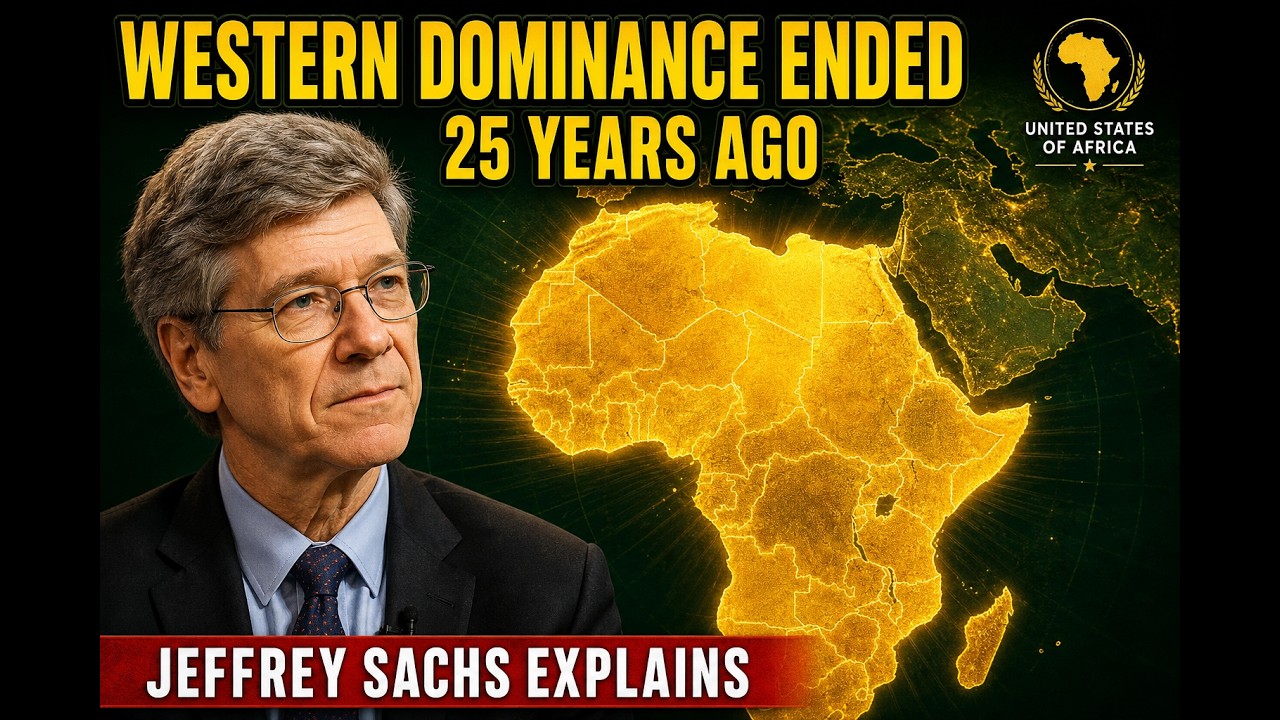
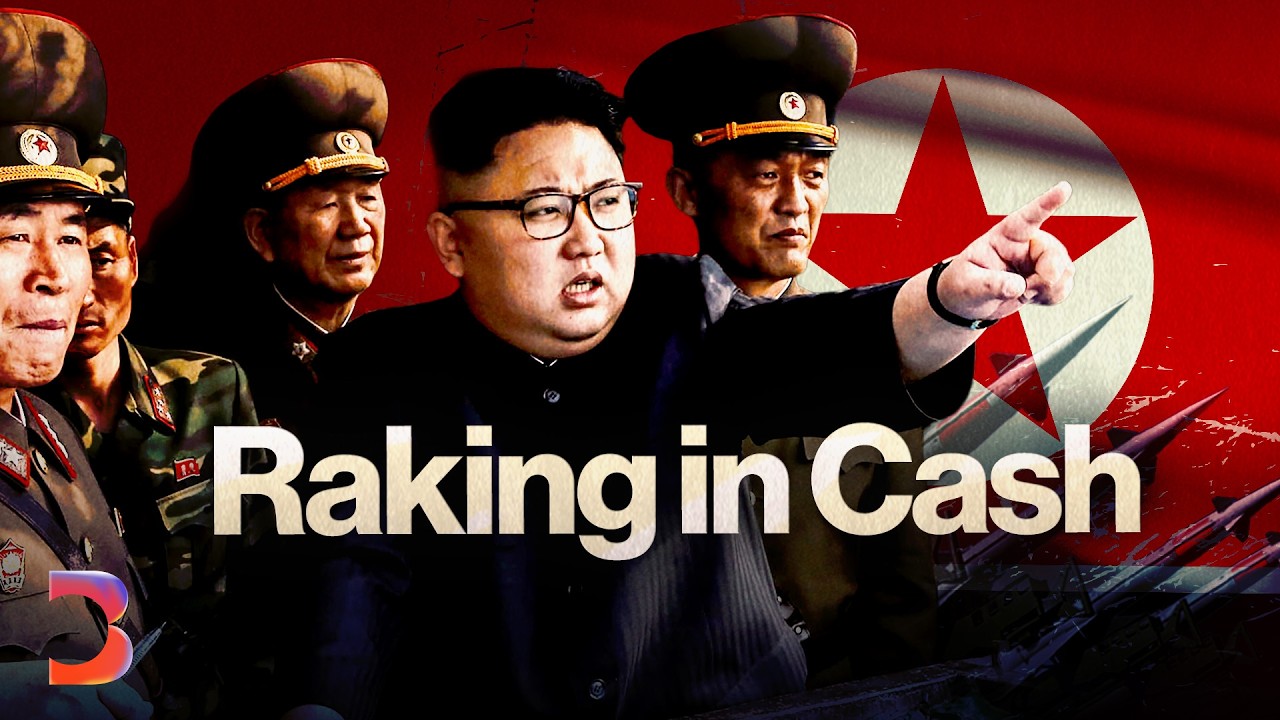
North Korean leader Kim Jong Un has raked in as much as $22 billion in foreign earnings from 2022 to 2025, according to a Bloomberg Economics analysis. That represents a 400% rise in revenues from the previous four-year period despite sweeping global sanctions.
So how did Kim do it, and why is a richer North Korea an even bigger concern for the world?
Read more:
Kim Jong Un Flouted Sanctions to Amass $22 Billion Windfall
https://www.bloomberg.com/grap....hics/2026-north-kore
00:00 Introduction
01:55 Recent economic growth
03:48 Geopolitical landscape
05:21 Crypto thefts
06:14 Trade with China
07:03 Arms sales to Russia
09:22 Regime survival
#northkorea #kimjongun
--------
Like this video? Subscribe: http://www.youtube.com/Bloombe....rg?sub_confirmation=
Get unlimited access to Bloomberg.com for just $1.99 your first month: https://www.bloomberg.com/subs....criptions?in_source=
Bloomberg Originals offers bold takes for curious minds on today’s biggest topics. Hosted by experts covering stories you haven’t seen and viewpoints you haven’t heard, you’ll discover cinematic, data-led shows that investigate the intersection of business and culture. Exploring every angle of climate change, technology, finance, sports and beyond, Bloomberg Originals is business as you’ve never seen it.
Subscribe for business news, but not as you've known it: exclusive interviews, fascinating profiles, data-driven analysis, and the latest in tech innovation from around the world.
Visit our partner channel Bloomberg News for global news and insight in an instant.


Ever heard of the petrodollar and wondered what it is? Why does the U.S. dollar dominate global trade? And why is oil almost always priced in USD? This video breaks down the petrodollar system, how it strengthens the U.S. economy through petrodollar recycling, and why BRICS countries are pushing for de-dollarization with alternatives like the petroyuan. But could the petrodollar collapse? And if it does, would the U.S. lose its status as a superpower?
Using simple language and real-life examples, we'll explore how the petrodollar shapes global finance and why it’s so controversial. Subscribe for more financial videos and tricks!
You can watch the "What is Fiat Money? Why Paper Money Has Value?" here: https://www.youtube.com/watch?v=-SdpOESEcM8
Join this channel to get access to perks:
https://www.youtube.com/channe....l/UCLdLVA4iiC6x22Rb0
Chapters:
0:00 Introduction
0:43 What is the Petrodollar?
3:20 History of the Petrodollar
8:16 How Important is the Petrodollar to the U.S.?
9:45 Why is the Petrodollar Controversial?
13:12 Future of the Petrodollar
Credits:
U.S. Military Edit: https://www.youtube.com/watch?v=c_r7mlIJ8so
Oil in the desert: https://www.youtube.com/shorts/qm-95TsG54Q
USBall thumbnail: Michael_nagik_-_Fourth_of_July.png
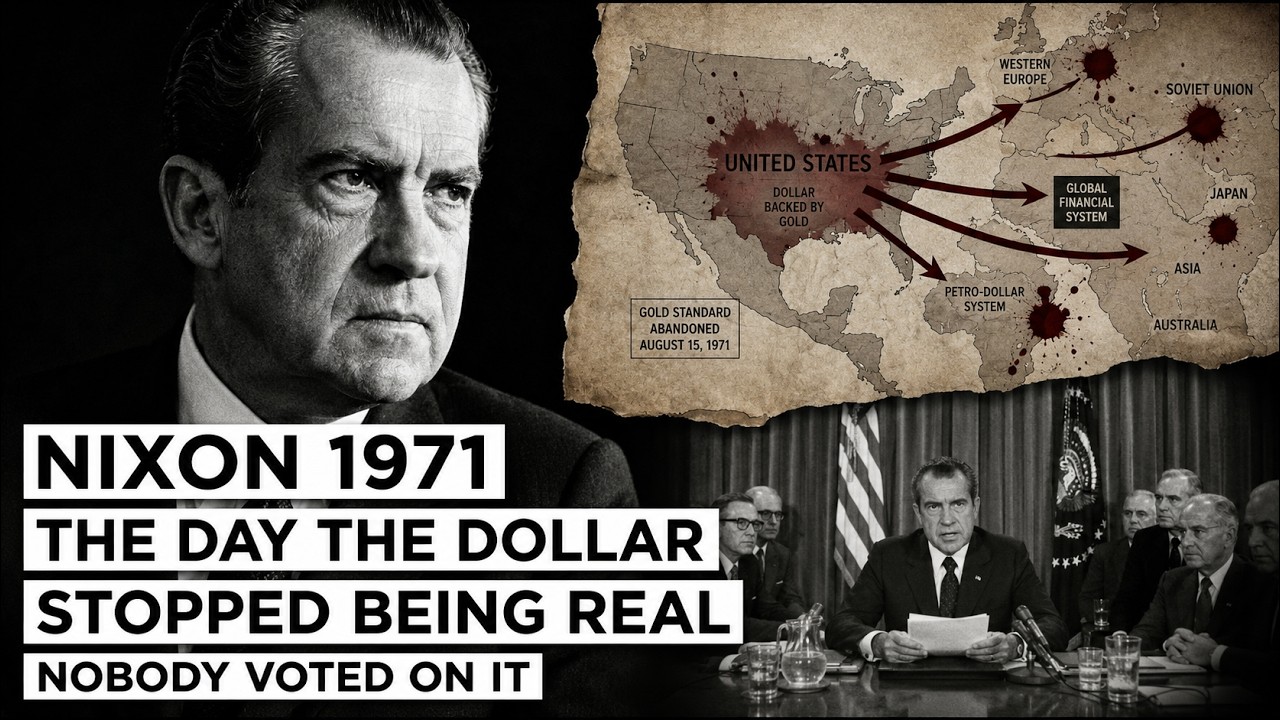
On August 15, 1971, President Richard Nixon interrupted Sunday night television to make an announcement that would quietly reshape the entire global financial system. Without a single vote in Congress, without consulting America's allies, and without any public debate, Nixon severed the last link between the U.S. dollar and gold — ending the Bretton Woods system that had governed international finance since World War II.
What followed was the birth of the fiat money era we still live in today. Inflation spiraled. Oil prices quadrupled. The petrodollar system emerged. And the rules of money changed forever — not through democratic process, but through a secret weekend meeting at Camp David attended by just fifteen men.
This is the story of how one decision, made behind closed doors, turned the dollar from a gold-backed promise into pure government decree — and why you're still paying the price for it more than fifty years later.
Sources and further reading:
Federal Reserve History — "Nixon Ends Convertibility of U.S. Dollars to Gold"
U.S. State Department — "Nixon and the End of the Bretton Woods System, 1971–1973"
Jeffrey E. Garten — "Three Days at Camp David: How a Secret Meeting in 1971 Transformed the Global Economy"
World Gold Council — "The Bretton Woods System"
Bank for International Settlements — Working Paper No. 684, "Triffin: Dilemma or Myth?"
#nixonshock #goldstandard #brettonwoods #fiatmoney #usdollar #monetaryhistory #campdavid #petrodollar #globalfinance #economichistory #nixon1971 #goldwindow #centralbanking #moneyprinting #inflation #reservecurrency #financialhistory #wtfhappenedin1971 #johnconnally #paulvolcker #degaulle #triffindilemma #documentary

In 1971, the United States cut the dollar loose from gold and gambled the entire global economy on a single question: what gives a piece of paper its value once the metal underneath is gone? The answer turned out to be oil — and the deal that made it happen was kept secret for forty-one years.
This is the story of the petrodollar: how a moment of weakness became the most durable instrument of power any nation has ever wielded. From the collapse of Bretton Woods and the Nixon Shock, to the 1973 oil embargo that quadrupled prices overnight, to the chain-smoking Wall Street bond trader who flew secretly into Saudi Arabia in 1974 to strike a deal that would anchor the dollar to the world's most essential commodity.
But this isn't just a story about American advantage. It's a story about a trap. We follow the petrodollars on their journey — from oil importers, into Gulf treasuries, through Western banks, and out as cheap dollar loans to the developing world. Then we watch Paul Volcker raise interest rates to nearly twenty percent and the bill reset overnight, triggering Latin America's "lost decade," sovereign defaults, and more than twenty million people pushed into extreme poverty.
We separate documented history from myth: the real secret Treasury bond arrangement versus the viral "single 1974 oil treaty" that never actually existed. We look honestly at the contested "petrodollar war theory" surrounding Iraq and Libya — what's proven, what's speculation, and why the truth refuses to be neat. And we examine whether the system is finally cracking, with the dollar's reserve share at a three-decade low, the rise of the petroyuan, and central banks quietly stacking gold.
How did America make the world buy oil in dollars? And who really got trapped in it?
If this pulled back the curtain on something you only half understood, hit like and subscribe for more deep dives into the hidden machinery of money and power.
#petrodollar #usdollar #oileconomy #geopolitics #financialhistory #dedollarization #brettonwoods #nixonshock #federalreserve #saudiarabia #opec #petroyuan #brics #reservecurrency #globaleconomy #macroeconomics #economichistory #paulvolcker #debtcrisis #dollarhegemony #wallstreet #powerstructures #moneyexplained #oilanddollars #economicsdocumentary
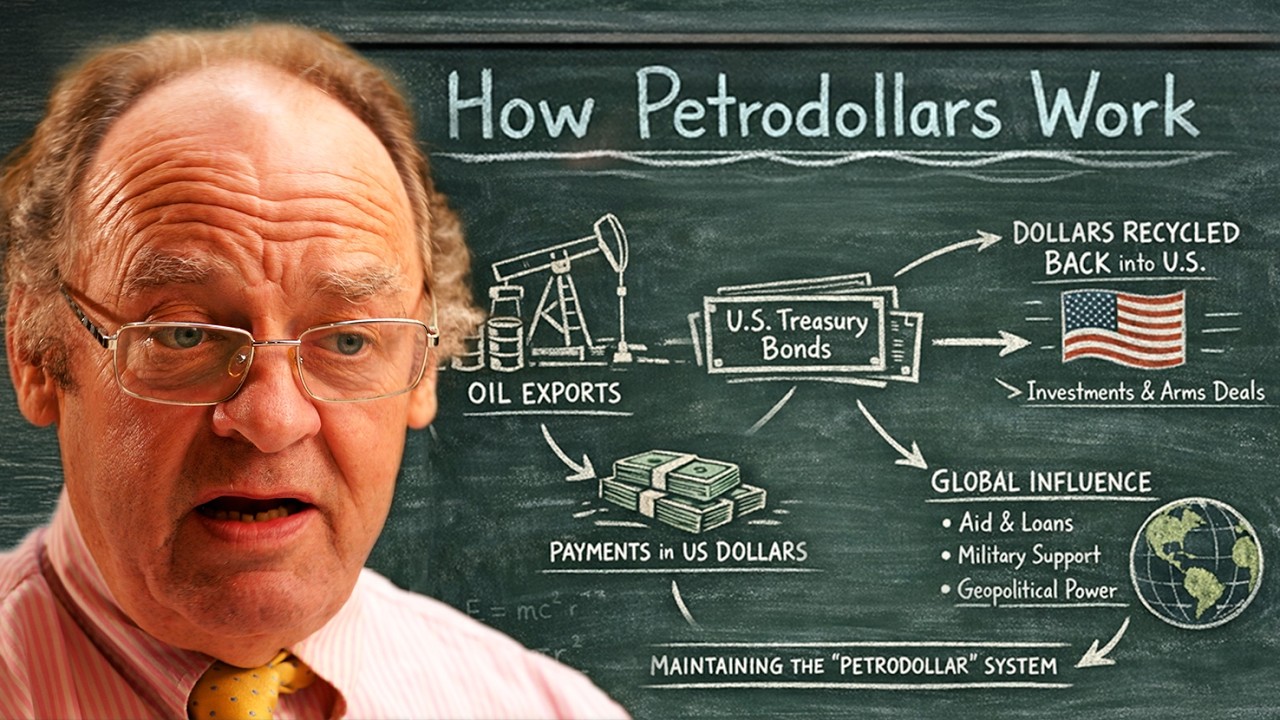
Trump's War in Iran has sparked global fears about the economy. If the Strait of Hormuz were to remain closed, and Dubai, Saudi Arabia, UAE and the other Gulf states continue to come under attack, global oil prices could surge.
Why has Trump launched this attack on Iran now?
Everything comes back to the US Petrodollar system. Oil is at the root of everything. It's been the basis of our global economy since the Second World War.
But what actually is the Petrodollar system? How does it work? Why was it put in place? What's the future of the Petrodollar?
In this video, we dive into the topic. Keeping the Petrodollar afloat explains all the US foreign policy, and all geopolitics, for more than 70 years. Everything from the first Gulf War, to the War in Iraq, to Russia's invasion of Ukraine, to the current War with Iran.
00:00 - Introduction
00:30 - Why Is Oil So Important?
01:17 - How the US Dollar Controlled Global Economy
01:53 - Gold Standard and The Nixon Shock
02:44 - Global Reserve Currency
03:20 - Petrodollar Agreement with the Saudis
04:00 - How the Petrodollar System Works
05:00 - Petrodollar Recycling
05:43 - Future of the Petrodollar
06:06 - Why Hostile Countries Trade In Dollars
06:50 - China and Russia
🔔 Subscribe for more finance and economics content: @LockStockFinance
#iran #petrodollar #geopolitics #trump #saudiarabia #uae #dubai #oil #money #economy
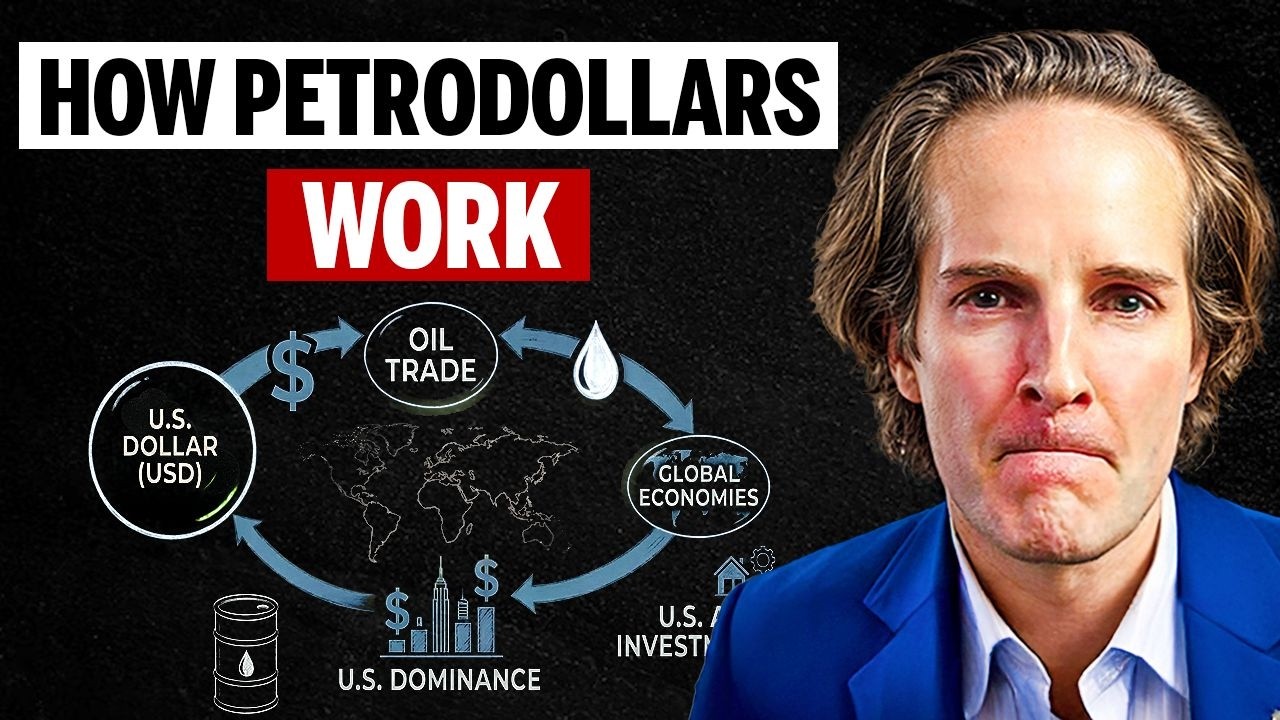
👤 Meet Felix Prehn:I'm your host, Felix Prehn. My journey took me from being a novice investor to an investment banker, a corporate lawyer, and an entrepreneur. Investing was my key to early retirement at 40. My goal? To empower YOU to navigate the financial market with ease and transparency, free from the conventional financial system's noise. Let's embark on this journey to financial freedom together!⚖️This is from my lovely lawyers:The content in this video is for informational and educational purposes only. It does not constitute and should not be construed as financial or investment advice or an offer to purchase or sell securities. The content is not personalized or tailored to a specific person or group of persons, nor to their personal investment or financial needs. You should consult a financial adviser or other investment professional authorized to provide investment advice. Investing comes with risks, including the risk of loss. Presentations of trades made by Felix Prehn or Goat Academy Ltd or its personnel are not a guarantee that any investment decision made by a student will be successful. Past performance is not a guarantee of future performance.Timestamps:00:00 Intro01:31 Follow the Energy: Why Oil is Everything (93M Barrels/Day)02:48 The Natural Trade: Saudi Arabia, Japan, and the Currency Catch04:37 History: Bretton Woods (1944) and the Dollar-Gold Peg06:56 Nixon’s Shock (1971): The Death of the Gold Standard07:51 The Fiat Problem: Money Backed by Nothing08:28 1973 Crisis: Kissinger, Saudi Arabia, and the Birth of the Petrodollar10:26 The Loop: How Petrodollar Recycling Creates Forced Customers13:47 3 Massive Advantages for America: Demand, Debt, and Power14:36 Live Intelligence: Tracking the Petrodollar, Metals, and the Middle East16:48 The Weaponized Dollar: Sanctions as an Economic Nuke17:57 De-dollarization Begins: China, Russia, India, and the Backup Plan19:05 3 Investment Risks: Dollar Weakness, Higher Rates, and Geopolitics20:49 3 Investment Opportunities: Hard Assets, Emerging Markets, and the Green Transition22:45 The Future: Why the Dollar Isn’t Collapsing Tomorrow (Momentum & Military)24:35 Gradual Erosion: The "Newspaper Moment" for the US Dollar26:03 Outro#felixprehn #stockmarket

There are growing signs that the United States may be on the verge of another major financial crisis, one that could start in the $3 trillion private credit market, which is already seeing significant turmoil, before spreading to other sectors.
Geopolitical Economy Report editor Ben Norton interviewed economist Michael Hudson to discuss the serious problems on Wall Street. Hudson warned that the US economy is built on a Ponzi scheme that depends on continuing to pour money into a bloated, bubbly financial system based on unsustainable speculation, not industrial production.
Check out our related short video about the private credit crisis on Wall Street: https://www.youtube.com/watch?v=S1cx9Zk6WZk
Topics
0:00 Introduction
1:37 Highlights of Michael Hudson
3:29 Interview starts
4:18 2008 financial crisis
5:04 Zero interest-rate policy (ZIRP)
7:31 Private equity
9:17 Lack of investment
10:34 Wealth inequality
12:08 Debt defaults
14:10 Depression fears
16:12 US govt supports Wall Street
19:07 Ponzi schemes
23:51 US economic problems
27:35 Iran war impact
30:16 Financialization of economy
33:46 Outro
|| Geopolitical Economy Report ||
Please consider supporting us at https://GeopoliticalEconomy.com/Support
Subscribe to our newsletter: https://GeopoliticalEconomy.Report
Join our community on Patreon: https://Patreon.com/GeopoliticalEconomy