- General Videos
- Music
- Economics
- Health
- Travel & Events
- History
- Psychology
- Spirituality
- Movies
- News & Politics
- Kmtyw Combat Sciences
- Ɔbenfo Ọbádélé Kambon Videos
- Ɔbenfoɔ Kamau Kambon: Black Liberation Philosophy
- Science, Tech, Engineering and Math
- Permaculture
- Self-Sustainability
- Living Off Grid
- Yoruba Language Learning
- Education
- Mmɔfra Adesua
- Nana Kamau Kambon Playlist
- Livestream
- Komplementarity Kouples and Revolutionary Singles
- Abibitumi Film Series
- Decade of Our Repatriation
- Live
Latest videos


ORFC Global 2021 Session
Africa faces multiple challenges related to our food systems, including hunger, malnutrition, obesity, noncommunicable diseases, the climate crisis, environmental degradation, loss of biodiversity, cultural erosion, and other climate related shocks, such as pest and disease outbreaks and escalating prices of external inputs. The COVID-19 pandemic has further exposed the weaknesses of current food systems to meet the needs of African peoples.
These interconnected challenges demand a holistic response, with African civil society and institutions working together to develop African solutions to meet African needs, addressing the gaps and inconsistencies in current frameworks and exploiting the potential of innovative ideas and approaches.
This session will bring key actors and thinkers from across Africa to debate on the current status of the food system in their part of the continent and suggest solutions to address the challenges.
Speakers:
Gertrude Pswarayi-Jabson
Amadou Kanouté
Nada Trigui
Chair:
Million Belay
#ORFCGlobal
https://orfc.org.uk/
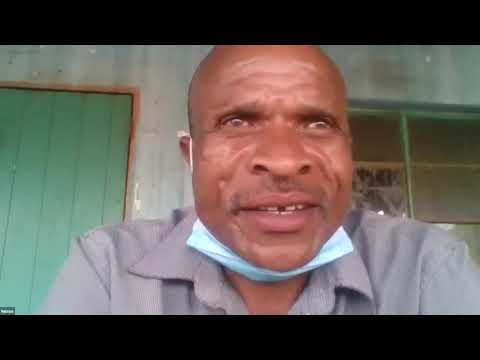
ORFC Global 2021 Workshop
The community of Shashe in the central Masvingo province of Zimbabwe is home to 500 farming families. The agricultural calendar here is marked by four seasonal ceremonies and as well as many other rituals that celebrate the relationship of soil and water, that is key to their food sovereignty.
Shashe leader, Nelson Mudzingwa, says, “The soil is very important because every living organism is dependent on it. We were made of soil, live in the soil and walk on the soil. We build on the soil and we farm in the soil, and when we die we shall be returned to the soil. We are soil.” Water is also essential as “it is the blood of the soil and must flow within it, not above it. A living soil should be moist with life in it, allowing germination of plants and their growth. In our bodies water is also important as well as in all other living things that respire or transpire”.
Join Nelson Mudzwinga, La Via Campesina General Coordinator, Elizabeth Mpofu and Vongai Dube to talk about the spiritual beliefs that guide their farming practices.
Speakers:
Elizabeth Mpofu
Vongai Dube
Nelson Mudzingwa
#ORFCGlobal
https://orfc.org.uk/

ORFC Global 2021 Session
West African Farmer Testimonies: How We Are Overcoming the Crisis of Climate Change in the Sahel Through Natural Regeneration of Trees on Our Farms
Small-scale farmers in the 16 countries of the Sahel in West Africa face a dual crisis to their livelihoods: climate change and land degradation.
For many generations, farmers had lived and farmed in equilibrium with the natural environment. They maintained soil fertility, water holding capacity and crop production through fallowing and other practices.
Today, population pressure, climate change, soil erosion, misuse of agrochemicals have reduced the resiliency and sustainability of the farming system. Farm communities have become highly vulnerable to drought. Hunger and chronic malnutrition have increased.
This session highlights the testimonies of farmers, men and women, from 4 countries in the Sahel in overcoming these problems. They represent a wider movement adapting the principles of “agroecology” (learning how to work with nature). This grassroots, farmer-led movement has achieved remarkable success in transforming landscapes, adapting to climate change, regenerating their soils, and improving their food security.
Their inspiring testimonies show how human determination, innovation, and collective action have brought hope to one of the most ecologically fragile, crisis prone areas in Africa.
Speakers:
Tsuamba Bourgou
Fatou Batta
Dan Banuoku
Chair:
Peter Gubbels
#ORFCGlobal
https://orfc.org.uk/

ORFC Global 2021 Session
Land theft is not a thing of the past. Samwel, Kathryn, Angie and June will be talking about the different ways communities are discriminated against through land theft and dispossession. Their conversation will focus on understanding that true food sovereignty demands local control of land. Samwel’s Maasai community has faced illegal sales of their land to foreign companies; Kathryn, representing KMP (the Peasant Movement of the Philippines), has been on the frontlines of organizing to gain land rights for the nine out of ten Filipino farmers that do not own the land they till. The Provosts have been the target of predatory loans, historical deprivation and racial discrimination. Together, they will explain how ownership of land is not a narrative around regeneration or sustainability. It is an argument around sovereignty over the very land they and their ancestors tended. To be truly food sovereign, the land must be in the hands of the local communities.
Speakers:
Samwel Nangiria
Kathryn Manga
June and Angie Provost
Chair:
Freya Yost
#ORFCGlobal
https://orfc.org.uk/