- General Videos
- Music
- Economics
- Health
- Travel & Events
- History
- Psychology
- Spirituality
- Movies
- News & Politics
- Kmtyw Combat Sciences
- Ɔbenfo Ọbádélé Kambon Videos
- Ɔbenfoɔ Kamau Kambon: Black Liberation Philosophy
- Science, Tech, Engineering and Math
- Permaculture
- Self-Sustainability
- Living Off Grid
- Yoruba Language Learning
- Education
- Mmɔfra Adesua
- Nana Kamau Kambon Playlist
- Livestream
- Komplementarity Kouples and Revolutionary Singles
- Abibitumi Film Series
- Decade of Our Repatriation
- Live
Latest videos


#agriculture #organicfarming #celebratefarmers #maizefarming #ricefarming #ghfarmer #cocoafarming #sustainability #zerowaste #foodie
The Ghanaian Farmer platform works to educate and enlighten people on the latest advancements to hit the agriculture industry.
The show attracts a large farm and ranch audience along with a loyal following of city viewers who want to remain connected with country and the business of agriculture.
Whether you stay in Ghana or abroad, this platform is your best bet, we connect you with all the value chain.
The Ghanaian Farmer, Business Tilling The Land 👌🍏🍒🥑🌽🌶️🥒🥜🥕
.
https://www.facebook.com/theGhanaianFarmer


Fertile land is scarce in Egypt. All of life depends on water from the Nile River. 85 million Eyptians are settled along its banks. The rest of the country is desert. Egyptian and German scientists have now found a way of cultivating forests in the desert sand.
It looks like a fata morgana. But the forests in the Egyptian desert are real. They're watered with processed sewage. 24 such forests have sprung up across the country over the past eight years. The sewage is rich in nutrients and fuels the growth of plants like mahagony, eucalyptus and sisal.
A Report by Florian Nusch
Global 3000 home page: http://www.dw.de/program/global-3000/s-11487-9798
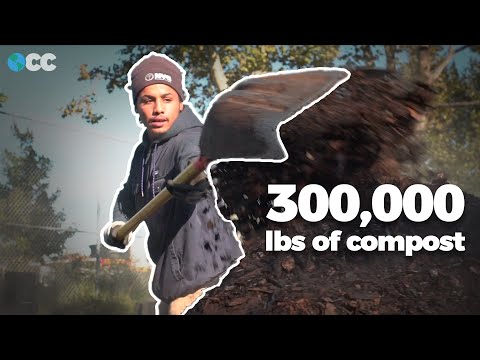
In this video brought to you by the Local Motives YouTube channel, we explore how a small community urban farm in Red Hook, Brooklyn produces over 150 tons of compost every year with just hand tools. Through the help of over 2000 volunteers, the Red Hook Community Urban Farm diverts over 300,000 lbs (pounds) of food scraps, food waste, and yard waste from the landfill. This NYC urban farm uses large piles of food waste to create compost. The NYC urban farm not only educates volunteers on how to compost and grow their own food in an urban agriculture environment, but they also put them to work turning compost piles to create the perfect soil for growing organic vegetables and produce. This is an excellent example of how small farms, collective work, and a good idea can make a big impact on climate change.
Subscribe to Local Motives: https://www.youtube.com/channe....l/UCLTofw9H3F8-MRsIj
Local Motives Instagram: http://instagram.com/localmotives.series
Local Motives Website: https://www.localmotives.us
Local Motives Series original score composed and produced by William Lindsay.
Volunteer at Red Hook Community Farm’s Compost Operation: https://rhicenter.org/red-hook-farms/the-farms/
Help me make more videos like this via Patreon: http://bit.ly/2iz4lIV
Email List: https://www.subscribepage.com/ourchangingclimate
Twitter: https://twitter.com/OurClimateNow
Facebook: https://www.facebook.com/occvideos/
Instagram: https://www.instagram.com/occ.climate/
I use Epidemic Sound for some of my music: http://epidemicsound.com/creator
For the rest of my music, I use Artlist.io. You can get 2 months free of Artlist.io with this link: https://artlist.io/Charlie-278823
_______________________
#Compost #UrbanFarm #FoodWaste