- General Videos
- Nnwom
- Sikas?m
- Akwahosan
- Travel & Events
- Abak?s?m
- Adwene mu Nhwehw?mu
- Honhom fam nne?ma
- Fim
- News & Politics
- Kmtyw Combat Sciences
- Ɔbenfo Ọbádélé Kambon Video ahorow
- ?benfo? Kamau Kambon: Black Liberation Philosophy
- Science, Tech, Engineering and Math
- Permaculture
- Self-Sustainability
- Living Off Grid
- Yoruba Language Learning
- Nhomasua
- Mmɔfra Adesua
- Nana Kamau Kambon Playlist
- Livestream
- Komplementarity Kouples and Revolutionary Singles
- Abibitumi Film Series
- Decade of Our Repatriation
- Live
Nea agye din



The idea that Africa is "overpopulated" and that the poverty of its people is a function of geographical poverty is one of the most persistently promoted myths in western-dominated global discourse.
In this video, @Big_Mck forensically takes apart this myth, and the adjacent myth of Africa's small geographical size which has been promoted for centuries by the Mercator Projection, revealing them for the pernicious lies they are, and linking these lies totheir ultimate beneficiaries in the capitals of Europe and North America.#africa #population #poverty #thetruth
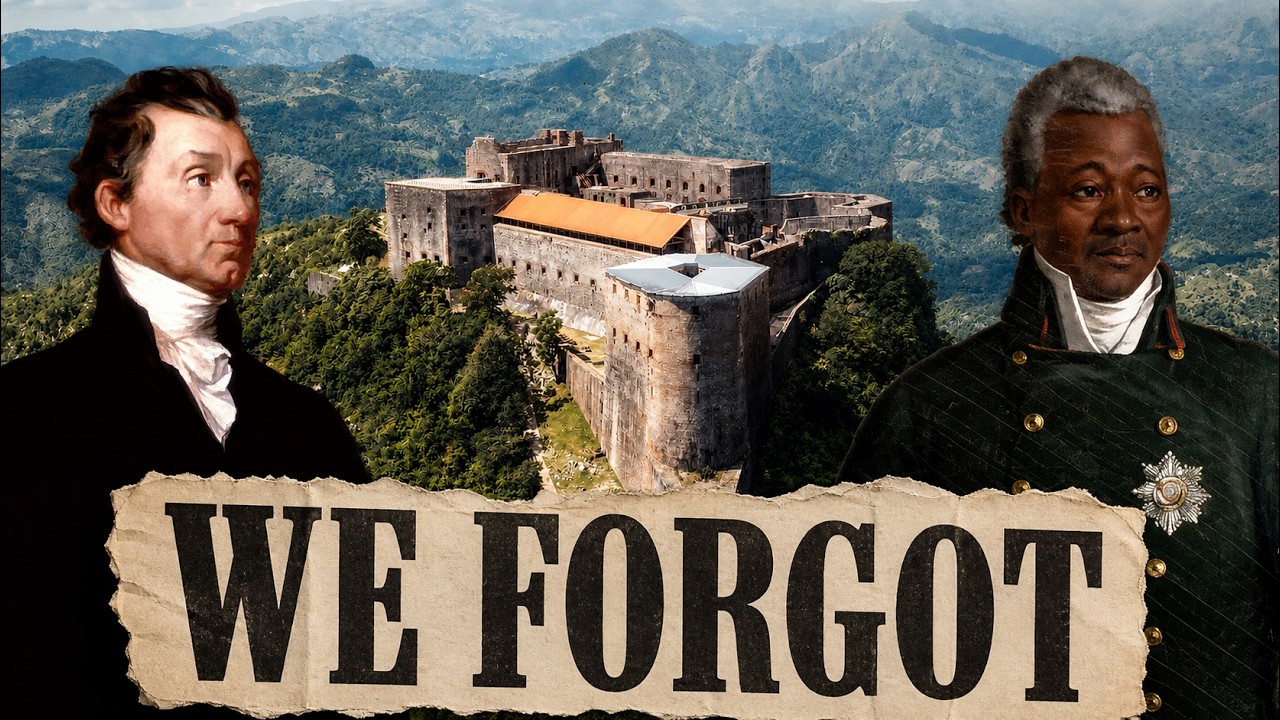
"2AM in Venezuela" (OFFICIAL VIDEO): https://youtu.be/GtvkwgbVKF8
BLACK WINTER (Full Album): https://youtube.com/playlist?list=PLJSMFuicKjJ46p1K9TlqZPRGFSd0M5z9U&si=4WG_YXCGJinM6XEN
Join the Patreon for exclusive videos that you won't find on Youtube: https://www.patreon.com/NTD1814
S U P P O R T
Cash App - $NelsonAmadeus
PayPal- GlobalHitsWorld@gmail.com
EMAIL - KingNeferkare@gmail.com
Twitter @NTDessalines
Instagram @NelsonAmadeus
TURN ON POST NOTIFICATIONS.
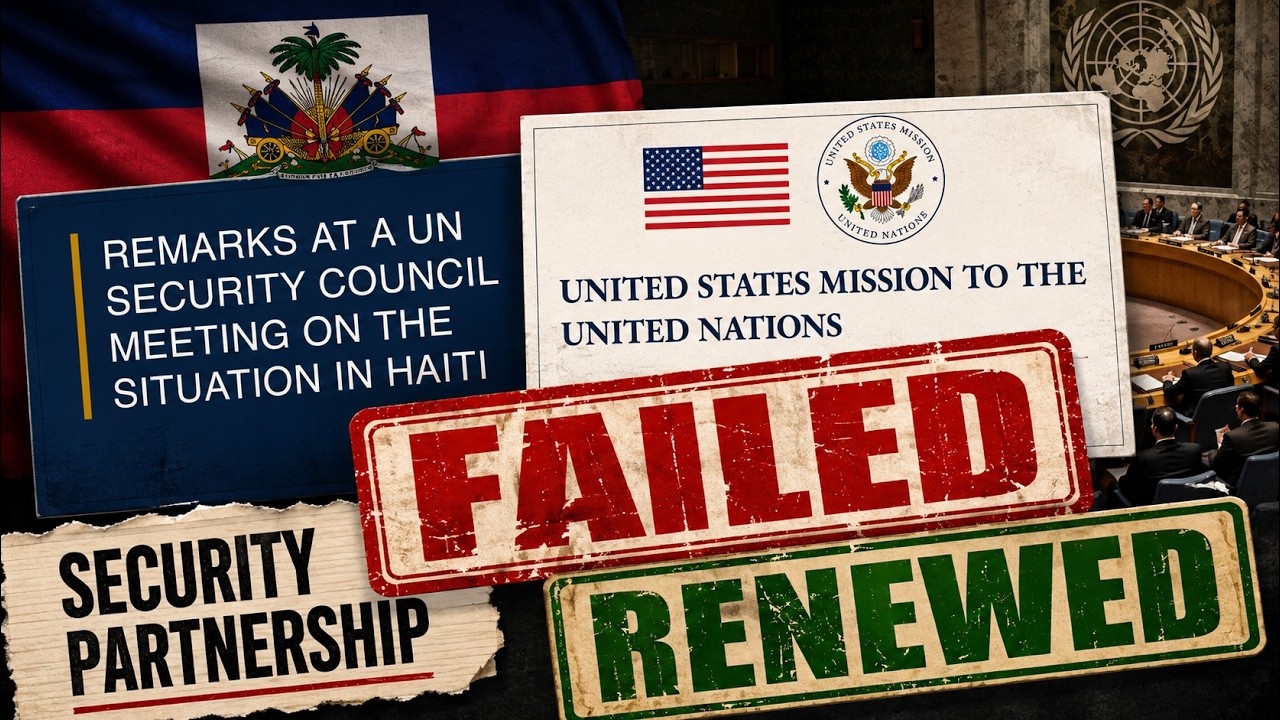
"2AM in Venezuela" (OFFICIAL VIDEO): https://youtu.be/GtvkwgbVKF8
BLACK WINTER (Full Album): https://youtube.com/playlist?list=PLJSMFuicKjJ46p1K9TlqZPRGFSd0M5z9U&si=4WG_YXCGJinM6XEN
Join the Patreon for exclusive videos that you won't find on Youtube: https://www.patreon.com/NTD1814
S U P P O R T
Cash App - $NelsonAmadeus
PayPal- GlobalHitsWorld@gmail.com
EMAIL - KingNeferkare@gmail.com
Twitter @NTDessalines
Instagram @NelsonAmadeus
TURN ON POST NOTIFICATIONS.

In this video, South African politician, Dr Khanyisile Litchfield-Tshabalala posits that South African TV series The Polygamist presents a deeply distorted portrayal of a practice that has existed within African societies for centuries. She argues that polygamy, as traditionally practiced in many African communities, was not merely an undisciplined man pursuing multiple sexual partners at will, but a social institution governed by cultural norms, ancestral laws and communal expectations, with responsibilities and obligations toward every member of the family.
In her words, consent, accountability and the welfare of the household were central to its practice. It was not synonymous with promiscuity. Whereas she says, what The Polygamist depicts is something fundamentally different: a man driven by sexual gratification, deception and disregard for the women involved. Far from an honest representation of traditional African polygamy, she says, it is a bastardisation of the institution.
If you have watched The Polygamist, do you agree with her? Drop us a comment with your opinion and don't forget to follow The Spearhead.
#thepolygamist #africa #culture #tradition

The AES parliament just opened in Niamey. Mali, Burkina Faso and Niger now have a joint army, a bank, a passport and a legislature. Here's what the Alliance of Sahel States is really building after ECOWAS.
he AES parliament just opened in Niamey. Mali, Burkina Faso and Niger now have a joint army, a bank, a passport and a legislature. Here's what the Alliance of Sahel States is really building after ECOWAS.
In August 2026, forty-five deputies sat down in Niamey and opened the first confederal parliament of the Alliance of Sahel States. Fifteen from each country. Three committees: defence and security, diplomacy, development.
It looked like a small story. It isn't.
In six years, Mali, Burkina Faso and Niger went from three separate coups to a mutual defence pact, a 6,000-strong joint force, a confederal development bank, a common passport, a shared import levy, and now a parliament. That is the architecture of a state, built at speed, during a war.
But there's a constraint no resolution can fix. All three countries are landlocked. Every container and every litre of fuel still crosses a border that belongs to someone else.
In this episode we follow the evidence: what was actually built in Niamey, why Sahel security numbers finally improved in 2025, what West African port data reveals about who really holds leverage, and why Morocco is now offering the Sahel a different road to the Atlantic entirely.
No cheerleading. No dismissal. Just the receipts.
SOURCES USED
Security figures come from the Global Terrorism Index published by the Institute for Economics and Peace, and from research by the Institute for Security Studies in Pretoria. Port and corridor data comes from the African Development Bank and Ecofin Agency. Regional analysis draws on Chatham House and the International Crisis Group. Institutional details come from ECOWAS Commission statements and from Sahelian outlets including Burkina24, Le Sahel, Koaci and RTN. Reporting on Morocco's Atlantic Initiative draws on Al Jazeera and the Policy Center for the New South.
GO DEEPER WITH US
Members get the extended research file for this episode, including the currency question nobody explains properly, a sector-by-sector investment breakdown, my 2028 prediction with a confidence level attached, and a full list of everything I could not verify.
TO JOIN OUR MEMBERSHIP CLICK THE LINK https://www.patreon.com/AfricaTodayClub763
DISCLAIMER
This video is independent analysis and commentary on publicly reported events. It is produced for educational and informational purposes only. All figures cited are drawn from published reports by the organisations named above and were accurate at the time of production. Where information could not be independently verified, this is stated in the video.
Africa Today is not affiliated with, sponsored by, or endorsed by any government, political party, regional organisation or armed group mentioned. Views expressed are our own interpretation of publicly available evidence and should not be taken as statements of fact about the intentions of any individual or institution.
Nothing in this video constitutes financial, investment, legal or travel advice. Viewers considering business decisions in any region discussed should consult qualified professionals and conduct their own due diligence.
Archival footage and images are used under fair use for news reporting, commentary, criticism and education.
We welcome corrections. If you believe something here is inaccurate, comment with a source and we will pin it.
QUESTION FOR YOU
Is the AES building a genuine new regional model for West Africa, or a smaller bloc that still can't escape the system it left? Tell me where you land.
#aes #sahel #ecowas
welcome to Africa Today a place where we showcase Africa's financial potential and help you obtain financial freedom
TO JOIN OUR MEMBERSHIP CLICK THE LINK
https://www.patreon.com/AfricaTodayClub763
BOOK A SESSION WITH US THROUGH
https://www.patreon.com/AfricaTodayClub763/shop/one-on-one-consultation-129020?source=storefront
JOIN OUR MEMBERSHIP THROUGH
https://www.youtube.com/channe....l/UCQhku_T68i-szD9Qj
OUR PAYPAL
http://paypal.me/AfricaToday
Don't forget to Like, Share and Subscribe
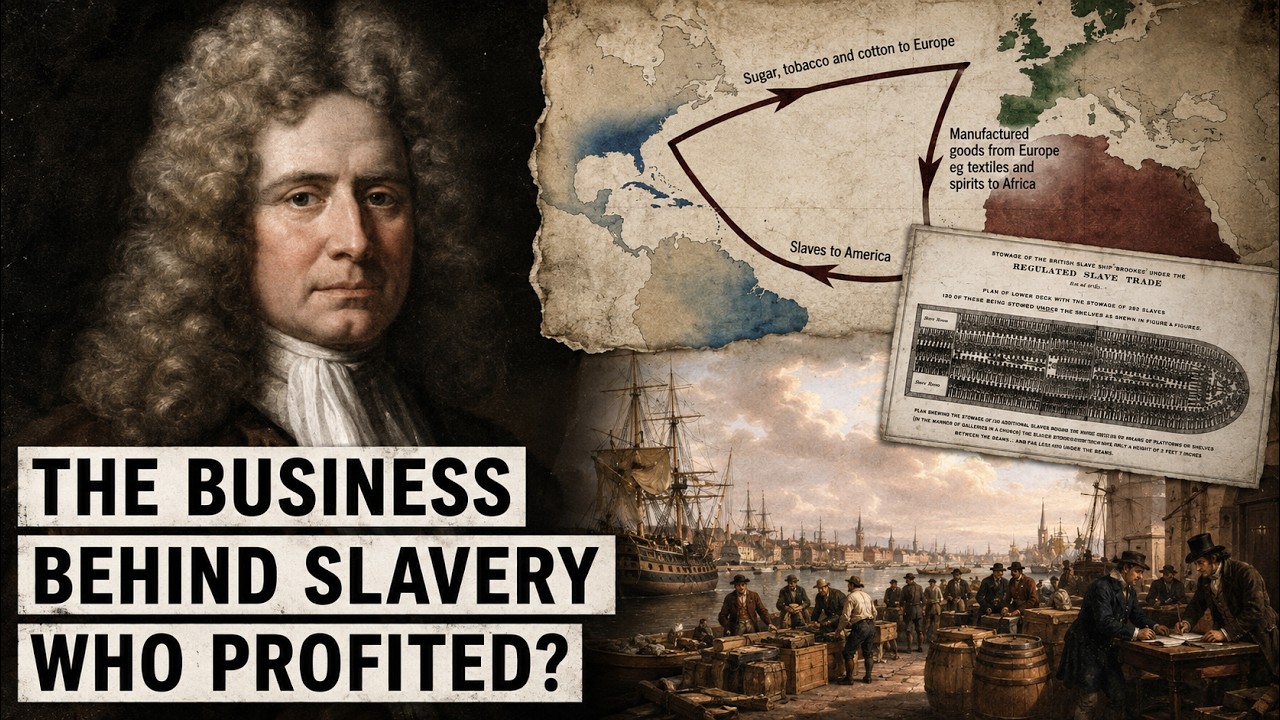
The Atlantic slave trade wasn't just a moral catastrophe — it was the most profitable business operation in human history. For over three centuries, a vast financial machine connected three continents, generating wealth that built cities, funded banks, bankrolled the Industrial Revolution, and created dynastic fortunes that are still compounding today.
In this video, we follow the money. From the Portuguese trading posts of the 1400s to the boardrooms of Lloyd's of London. From the sugar plantations of Jamaica, where enslaved workers had a life expectancy of seven years, to the grand townhouses of Liverpool, where merchant families lived in extraordinary luxury funded by human cargo. From the Royal African Company — a crown-backed corporation that branded enslaved people with its initials — to the Bank of England, whose early governors profited directly from the slave economy.
We examine the triangular trade not as a historical diagram, but as a fully integrated global financial system. We look at who invested, who insured, who extended credit, and who collected the dividends. We explore how slave trade profits became the seed capital for Britain's Industrial Revolution, how New England merchants ran closed-loop supply chains of rum, sugar, and enslaved people, and how the British government paid slave owners £20 million in compensation when slavery was abolished — a debt so large that British taxpayers were still paying it off in 2015.
This is the story of who really profited from the Atlantic slave trade, and why the financial architecture they built is still shaping the world today.
If you found this valuable, please like, subscribe, and share this video. It helps more than you know.
#atlanticslavetrade #slaveryandcapitalism #whoreallyprofited #triangulartrade #slavetradeeconomics #royalafricancompany #lloydsoflondon #britishempire #sugarplantations #industrialrevolution #ericwilliams #capitalismandslavery #liverpool #bristol #middlepassage #slavetradehistory #colonialwealth #economichistory #hiddenhistory #moneyandpower #macrofinance #globaleconomics