- General Videos
- Nnwom
- Sikas?m
- Akwahosan
- Travel & Events
- Abak?s?m
- Adwene mu Nhwehw?mu
- Honhom fam nne?ma
- Fim
- News & Politics
- Kmtyw Combat Sciences
- Ɔbenfo Ọbádélé Kambon Video ahorow
- ?benfo? Kamau Kambon: Black Liberation Philosophy
- Science, Tech, Engineering and Math
- Permaculture
- Self-Sustainability
- Living Off Grid
- Yoruba Language Learning
- Nhomasua
- Mmɔfra Adesua
- Nana Kamau Kambon Playlist
- Livestream
- Komplementarity Kouples and Revolutionary Singles
- Abibitumi Film Series
- Decade of Our Repatriation
- Live
Video a ɛwɔ soro

Africa's economy is growing faster than Asia in 2026 — and the African geopolitics behind this shift involve China's zero tariff trade deal, AGOA's uncertain future, and a $40 trillion Afri-Caribbean market most people have never heard of.This week on The Strategic Lens, we break down four stories that are quietly rewriting the rules of global trade and African economic power — and what it means for Africans, the diaspora, and anyone paying attention to where real growth is happening right now.TO JOIN OUR MEMBERSHIP CLICK THE LINKhttps://www.patreon.com/AfricaTodayClub763Here is what we cover:The UN, IMF, and African Development Bank all dropped reports this month — and they all agree. Africa is projected to grow at 4.4% in 2026, outpacing Asia at 4.1% and leaving the global average of 2.7% in the dust. Twenty-one African countries are growing above 5%. Four of them — Ethiopia, Rwanda, Senegal, and Niger — are hitting that 7% poverty-reduction threshold economists say actually changes lives. But here is the catch nobody is talking about: African governments are spending 27.5% of their revenue just on debt interest payments. The growth is real. The debt trap is realer.Then there is the avocado. One fruit shipment from Limpopo, South Africa to Shanghai, China — and why it represents something much bigger than fruit. South Africa grows 160,000 tons of avocados a year. For decades, 95% of exports went to Europe, the UK, and Russia. That is changing fast, and the implications for thousands of rural South African farmers are enormous.China just announced zero tariff access for 53 African nations, effective May 1, 2026. No political conditions. No renewal anxiety. Meanwhile, the US renewed AGOA — but only for three years, down from the traditional ten. We break down what this trade war between East and West actually means for African leverage, and why the real danger is not the deal itself but what Africa exports under it.And finally — the $40 trillion Afri-Caribbean market. Africa and the Caribbean share history, culture, and DNA. They barely share trade. Less than 1% of total trade flows between the two regions. But that is starting to change. We cover the Afri-Caribbean Investment Summit, the first ever direct flight from Nigeria to St. Kitts and Nevis, and why this South-South corridor might matter more than any deal with China or America in the long run.⚠️ DISCLAIMERThe Strategic Lens produces content for informational and educational purposes only. Nothing presented in this video or its accompanying materials constitutes financial, investment, legal, or political advice. All statistics, projections, and data cited are drawn from publicly available reports by institutions including the IMF, African Development Bank, UN Department of Economic and Social Affairs, and other named sources at the time of production. Figures are subject to change as new data becomes available. Viewers are encouraged to consult the original source documents — linked in the member resources section — before drawing conclusions or making decisions based on any information presented here. The views expressed are those of the host and do not represent the official position of any government, institution, or organization referenced in this content.

Support our work: https://democracynow.org/give
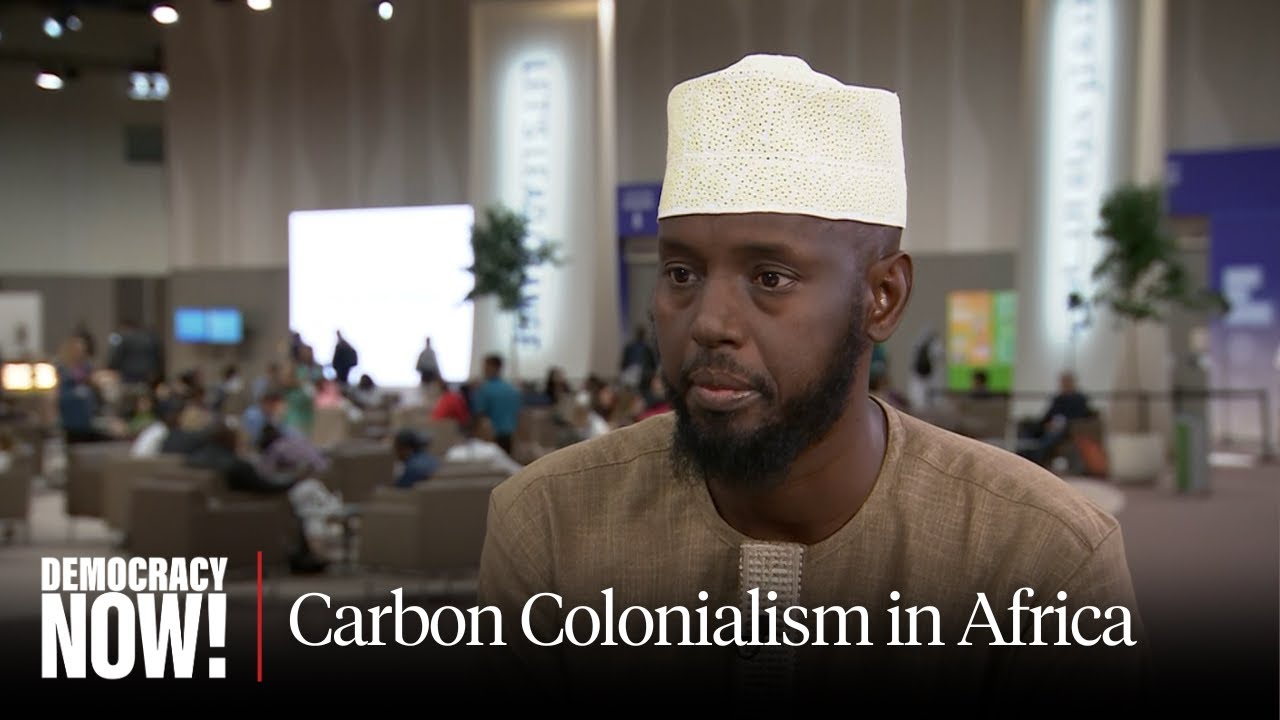
As _Democracy Now!_ broadcasts from COP28 in Dubai, we look at how the United Arab Emirates is using its vast oil money to buy up the rights to land in many African countries in order to sell carbon credits to major polluters, a plan that critics characterize as a new form of colonialism. "After failing to mitigate at the source," wealthy polluters now "want to, basically, buy, on the cheap, African land," says Power Shift Africa's Mohamed Adow about wealthy nations' failure to deliver on climate finance and turn to a "land grab" on the African continent. "What they're doing is actually commodifying nature," says Adow, who describes carbon credits as an "imaginary concept" amounting to "permits to pollute."
Democracy Now! is an independent global news hour that airs on over 1,500 TV and radio stations Monday through Friday. Watch our livestream at democracynow.org Mondays to Fridays 8-9 a.m. ET.
Subscribe to our Daily Email Digest: https://democracynow.org/subscribe

Britain didn't discover Iraq. It invented it. After World War One, the British Empire stitched together three Ottoman provinces that had never been a single country, installed a foreign king who had never set foot on Iraqi soil, staged a referendum with a 96% approval rate, and locked in control of one of the largest oil reserves ever found. This is the full story of how Iraq was manufactured — not for the people who lived there, but for the petroleum beneath their feet.
From the secret Sykes-Picot Agreement to the Cairo Conference of 1921, from Churchill's air bombing campaigns to the Turkish Petroleum Company's 75-year concession, this video traces the real forces behind Iraq's creation. It's a story of broken promises, imperial cartography, puppet monarchies, and oil — always oil.
The consequences didn't end in 1932 or 1958. The borders drawn in hotel rooms by colonial officials who never lived in the region shaped every crisis Iraq has faced for over a century — and the world is still living with the fallout.
🔔 Subscribe and turn on notifications so you never miss a video.
👍 Like this video if you want more deep dives into the hidden forces behind global power.
💬 Drop your thoughts in the comments — did you know Iraq was engineered by the British Empire?
#iraq #britishempire #oilpolitics #middleeast #geopolitics #sykespicot #winstonchurchill #kingfaisal #colonialism #iraqhistory #oilwars #britishmandate #cairoconference #arabrevolt #mesopotamia #empireandoil #hiddenhistory #globalpower #documentary #macrofinance

All People Profiles scripts are researched and written by qualified Historians. The script for this video has been checked with Plagiarism and AI Detector software and scored 1% on Grammarly. In academia, a score of below 15% is considered good or acceptable. Please email us for script references and citations.All footage, images and music used in People Profiles Documentaries are sourced from free media websites or are purchased with commercial rights from online media archives.Special thanks to the British Museum.#biography #history #documentary