- General Videos
- Music
- Economics
- Health
- Travel & Events
- History
- Psychology
- Spirituality
- Movies
- News & Politics
- Kmtyw Combat Sciences
- Ɔbenfo Ọbádélé Kambon Videos
- Ɔbenfoɔ Kamau Kambon: Black Liberation Philosophy
- Science, Tech, Engineering and Math
- Permaculture
- Self-Sustainability
- Living Off Grid
- Yoruba Language Learning
- Education
- Mmɔfra Adesua
- Nana Kamau Kambon Playlist
- Livestream
- Komplementarity Kouples and Revolutionary Singles
- Abibitumi Film Series
- Decade of Our Repatriation
- Live
Top videos


Our very special guest is Kimoni Yaw Ajani, Warrior Scholar and author of "The Afrikan Revolution in Haiti"!
SUPPORT KIMBUNGA MEDIA: https://www.patreon.com/kimbungamedia
Join WhatsApp: https://whatsapp.com/channel/0....029VaXt3adHwXb8Yt44J
Join Telegram: https://t.me/kimbungamedia
• SUBSCRIBE • LIKE • COMMENT • SHARE
••••••••••••••••••••••••••••••••••••••••••••••••••
Greetings & Welcome to Kimbunga Media - Your Premiere Universal Afrikan Nationalist Media Institution
Find Kimbunga Medai on:
► Instagram: http://instagram.com/kimbungamedia
► https://www.facebook.com/kimbungamedia
► Twitter: https://twitter.com/kimbungamedia
► SignUp for Newsletter: https://kimbungamedia.com/
🎙️ New to streaming or looking to level up? Check out StreamYard and get $10 discount! 😍 https://streamyard.com/pal/d/4797865091006464





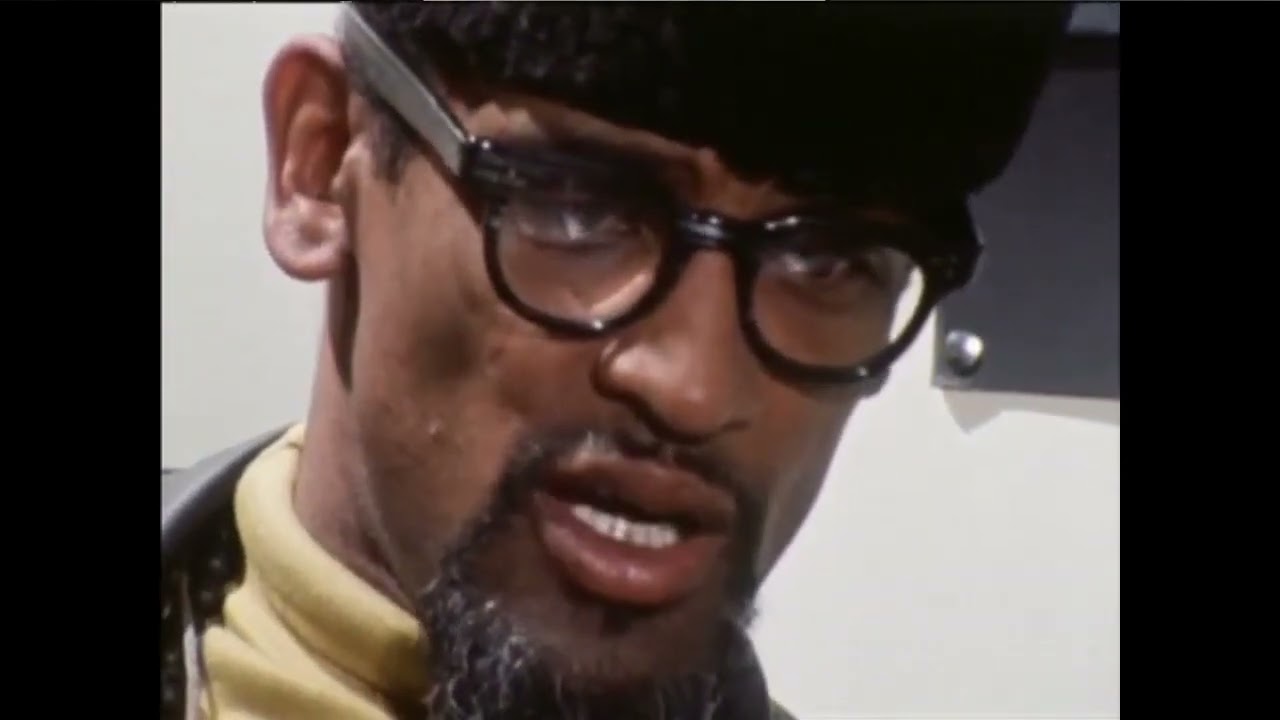
In this reasoning Rastafari dub poet, musician, actor, educator, and radio host Mutabaruka speaks reliving the horror and pains of our ancestors while acting in the movie 'Sankofa'.
Mutabaruka goes on to explain how he gained a clear understanding of the quagmire Africans were in while enslaved in the Americas.
Please subscribe to Mutabarukas' new internet radio station Rasss Internet:
https://rasssinternet.today
Get Your 'Nyahbinghi Shirt' Today:
https://koncioust.com/products..../queen-muhumusa-empr
Tune into 'I NEVER KNEW 📻'
🇲🇱Roots, Rock, Reggae Music🇲🇱
Hosted By : Jr of 'I Never Knew Tv'
https://www.WLOY.org
Sunday 9 -11 AM EST
Wednesday 8- 10 AM EST
Thursday 10- Noon AM EST
#mutabaruka #sankofa


In 1953, Britain and the CIA orchestrated one of the most consequential covert operations in modern history — the overthrow of Iran's democratically elected Prime Minister, Mohammad Mossadegh. His crime? Nationalizing Iran's oil industry and demanding that his country's most valuable resource belong to its own people.
What followed was a masterclass in imperial manipulation: economic warfare, naval blockades, propaganda campaigns, bribed journalists, paid mobs, and a rogue CIA operative who ignored direct orders to abort the mission. The operation destroyed Iran's democracy, installed an authoritarian monarch backed by a brutal secret police, and set in motion a chain of events that led directly to the 1979 Islamic Revolution, the hostage crisis, and decades of hostility between Iran and the West that continues to this day.
This is the full story — from the exploitative oil concession of 1901 that handed nearly half a million square miles of Persian territory to a single British financier, to the boardrooms of BP and the backrooms of the CIA, to the tanks rolling through the streets of Tehran. It's a story about oil, power, and what happens when a nation's sovereignty stands in the way of corporate profits.
The CIA didn't publicly acknowledge its role for 60 years. This video explains why.
Sources and further reading:
— "All the Shah's Men" by Stephen Kinzer
— Declassified CIA documents on Operation TPAJAX (National Security Archive, George Washington University)
— "Mohammad Mosaddeq and the 1953 Coup in Iran" by Mark Gasiorowski and Malcolm Byrne
— Britannica: 1953 Coup in Iran
— Council on Foreign Relations: U.S. Relations with Iran Timeline
If this video changed how you see the history of the Middle East, subscribe and share it with someone who needs to hear this story.
#iran1953 #operationajax #ciacoup #mossadegh #britishpetroleum #oilpolitics #coldwar #middleeasthistory #geopolitics #foreignpolicy #regimechange #iranhistory #bp #mi6 #cia #imperialism #oilindustry #irancoup #modernhistory #powerandmoney


Chef Aviyah is a plant based chef, holistic wellness practitioner and founder of 'Natural Livity House Of Wholeness'.In pt.2 of this reasoning, Chef Aviyah shares why she believes laziness and slothfulness is the main reason for the appearance of many women.Click link to learn more about Chef Aviyah and her services:👉🏿 https://naturallivity7.com➡️ Tune into 'I NEVER KNEW 📻'🇲🇱Roots, Rock, Reggae Music🇲🇱Hosted By : Jr of 'I Never Knew Tv'https://www.WLOY.orgSunday 9 -11 AM ESTWednesday 8- 10 AM ESTThursday 10- Noon AM EST#women #ineverknewtv


The African Union has officially adopted Swahili as an official working language. The approval comes following a request by Tanzanian Vice President Philip Mpango, who argued that over 100 million people in Africa speak Swahili, making it one of the most widely spoken languages in the African continent.
Tune into Newzroom Afrika, DSTV channel 405 for more details.
#newzroom405

To donate to our course
Buy us a coffee https://www.buymeacoffee.com/africanbuzz
Burkina Faso to publish their own textbooks
#burkinafaso #traoré #senegal #senegal #sonko #diomayefaye #diomayepresident #niger #tiani #burkinafaso #mali #niger #g5 #france #ibrahim #tchiani #mali #assimi #goita #burkinafaso #africa #african #kenya #africanclimatesummit #climatechange #climate #carbondioxide #china #africa #african #niger #france #french #france24 #ambassador #africanamerican #nigeria #gabon #ecowas #chad #congo #africaunite
Please SUBSCRIBE, LIKE, COMMENT and Share, Thank for Watching
#Love
#Peace
#theafricawewant


A documentary on the Nubian Archers - Longbow-men of Africa.
In this Units of History documentary we explore the story of the Nubian Archers - Longbowmen of Africa. The episode begins with an introduction to the lands of the Nile, its geography, and the entwined development of both Egypt and Nubia. In this context it appears that the Nubian Archers existed from the very start as skilled hunters in southern civilization. Over time they would develop such a reputation that the ancient Egyptians would call the area of ancient Nubia, Tah-Seti, the Land of the Bow. Both the Egyptian Army and the Nubian Army would clash for centuries along the Nile. Such was the threat from Nubia that the Pharaohs began to fortify the region of the first cataract with a series of Egyptian Fortifications like the Buhen Fortress. Yet even still the Nubian Archers could not be stopped and their armies are said to have regularly managed to storm these bastions. The Egyptians recognized the military prowess of the Nubian Archers and quickly hired them as mercenaries in their own armies. This was a trend that would continue with later Empires that interacted with the Lands of Nubia. We talk specifically about what the equipment of these Nubian archers, how they were trained, how they were organized, and how they fought in battle. Finally the documentary concludes with an overview of their service history that would span hundreds of years through the Kingdom of Kerma, the Kingdom of Napata, and the Kingdom of Meroe. Stay tuned for more Units of History episodes and let us know what units you would like to see covered next! I'm excited to also cover more of the history of Nubia and African history in general! For now you can check out our previous episodes on Ancient Egypt and the Roman Invasion of Nubia.
Claim your SPECIAL OFFER for MagellanTV here: https://try.magellantv.com/invicta. Start your free trial TODAY so you can watch "The Story of Egypy" about the history of the Nile civilizations, and the rest of MagellanTV’s documentary collection: https://www.magellantv.com/ser....ies/the-story-of-egy and Suggested Reading:“The Kingdom of Kush: Handbook of the Napatan-Meroitic Civilization” by László Török“Aksum and Nubia: Warfare, Commerce, and Political Fictions in Ancient Northeast Africa” by George Hatke“Ancient Nubia” by Shinnie“Kerma Kushites." by Hansberry. W., & Johnson, E.“The Histories” by Herodotus“Ancient Egyptian Bows and Arrows and their Relevance for African Prehistory” by J. D. Clark “Wrestling in Ancient Nubia” by Scott T. Carroll Credits:Research = InvictaWriting = InvictaNarration = Guy MichaelsArtwork = Penta Limited#history#africa#documentary