- General Videos
- Music
- Economics
- Health
- Travel & Events
- History
- Psychology
- Spirituality
- Movies
- News & Politics
- Kmtyw Combat Sciences
- Ɔbenfo Ọbádélé Kambon Videos
- Ɔbenfoɔ Kamau Kambon: Black Liberation Philosophy
- Science, Tech, Engineering and Math
- Permaculture
- Self-Sustainability
- Living Off Grid
- Yoruba Language Learning
- Education
- Mmɔfra Adesua
- Nana Kamau Kambon Playlist
- Livestream
- Komplementarity Kouples and Revolutionary Singles
- Abibitumi Film Series
- Decade of Our Repatriation
- Live
Top videos


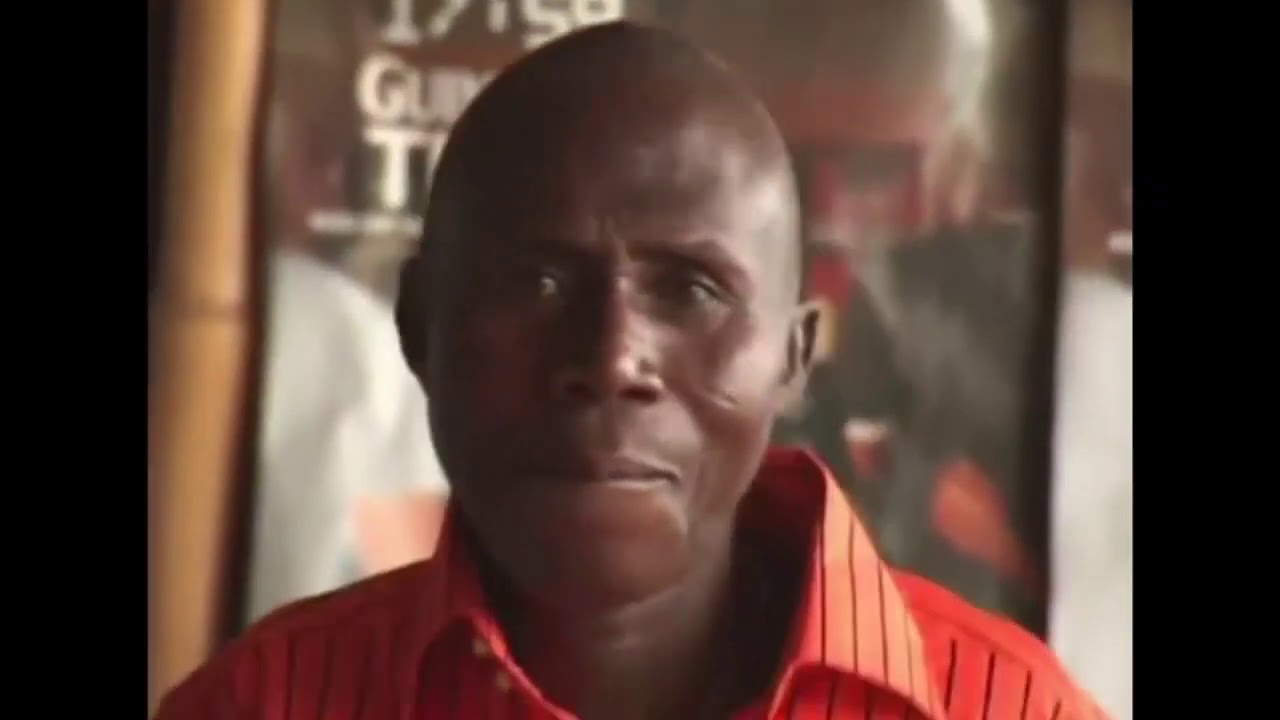
Ɔbenfo Ọbádélé Bakari Kambon sits down with Dre Taylor at The Beyond View in Ɔbosomase, Ghana, for a powerful conversation on repatriation, land, development, community-building, and what it means to stop funding the system that oppresses us.This is not just a property tour. This is a conversation between two brothers who “escaped the plantation” and are now focused on demonstration over conversation: building homes, creating community, employing people, supporting local development, and opening pathways for Abibifoɔ serious about repatriation.They discuss Ghana, the Decade of Our Repatriation, Black Power, land, manufacturing, education, identity, miseducation, historical sellouts, and why consciousness without application is not enough.The DOOR is open. Walk through it.Learn more about repatriation support, citizenship, housing, relocation, driver’s licenses, and business setup:https://www.r2gh.com#Repatriation #ghana #blackpower #abibifahodie #decadeofourrepatriation #r2gh #thebeyondview #abibitumi


I I am elated that you stopped by to check out my channel please like comment share and subscribe
♥️♥️♥️👇🏾
Here is the link to cubsden channel please subscribe: https://youtube.com/c/CubsDenTips
♥️♥️♥️👇🏾
Email me for collabs at:
Lewismarialee@gmail.com
Follow me on instagram at:
Empress_marcy
#patoistranslation #nigerianpidgin
#englishtranslation



🎙 ABOUT SAHEL CHRONICLES
We take the political stories dominating headlines and break them down so you understand what's happening, why it matters, and how it affects you.
The world is complicated. The news doesn't have to be.
▶ Subscribe for daily political explainers: https://www.youtube.com/@SahelChronicles
▶ Follow Jude on X: @realjudebela
▶ Follow Jude on Instagram: @realjudebela
📸Insta - @sahelchronicles
🐦X - @sahelchronicles
Inquiries // use the linked email
For story tips: use the linked email
....................................................
Copyright © 2026 JudeBela Studios Limited. All rights reserved.


🍽Welcome. Come have a fancy vegan meal experience. *Let me know if you can honor my invitation to purchase a ticket and join me at this special event as a guest.*
Register here before Thursday 5 April
https://nkwadua.com/events/men....u-tasting-dining-exp
~ Chef Ama 👩🏽🍳
PS
‼We have some VIP guests so for security reasons pre-registration is required. Security can only admit those registered on the website.
PPS: West Legon venue & directions sent in your website confirmation email.


In this video, we take an in-depth look at the ancient Tichitt culture of West Africa and examine how it supports the groundbreaking theories of historian and anthropologist Cheikh Anta Diop. Diop argued that African civilizations were far more advanced than often recognized, with Africa’s history frequently overlooked or misunderstood. According to his model, many modern West African populations trace their roots back to the Nile Valley (the Hapi River basin), having migrated over millennia. This perspective reshapes our understanding of African civilizations as interconnected and deeply influential in the ancient world.
The Tichitt culture, which flourished around 2000 BCE in what is now Mauritania, provides compelling evidence of an advanced society with organized agriculture, monumental stone settlements, and a structured social order. New archaeological findings reveal how this culture aligns with Diop's theories, not only affirming Africa's role in early civilization but also challenging misconceptions about Africa's historical contributions.
Join us as we explore the connections between the Hapi River basin and Tichitt, uncovering how these migrations shaped West African culture and heritage. Discover why Tichitt’s ancient legacy is essential for understanding Africa's place in global history and how it serves as proof of Diop’s enduring influence on the study of African civilizations.
0:00 Intro
1:44 Pastoral Domesticates
3:00 John Henry Clarke Refutes Christopher Wise
3:52 Yéréré Testimony
5:20 Kobadi Culture
7:37 Post Dynastic Migrations
8:20 Yoro Dyao Testimonies
9:07 Dinga Cissé Testimonies
10:35 Gao Assemblages
12:10 Segambian Glass Beads from Kmt
12:50 Sudanic Tumuli
14:56 Wangara Narratives
16:15 Senegambian Megaliths
Support Kamjiverse:
Cashapp: https://cash.app/$Kamjiverse
Instagram: https://www.instagram.com/kamjiverse/
Patreon: https://www.patreon.com/c/Kamjiverse
Twitter: https://x.com/Kamjiverse
Like, share, and subscribe to help spread the message!



In 1971, the United States cut the dollar loose from gold and gambled the entire global economy on a single question: what gives a piece of paper its value once the metal underneath is gone? The answer turned out to be oil — and the deal that made it happen was kept secret for forty-one years.
This is the story of the petrodollar: how a moment of weakness became the most durable instrument of power any nation has ever wielded. From the collapse of Bretton Woods and the Nixon Shock, to the 1973 oil embargo that quadrupled prices overnight, to the chain-smoking Wall Street bond trader who flew secretly into Saudi Arabia in 1974 to strike a deal that would anchor the dollar to the world's most essential commodity.
But this isn't just a story about American advantage. It's a story about a trap. We follow the petrodollars on their journey — from oil importers, into Gulf treasuries, through Western banks, and out as cheap dollar loans to the developing world. Then we watch Paul Volcker raise interest rates to nearly twenty percent and the bill reset overnight, triggering Latin America's "lost decade," sovereign defaults, and more than twenty million people pushed into extreme poverty.
We separate documented history from myth: the real secret Treasury bond arrangement versus the viral "single 1974 oil treaty" that never actually existed. We look honestly at the contested "petrodollar war theory" surrounding Iraq and Libya — what's proven, what's speculation, and why the truth refuses to be neat. And we examine whether the system is finally cracking, with the dollar's reserve share at a three-decade low, the rise of the petroyuan, and central banks quietly stacking gold.
How did America make the world buy oil in dollars? And who really got trapped in it?
If this pulled back the curtain on something you only half understood, hit like and subscribe for more deep dives into the hidden machinery of money and power.
#petrodollar #usdollar #oileconomy #geopolitics #financialhistory #dedollarization #brettonwoods #nixonshock #federalreserve #saudiarabia #opec #petroyuan #brics #reservecurrency #globaleconomy #macroeconomics #economichistory #paulvolcker #debtcrisis #dollarhegemony #wallstreet #powerstructures #moneyexplained #oilanddollars #economicsdocumentary