- General Videos
- Music
- Economics
- Health
- Travel & Events
- History
- Psychology
- Spirituality
- Movies
- News & Politics
- Kmtyw Combat Sciences
- Ɔbenfo Ọbádélé Kambon Videos
- Ɔbenfoɔ Kamau Kambon: Black Liberation Philosophy
- Science, Tech, Engineering and Math
- Permaculture
- Self-Sustainability
- Living Off Grid
- Yoruba Language Learning
- Education
- Mmɔfra Adesua
- Nana Kamau Kambon Playlist
- Livestream
- Komplementarity Kouples and Revolutionary Singles
- Abibitumi Film Series
- Decade of Our Repatriation
- Live
Top videos


Nigeria erupted in protests this week against the anti-labor policies of the Tinubu administration and soaring inflation that is crippling Nigerians. Inspired by the anti-colonial uprisings across the Sahel, thousands took to the streets to demand living wages and the resignation of US-backed President Tinubu. Investigative journalist and author David Hundeyin joins the show to discuss the demands behind the #endbadgovernance protests and how the US government’s backing of Tinubu
#breakthroughnews


↓TRACKLIST↓ Vol. 1
1. République Guinée : 00:00
2. Sabor de Guajira : 05:09
3. Armée guinéenne : 09:59
4. Guantanamera-Seyni : 13:56
5. Dembaty Galant : 17:58
6. Air Guinée : 21:07
7. Guinée Hety Horémoun : 24:28
8. Montuno de la Sierra : 29:02
9. Waraba : 32:58
10. Dagna : 39:26
11. Doni Doni : 43:32
12. Camara Mousso : 48:07
13. Super Tentemba : 52:38
14. Mami Wata : 01:06:54
15. Alla lake : 01:14:24
↓TRACKLIST↓ Vol. 2 ▷▷ http://bit.ly/2ymOtTZ
1. Beyla
2. Fatoumata
3. Moussogbe
4. Sou (Morna)
5. N'gnamakoro
6. Balake
7. Mussofing
8. Dya Dya
9. Sina Mousso
10. N'Temenna
11. Telephone
12. Petit Sékou
↻ ÉCOUTEZ / TÉLÉCHARGEZ la compilation "The Syliphone Years: Hits and Rare Recordings, Vol 1" : http://smarturl.it/0da9sk
↻ ÉCOUTEZ / TÉLÉCHARGEZ la compilation "The Syliphone Years: Hits and Rare Recordings, Vol. 2" : http://smarturl.it/3a7cv2
Vocals – Aboubacar Demba Camara
Vocals, Maracas – Salifou Kaba
Lead Guitar – Sekou "Bembeya" Diabate Aka "Diamonds Fingers"
Rhythm Guitar – Mamadou "Vieux" Camara
Bass, Leader – Hamidou Diaoune
Congas – Siaka Diabaté
Drums – Mory "Mangala" Condé
Tenor Saxophone – Bangaly "Gros Bois" Traoré
Tenor Saxophone, Soprano Saxophone – Clément Dorego
Trumpet – Mohamed "Achken" Kaba, Sékou "Le Growl" Camara
Pays : Guinée
Label : Syliphone
Tracklisting : Graeme Counsel
Production : Syllart Records / Sterns Music
Année : 2007
The Syliphone Years
Au lendemain de la décolonisation de la Guinée, le nouveau président Sékou Touré s'affirme comme le promoteur d'une réhabilitation de l'authenticité africaine face au déni colonial des cultures colonisées. Dans une perspective d'unité nationale et panafricaine, les artistes obtiennent le statut de fonctionnaire d'état et sont encouragés par le gouvernement à composer et écrire de nouvelles chansons dans un style plus moderne, tout en puisant dans le répertoire des récits historiques et des musiques ancestrales de l'aire Mandingue. Le fer de lance de cette politique n'était autre qu'un label d'état, le label Syliphone, dont les enregistrements sont de formidables témoignages du dynamisme et des richesses culturelles d'un peuple à l'aube de son indépendance qui porte au monde la voix de sa révolution.
► Bembeya Jazz National
Le Bembeya Jazz National, mosaïque des traditions guinéennes, est fondé en 1961. En gagnant aux deux premières biennales (1964 et 1966), cet orchestre, issu des groupes régionaux, est invité en tournée à Cuba et promu orchestre national en 1966. Modèle de tous les orchestres ouest-africains, il s'inspirait de la musique Mandingue réadaptée aux guitares électriques avec des rythmes évoquant la rumba zaïroise et les orchestres cubains soutenus par une section de cuivres. Son rôle est de jouer tous les rythmes du pays. Un de ses membres historiques Achken Kaba, s'en explique ainsi : "la Guinée est musicalement un résumé de l'Afrique de l'Ouest, et même au-delà. Dans le Fouta, la flûte et la vièle des Peul font le lien avec le monde arabe. Sur la Basse-Côte, on retrouve les mêmes danses qu'au Libéria ou dans le sud de la Côte d'Ivoire et du Ghana, et jusqu'au Nigeria. Les Guinéens forestiers ont une alimentation, une corpulence et une culture qui les rapprochent même des Congolais."
Dans sa longue épopée jusque dans les années 90, le Bembeya a vu défiler de nombreux grands musiciens parmi lesquels son fondateur et chanteur légendaire Aboubacar Demba Camara, accompagné du guitariste non moins légendaire Sékou "Bembeya" Diabaté "Diamond fingers", puis plus tard notamment du jeune chanteur et futur star Sékouba Bambino.
(Texte : J.Dayan / Syllart Records)
↻ ÉCOUTEZ / TÉLÉCHARGEZ la compilation "Bembeya Jazz - The Syliphone Years: Hits and Rare Recordings, Vol 1": http://smarturl.it/0da9sk
↻ ÉCOUTEZ / TÉLÉCHARGEZ la compilation "Bembeya Jazz - The Syliphone Years: Hits and Rare Recordings, Vol 2": http://smarturl.it/3a7cv2
▷ Abonnez-vous à Syllart Records : http://bit.ly/2vGqE5i
✔ Likez #Syllart sur FACEBOOK - https://facebook.com/Syllartrecords

THANKS FOR WATCHING!! Please LIKE, SHARE
#PanAfricanDailyTV #ProfObaShaka
Don't forget to SUBSCRIBE and click the notification Bell 🔔 to get instant updates when a video is uploaded.
Follow us on:
YOUTUBE: https://www.youtube.com/channel/PanAfricanDTV
TWITTER : https://twitter.com/panafricanDTV
FACEBOOK: https://www.facebook.com/PanAfricanDailyTV
INSTAGRAM: https://www.instagram.com/panafricandailytv/
WEBSITE: www.afroworld.tv
COPYRIGHT DISCLAIMER: Under Section 107 of the Copyright Act 1976, allowance is made for fair use for purposes such as criticism, comment, news reporting, teaching, scholarship, and research.


What are fractals?
A fractal is a never-ending pattern that has self-similarity. This is one of the topics in math in the modern world nature and arts.
⏲️ Timestamps ⏲️
Introduction: (0:00)
What are fractals (9:41)
Self-similarity of Fractals (14:52)
How to compute Fractal dimension (15:41)
Formula of fractal dimension (22:55)
Examples of fractals (28:58)
Fractals in nature (38:12)
Fractals in architecture (39:20)
Fractals in arts (39:30)
Want to watch more videos like this?
📺 SUBSCRIBE to my channel here: http://bit.ly/mathhubtv
🌐 Website: https://mathhubtutorial.com/mathvideotutorials/
👍 Facebook: https://www.facebook.com/mathhubtutorials
🐦Twitter: https://twitter.com/mathhub303
🙋♂️ Have questions? I'm here to help you learn your math courses in an easy way. Leave a comment below and I will try to answer it as soon as I can. You can also leave topics that you need help with and I will create those videos for you.
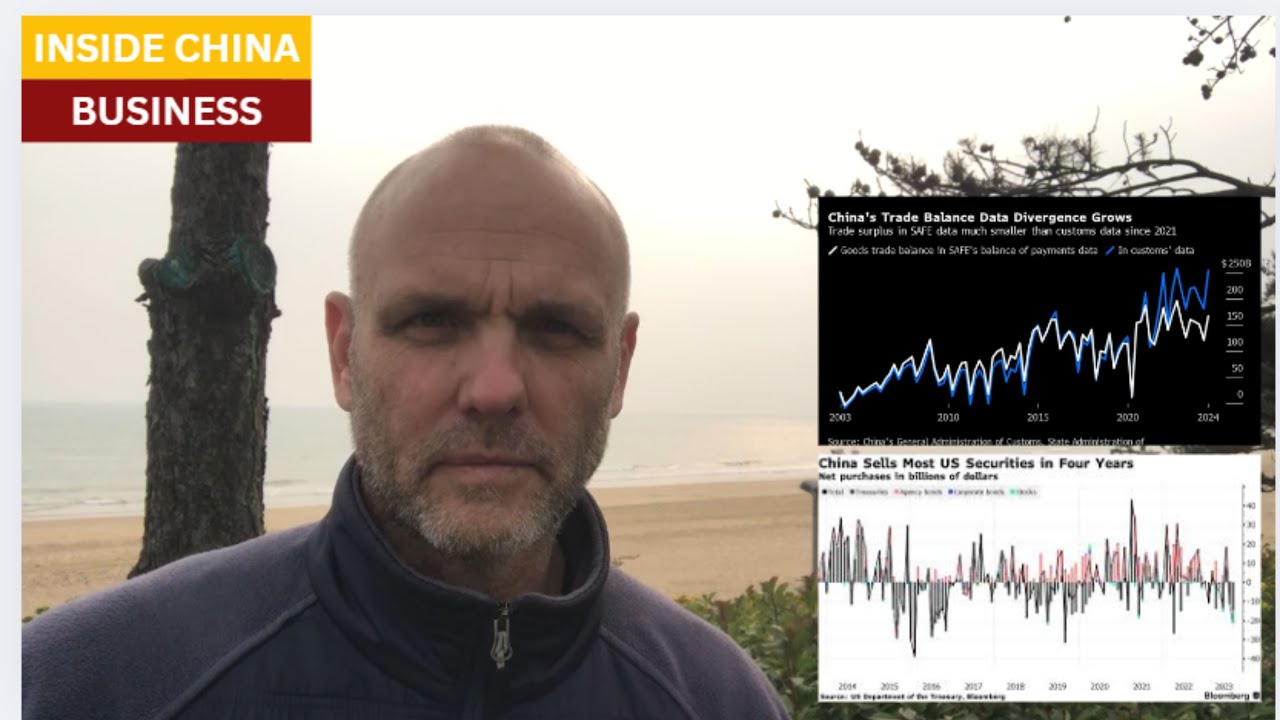

China runs large trade surpluses with the United States. Typically these funds would be returned to the US as capital investments, either through buys of fixed assets, securities, or lending.
China, however, is liquidating stakes in companies in the United States, and is selling off its portfolio of Treasury bonds.
These two trends are resulting in enormous imbalances in Balance of Payments, which much be re-balanced via China's central banking activities. China is clearly recycling giant capital pools from the United States for investment purposes inside China, and among China's top trading partners.
And because the US dollars are never returned to the capital markets, it is also clear that China and the BRICS countries are setting up their own trading and economic bloc, funded largely with US debt instruments.
(Editor note: At about the 2:00 mark, I misspoke. The US ran a trade deficit of approximately $800 billion, not surplus. Apologies.)
Resources and links:
Bloomberg, US Trade Deficit Widens to $78.8 Billion, Largest in Two Years
https://www.bloomberg.com/news..../articles/2024-09-04
Why is China dumping US Treasuries for gold?
https://x.com/SputnikInt/statu....s/178313812393054619
Vanishing Act: The Shrinking Footprint of Chinese Companies in the US
https://rhg.com/research/vanis....hing-act-the-shrinki
China Should Explain ‘Enormous’ Data Gaps, US Ex-Official Says
https://www.bnnbloomberg.ca/in....vesting/2024/09/06/c
Bloomberg, China Plans to Sell Dollar Bonds in Saudi Arabia as Ties Deepen
https://www.bloomberg.com/news..../articles/2024-11-05
The Economist, Chinese firms are growing rapidly in the global south
https://www.economist.com/brie....fing/2024/08/01/chin
Closing scene, Yangzhou Gardens, Jiangsu


In Senegal, traditional wrestling has its roots in the culture and community of rural villages, particularly among the Serer people.
What began as tribal preparations for battle developed into village ritual and soon a form of entertainment. Men traditionally fought at village festivals after the harvest season as a way of attracting women, proving their virility and bringing honour to their communities.
But in the past 50 years, traditional Senegalese wrestling has grown exponentially to become a major national sport for both men and women - with celebrity fighters competing for big prize money, in large stadia and in front of thousands of fans.
"We can say that it is not just a sport," says sociologist Aly Tandian. "It has always been a socially stimulating factor in the Senegalese society."
"Today, there are villages that have become well known in all of Senegal because they have given birth to great wrestlers," he adds.
Today, the professional wrestlers at major events - like "Bombardier" and Eumeu Sene - are household names, winning over $80,000 a fight.
Up-and-coming fighters like "Lacrymogene", who we meet in this film, win more modest sums - from a few to a few hundred dollars. But the winnings mean that for some of the poorest Senegalese, wrestling can genuinely represent a means of clawing their way out of poverty.
Traditional wrestling is part of a wider phenomenon of combat sports in West Africa, including in countries like Gambia, Guinea and Gabon. In Senegal, the sport has attracted both genders, with the women's game now popular and well respected in its own right.
Olympic fighter Isabelle Sambou has won the African Championships nine times. Safiato Biola has competed in women's events in Europe and North Africa, and Anta Sambou says winning three golds at the 2017 Francophone Games has built her confidence and transformed her life.
"Wrestling is part of our culture," says Isabelle.
"If you wrestle when you're young, you can wrestle through your whole childhood, and as an adult you can still wrestle. Especially the girls, don't be afraid of a wrestler."
"I love my achievements so much that it has made me stronger," she says. "I also represent a force in my village, and that has made me reach the top."
In this film, we explore the popularity of traditional wrestling among Senegalese fighters and fans alike, men and women, urban and rural - from small village festivals to arena events in the capital, Dakar.
We look at wrestling as an expression of pride and cultural identity but also to show how sport - at even the lowest levels - can mean the difference for some between modest, local success and a miserable existence on the margins of society.
As Tandian says, "There are certain places, like the suburbs of Dakar, where young people only have two options: wrestling or leaving the country."
Connect with Al Jazeera World:
‣ YouTube: https://aje.me/AJWplaylist
‣ Twitter: https://twitter.com/AlJazeeraWorld
‣ Facebook: https://www.facebook.com/AlJazeeraWorld
‣ Instagram: https://www.instagram.com/_aljazeeraw...
‣ Website: https://www.aljazeera.com/program/al-...
#aljazeeraworld #documentary #history