- General Videos
- Music
- Economics
- Health
- Travel & Events
- History
- Psychology
- Spirituality
- Movies
- News & Politics
- Kmtyw Combat Sciences
- Ɔbenfo Ọbádélé Kambon Videos
- Ɔbenfoɔ Kamau Kambon: Black Liberation Philosophy
- Science, Tech, Engineering and Math
- Permaculture
- Self-Sustainability
- Living Off Grid
- Yoruba Language Learning
- Education
- Mmɔfra Adesua
- Nana Kamau Kambon Playlist
- Livestream
- Komplementarity Kouples and Revolutionary Singles
- Abibitumi Film Series
- Decade of Our Repatriation
- Live
Top videos


To kick things off, ShakaRa breaks down his own school of Pan-Afrikanism, while explaining a few others...
THE PAN-AFRIKAN QUESTION provides concise answers to popularly asked questions about Pan-Afrikanism. If you have a question that you think needs to be answered, drop in the it comments section & we'll do our best to drop some knowledge.#PanAfrikanism #BlackNationalism #AfrikanLiberation #TPAQ
If you Would Like: https://www.paypal.me/abengapparel
► Subscribe: https://www.youtube.com/shakar....aspeaks/?sub_confirm
► Twitter https://twitter.com/ShakaRaSpeaks
► Facebook: https://www.facebook.com/ShakaRaSpeaks/
► Instagram: https://www.instagram.com/shakaraspeaks/




Are We Ready for the AI Takeover?STEAM PROGRAM FOR BLACK CHILDREN https://consciousingenuity.com/MANHOOD TRAINING CAMP FOR BLACK BOYShttp://asafocamp.com/THE MELTREK PROGRAM https://edanimeproductions.com/shopBEST ONLINE SCHOOL FOR BLACK CHILDREN https://www.uhuruacademy.com/ EMAIL ME:dr.maat.msu@gmail.com#drmaat #AI #artificialintelligence #steam #science #technology #engineering #art #agriculture #mathematics #blackengineers #blackscienctists #nsbe #swe #blackchildren #blackkids #africanhistory #africancivilization #africanpeople #africanempires #blackhistory #blackpeople #blackexcellence #blackconsciousness #africanhistory


Neil deGrasse Tyson Explains Why All Humans Come From Africa
"Human's origin is in Africa. There is no dispute about that at all. There is an ancestor of yours that is African if you go far enough back in the tree." - Neil deGrasse Tyson
#ClubShayShay #neildegrassetyson #africa
Buy LePortier: https://leportiercognac.com/pr....oducts/shay_vsop_750
SUBSCRIBE to get the latest Club Shay Shay content: https://www.youtube.com/c/Club....ShayShay?sub_confirm
Listen to the Club Shay Shay podcast on Apple Podcasts: https://podcasts.apple.com/us/....podcast/club-shay-sh
Listen to the Club Shay Shay podcast on Spotify: https://open.spotify.com/show/060hDdnydsJyMi17TmvyAh?si=iuda1z7oTE-21ZYzwiUdhg&nd=1
Like Club Shay Shay on Facebook: https://m.facebook.com/ClubShayShay/
Follow Club Shay Shay on Twitter: https://x.com/clubshayshay?s=21&t=PF1soCgsTT_NEerDJm9Lfg
Follow Club Shay Shay on Instagram: https://instagram.com/clubshay....shay?igshid=MzRlODBi
Follow Shannon Sharpe on Twitter: https://x.com/shannonsharpe?s=21&t=PF1soCgsTT_NEerDJm9Lfg
Follow Club Shay Shay on Tik Tok: https://www.tiktok.com/@clubshayshaypod?_t=8fJ79WZy2fb&_r=1
About Club Shay Shay:
Club Shay Shay is a weekly podcast hosted by Shannon Sharpe – 3x Super Bowl champion, member of the Pro Football Hall of Fame and co-host of First Take on ESPN. Each week Shannon will sit down with athletes, celebrities and influencers to break down, analyze and discuss the latest headlines in sports, pop culture and everything in-between. Get on the VIP list at Club Shay Shay NOW and never miss an episode!
Neil deGrasse Tyson | EP. 217
https://youtu.be/ahyz9LmxRis
Club Shay Shay
https://www.youtube.com/c/ClubShayShay


Join Host Attorney Anthony Muhammad for The Business Hour Featuring special Guest Dr. Kamau Kambon
Listen to Sankofa Revolutionary Radio in Birmingham on FM 95.1 and online from anywhere you are.
Live at 9AM Eastern and
Rebroadcast at 3 PM and 6 PM
Listen to WSYP https://www.SankofaYDP.com
For More Info Visit www.KamauKambon.org
Special Interview. This coming Thursday, August 27, 2020
Learn about Black Liberation solutions to protect yourself and your family in this renewed brazen system of racism and white terror domination.
African School Theme SongMusic promoted by The Free Cat: http://tiny.cc/50cnpz
![Dr. Wangari Maathai - Unabridged Lecture at Concordia University 28 Sep 2009]](https://i.ytimg.com/vi/Pdxx0p8sls0/hqdefault.jpg)

Dr. Wangari Maathai is a Kenyan environmental, political activist and elected member of Parliament. She founded the Green Belt Movement, an environmental non-governmental organization focused on the planting of trees, environmental conservation, and women's rights. In 2004 she became the first African woman, and the first environmentalist, to receive the Nobel Peace Prize for her contribution to sustainable development, democracy and peace.
The world-renowned environmentalist shared her vision of change. She inspired students with stories of personal sacrifice and stressed that every single person can make a difference.
Maathais lecture was presented by the Concordia Student Union (CSU) in association with the Sustainability Action Fund, the Arts and Science Federation of Associations, the university and the Yves Rocher Foundation.
Find out more about the Green Belt Movement, Maathais forest conservation effort based in Nairobi, by visiting:
http://greenbeltmovement.org.
For information about the CSU Speaker Series, visit:
http://life.csu.qc.ca.
The video of the lecture was produced by Concordia University Television, Canada's oldest student-run television station:
http://cutv.concordia.ca/
http://www.youtube.com/cutv
![Fatoumata Diawara - Reggae on the River [6 Aug 2016]](https://i.ytimg.com/vi/UJ8l2ym2QvA/hqdefault.jpg)

Just a few decades ago, Ethiopia was a country defined by its famines, particularly between 1983-1985 when in excess of half a million people starved to death as a consequence of drought, crop failure and a brutal civil war.
Against this backdrop, in recent years, Ethiopia has been experiencing stellar economic growth. The headline statistics are certainly remarkable: the country is creating millionaires faster than any other in Africa; output from farming, Ethiopia’s dominant industry, has tripled in a decade; the capital Addis Ababa is experiencing a massive construction boom; and the last six years have seen the nation’s GDP grow by a staggering 108 percent.
But it is not all positive news.
Around 90 percent of the population of 87 million still suffers from numerous deprivations, ranging from insufficient access to education to inadequate health care; average incomes are still well below $1500 a year; and more than 30 million people still face chronic food shortages.
Many critics say that the growth seen in agriculture, which accounts for almost half of Ethiopia’s economic activity and a great deal of its recent success, is actually being driven by an out of control ‘land grab', as multinational companies and private speculators vie to lease millions of acres of the country’s most fertile territory from the government at bargain basement prices.
At the ministry of agriculture in Addis Ababa, this land-lease programme is often described as a "win-win" because it brings in new technologies and employment and, supposedly, makes it easier to improve health care, education and other services in rural areas.
"Ethiopia needs to develop to fight poverty, increase food supplies and improve livelihoods and is doing so in a sustainable way," said one official.
But according to a host of NGO’s and policy advocates, including Oxfam, Human Rights Watch and the Oakland Institute, the true consequences of the land grabs are almost all negative. They say that in order to make such huge areas available for foreign investors to grow foodstuffs and bio-fuels for export - and in direct contravention of Ethiopia’s obligations under international law - the authorities are displacing hundreds of thousands of indigenous peoples, abusing their human rights, destroying their traditions, trashing the environment, and making them more dependent on food aid than ever before.
The most controversial element of the government’s programme is known as 'villagisation' - the displacement of people from land they have occupied for generations and their subsequent resettlement in artificial communities.
In Gambella, where two ethnic groups, the Anuaks and the Nuers, predominate, it has meant tens of thousands of people have been forced to abandon a traditional way of life. One such is Moot, an Anuak farmer who now lives in a government village far from his home.
Despite growing internal opposition and international criticism, the Ethiopian government shows no sign of scaling the programme back. According to the Oakland Institute, since 2008, an area the size of France has already been handed over to foreign corporations. Over the next few years an area twice that size is thought to be earmarked for leasing to investors.
So what does all this mean for the people on the ground? In Ethiopia – Land for Sale, filmmakers Veronique Mauduy and Romain Pelleray try and find out.
Connect with People & Power:
YouTube - http://aje.io/peopleandpowerYT
Facebook - https://facebook.com/AJPeopleAndPower
Twitter - https://twitter.com/AJpeoplepower
Website - http://www.aljazeera.com/peopleandpower/
#AlJazeeraEnglish #People&Power #LandGrabs

#TheNewBlackMind
► Subscribe to Transatlantic Productions 💥Smash The LIKE Button👍🏿 Share↗️ & hit the Notifications Bell 🔔
► Donate so we can complete the upload https://www.gofundme.com/tapvideo
► Cash App: $Tapvideo $GodKingD91 $BrotherRonn $Moneymark0730
► Share on video on all Social Media.
► Website https://tapvideo.blogspot.com
https://www.facebook.com/Tapvi....deocom-7441435789873
► Back up Channels:
https://www.youtube.com/channe....l/UCs9-wRHfFb7v7RQAi
https://www.youtube.com/user/savejamaica

Explore the fascinating world of ancient Egyptian beliefs with Dr. Kara Cooney’s in-depth course on Ancient Egyptian Cosmogony and Cosmology. Delve into the origin stories of one of history’s most influential civilizations, learn about the complex web of gods and goddesses, and understand the deep connections between nature, the universe, and the divine in Egyptian thought.
By interpreting religious texts, art, and ancient rituals, Dr. Cooney will guide you through the rich mythology and spiritual beliefs that shaped daily life, governance, and the cosmic balance of ancient Egypt. This course provides a rare opportunity to journey through ancient Egyptian cosmological concepts, their various creation myths, and how these beliefs compare and contrast with modern spiritual traditions.
Sign up today to learn from Dr. Kara Cooney, a globally recognized Egyptologist, whose research and passion bring ancient Egypt’s mythology, religion, and culture vividly to life.
👉Sign up for Dr. Kara Cooney's course!
https://historyvalley--pursuit....4knowledge.thrivecar

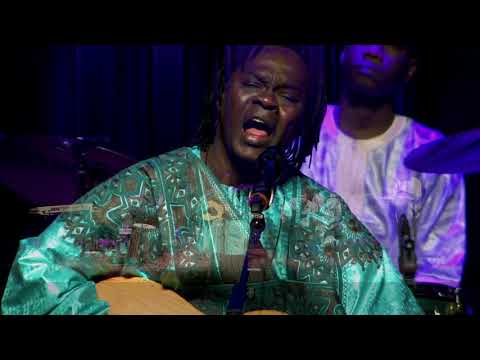
In honour of Black History Month 2021, relive the magic of Baaba Maal’s historic February 2020 residency at the Museum. Watch this video to experience highlights from the Senegalese music legend’s Duniya Salaam concerts, a celebration of diversity and world peace.
Performing on two consecutive nights in the Museum's Auditorium, Maal shared soaring melodies, rhythms, and stories that have made him one of the world’s most renowned musicians. The Senegalese singer, guitarist, and percussionist's performances both centred around the theme of Duniya Salaam, which translates to "world peace."
Maal’s shows were part of an Artist Residency at the Museum that also saw him leading youth workshops and take part in a public discussion about music’s role in uniting cultures.
Baaba’s Maal Duniya Salaam is presented in collaboration with the Embassy of the Republic of Senegal in Canada.
Bringing online Museum experiences to you is part of our mission to connect cultures and promote understanding between peoples. To learn more about how you can support the Museum by making a donation or becoming a Friend or Patron, please visit: https://www.agakhanmuseum.org/support

In this video, I'll be discussing why members of the African diaspora—particularly those from the West—are moving to Africa, the challenges that have come up as a result, and potential solutions to help address these issues.
Enjoy and feel free to share your thoughts in the comments below! Whether you agree or disagree, I’d love to know your perspective.
Disclaimer: All views are of my own accord. This video is part of my Opinion series, where I aim to spark open discussions about various topics related to travel.
▬▬▬▬▬▬▬▬▬▬▬▬▬▬▬▬▬▬▬▬
♡ BLOG POST ON AFRICAN DIASPORANS MOVING TO AFRICA:
https://[a]www.beingchristinajane.com%2Fwestern-diasporans-moving-to-africa%2F[/a]
▬▬▬▬▬▬▬▬▬▬▬▬▬▬▬▬▬▬▬▬
♡ FOR COLLABORATIONS AND PARTNERSHIPS:
Email: christinajaneva@gmail.com
▬▬▬▬▬▬▬▬▬▬▬▬▬▬▬▬▬▬▬▬
♡ FOLLOW ME ON MY SOCIALS:
Blog: www.beingchristinajane.com
Instagram: @beingchristinajane
Tik-Tok: @beingchristinajane
Twitter: @beingcjwrites
Pinterest: @beingchristinajane
LinkedIn: Christina Jane
Thanks for watching!
Love Always,
Christina Jane ♥
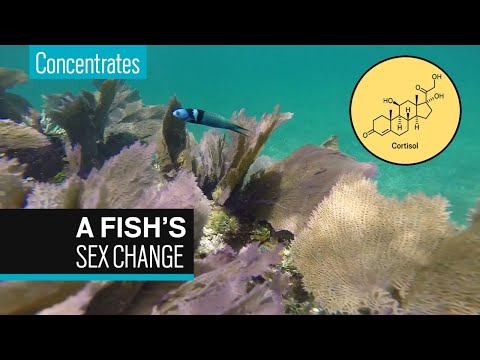
Researchers have offered a chemical explanation for sex change in a tropical fish. ↓↓More info and references below↓↓
For a tropical fish called the bluehead wrasse, sex isn’t always permanent. When a group of the fish loses its dominant male, the biggest female rapidly changes sex, taking on distinctive male coloring and producing mature sperm in as little as 8 days. Although this change is well documented, the molecular mechanisms that drive it have remained unclear. Now, an international group of researchers has offered a chemical explanation for the transformation after analyzing tissue samples from transitioning fish.
Read more:
Stress, novel sex genes, and epigenetic reprogramming orchestrate socially controlled sex change | Science Advances
https://advances.sciencemag.or....g/content/5/7/eaaw70
Music: “English Country Garden” by Aaron Kenny.
Stay up to date with the most important chemistry news.
Subscribe to C&EN's newsletter at cenm.ag/speakingsignup.