- General Videos
- Music
- Economics
- Health
- Travel & Events
- History
- Psychology
- Spirituality
- Movies
- News & Politics
- Kmtyw Combat Sciences
- Ɔbenfo Ọbádélé Kambon Videos
- Ɔbenfoɔ Kamau Kambon: Black Liberation Philosophy
- Science, Tech, Engineering and Math
- Permaculture
- Self-Sustainability
- Living Off Grid
- Yoruba Language Learning
- Education
- Mmɔfra Adesua
- Nana Kamau Kambon Playlist
- Livestream
- Komplementarity Kouples and Revolutionary Singles
- Abibitumi Film Series
- Decade of Our Repatriation
- Live
Top videos




"2AM in Venezuela" (OFFICIAL VIDEO): https://youtu.be/GtvkwgbVKF8
BLACK WINTER (Full Album): https://youtube.com/playlist?list=PLJSMFuicKjJ46p1K9TlqZPRGFSd0M5z9U&si=4WG_YXCGJinM6XEN
Join the Patreon for exclusive videos that you won't find on Youtube: https://www.patreon.com/NTD1814
S U P P O R T
Cash App - $NelsonAmadeus
PayPal- GlobalHitsWorld@gmail.com
EMAIL - KingNeferkare@gmail.com
Twitter @NTDessalines
Instagram @NelsonAmadeus
TURN ON POST NOTIFICATIONS.
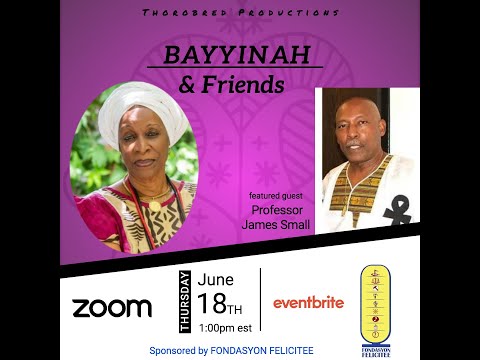




Welcome to Powered by Nyame, the YouTube channel that takes spirituality, history, and cultural data seriously and offers fascinating and useful insights. This week we take a fresh look at what should happen before parenthood. We expose the concept of "planned parenthood" and offer four (4) principles to guide men and women who desire children and family. Stay tuned!
Join this channel to get access to perks:
https://www.youtube.com/channe....l/UCykQ4Bi0UQj7LcL-2


Machel Montano x Tempa x Travis World - Tempa Wine
Buy/Stream - https://monkmusic.link/tempawine
Don't forget to SUBSCRIBE: http://bit.ly/1daMZwo
Song Credits:
Song Title - Tempa Wine
Artist - Machel Montano x Tempa
Producer - Travis World
Composers/Writers - Machel Montano, Travis Hosein, Rebecca Alexander, Shane Howell, Emmanuel Rudder, Kernal Roberts, Dwain Antrobus, Patrice Roberts
Machel Montano recorded by - 1st Klase at Baby Monster Studio Trinidad
Tempa recorded by - I.Y.K.Y.K Ent at Studio Impact
Mixed & Mastered by - Travis World
Contains a sample of “Tempa Wine” by Patrice Roberts x Machel Montano
Record label - Monk Music / Travis World Music
Follow the Team:
https://www.instagram.com/machelmontano/
https://www.instagram.com/tempa_music._/
https://www.instagram.com/travisworldmusic/
https://www.instagram.com/emmanuelallanrudder/
https://www.instagram.com/stud....ioimpact_productionz
https://www.instagram.com/iykyk_ent_/
Follow Machel Montano:
X | https://www.x.com/MachelMontano
Instagram | https://www.instagram.com/machelmontano
Facebook | https://www.facebook.com/MachelMontanoMonk
Spotify | http://bit.ly/MM-spotify
Soundcloud | https://soundcloud.com/machelmontano
Follow Monk Music:
Instagram: https://www.instagram.com/monkmusicgroup
Facebook: https://www.facebook.com/monkmusicgroup
X: https://x.com/monkmusicgroup


Ɔbenfo Ọbádélé Kambon is a world-renowned master linguist, scholar and the architect of Abibitumi the oldest and largest Black social education network on the planet.In this eye-opening reasoning, Ɔbenfo Ọbádélé Kambon breaks down why Black anti-amerikkkans who move to Ghana and continue earning in u.s. dollars can experience a far better quality of life. From affordable housing to lower costs of goods and services, Ghana offers a lifestyle that many in the krakkkaville can only dream of.Please click link below to learn more about Ɔbenfo Ọbádélé Kambon and his work:https://www.repatriatetoghana.....comhttps://www.abibi Catch 'I NEVER KNEW RADIO for Roots, Rock, Reggae Music!Hosted by Jr a.k.a 'The Bald Head' of 'I Never Knew TV'📅 Sundays: 9 - 11 AM EST📅 Wednesdays: 8 - 10 AM EST📅 Thursdays: 10 AM - Noon ESTListen live: https://wloy.org/listen/#ghana #ineverknewtv


**LINK BELOW FOR IN-CLASS USE INSTRUCTIONS**
Virtual Plant Cell: Into Aquaporins highlights the important role that aquaporin proteins play in shuttling water, carbon dioxide and other molecules vital to good plant health, into and out of plant cells.
See https://plantenergy.edu.au/outreach/resources for materials to support classroom use of VPC: Into Aquaporins. This is a curriculum-aligned resource that addresses topics including diffusion across membranes, transcription and translation. This video can also be used with the lesson plan resource: Planting Science: Classifying Systems in Cells (year 7-10), developed by the ARC Centre of Excellence for Translational Photosynthesis: http://photosynthesis.org.au/years7-10/
Virtual Plant Cell (VPC) is a suite of educational virtual reality experiences created by the ARC Centre of Excellence in Plant Energy Biology. Explore and learn about the sub-microscopic inner world of a plant. www.plantenergy.edu.au/VPC
Subtitled. Full transcript below.
CREDITS:
3D Modelling and Animations: Peter Ryan, Tail Art, www.peterryanart.com.au
Graphic and Logo Design: Chris Brown, Eyecue Design, www.eyecue.com.au
Music: Jim Kennedy, Audiosimian, www.audiosimian.com
Voice Over: Glenn Hall
Science from the ARC Centre of Excellence in Plant Energy Biology with support from the ARC Centre of Excellence for Translational Photosynthesis. Project led by Karina Price and the researchers of the ARC Centre of Excellence in Plant Energy Biology.
Funded by the Australian Research Council.
TRANSCRIPT:
Plants are amazing. They create energy from sunlight and they use this energy to create what we use for our food, fuel and fibre, and this takes us on a journey deep into the inner world of a plant cell.
Plant cells collect sunlight and use it to convert water and carbon dioxide into sugar. This process is called photosynthesis. Photosynthesis happens inside the many green chloroplasts found around a plant cell.
The movement of water, carbon dioxide and other molecules like nitrogen, sugars and salts are vital for good plant health.
But how do water and other solutes get into the cell? Aquaporins are here to help. Aquaporins are tiny protein channels that are created in plant cells. They facilitate diffusion, the movement of important solutes, across cell membranes.
Aquaporins can be found in different membranes of the cell.
Water, carbon dioxide, and more is moved across these membranes, via aquaporin channels, as required.
Let’s see how plant cells create aquaporins when needed.
Proteins like aquaporins are coded for by genes. This is a sequence of information within a cell’s DNA. A message, called RNA, is first created from a gene through a process called transcription.
Messages move out of the nucleus to the ribosome. Here, the RNA message is “read” to create an aquaporin protein. This process of building a protein from an RNA message is called translation.
Aquaporins, like all proteins in a cell, have a unique structure. An aquaporin’s main function is to act as a channel that sits in a membrane. The aquaporin’s structure reflects this role.
Through research we can come to understand how aquaporins work, and how they work best. We can apply this knowledge to produce higher yielding crop plants by maximising their photosynthesis, improving their salt tolerance and enhancing their ability to survive challenging environmental conditions. And more efficient and resilient crops will ensure a secure food future.

tts donations here/ https://streamlabs.com/ishowspeed
FOLLOW ME 👀 http://link.me/ishowspeed
MERCH 👕 - https://speed.store/
MEMBERSHIPS ✅ - https://www.youtube.com/c/IShowSpeed/join
for donations tts/ Media Request here
https://streamlabs.com/ishowspeed/tip
IG: https://www.instagram.com/isho....wspeed?igsh=MXNveXVu
X: https://x.com/ishowspeedsui?s=21
Snap : https://snapchat.com/t/IeuoJ50Y
Discord: https://discord.gg/ishowspeed
JOIN MY OTHER CHANNELS
YT Live speedy: https://youtube.com/@LiveSpeed....y?si=Sd4QiWsrk-iGX7f
YT Speedy Boykins: https://youtube.com/@speedyboy....kins7869?si=0jMDTQQs
YT Speeduniverse : https://youtube.com/@SpeedUniv....erse?si=XUMYeIWoUY4T


On this very special episode, the son of the Black Messiah blesses the trap with some revolutionary knowledge. Fred Hampton was a 21 year old Black Panther leader who was assassinated in his Chicago apartment in 1969. His son, Fred Hampton Jr. continues the struggle today and gives some insight into the making of the film 'Judas and The Black Messiah' which was based on his father's life.
Plus, Chairman Fred Hampton Jr. explains how the revolutionary struggle continues today and gives an update on the many political prisoners still locked up. This is the coldest podcast!
Hit Our Website for more info: https://www.85southshow.com/
Get our custom merchandise: https://85apparelco.com/
Subscribe To our Channel: bitly.com/85tube
WATCH KARLOUS' MILLER's COMEDY SPECIAL! https://vimeo.com/ondemand/kar....lousmillerbuyanymean
FOLLOW THE CREW
KARLOUS MILLER - https://www.facebook.com/karlousm/
DCYOUNGFLY - https://www.facebook.com/DcYoungFly1/
CHICO BEAN - https://www.facebook.com/OldSchoolFool/
Director - JOE T. NEWMAN - www.ayoungplayer.com
Producer CHAD OUBRE - https://www.instagram.com/chadoubre/
Producer - LANCE CRAYTON - https://twitter.com/Cat_Queso157
It's Jon - https://www.instagram.com/holaj_o_n/


#TheNewBlackMind
► Subscribe to Transatlantic Productions 💥Smash The LIKE Button👍🏿 Share↗️ & hit the Notifications Bell 🔔
► Donate so we can complete the upload https://www.gofundme.com/tapvideo
► Cash App: $Tapvideo $Moneymark0730 $BrotherRonn
► Share on video on all Social Media.
► Website https://tapvideo.blogspot.com
https://www.facebook.com/Tapvi....deocom-7441435789873
► Back up Channels:
https://www.youtube.com/channe....l/UCs9-wRHfFb7v7RQAi
https://www.youtube.com/user/savejamaica


Encircled by one of the world’s largest enclosed lagoons, the 101st French department is a real cultural crossroads between Africa, the Indian Ocean and Europe. This film by Pierre Brouwers is the true-to-life portrait of an island where little villages live in pace with age-old customs, where nature reveals a surprise package of flora and fauna. A guaranteed change of scenery… -
Follow us on social media :
Facebook : https://www.facebook.com/BestDocumentaryTV