- General Videos
- Music
- Economics
- Health
- Travel & Events
- History
- Psychology
- Spirituality
- Movies
- News & Politics
- Kmtyw Combat Sciences
- Ɔbenfo Ọbádélé Kambon Videos
- Ɔbenfoɔ Kamau Kambon: Black Liberation Philosophy
- Science, Tech, Engineering and Math
- Permaculture
- Self-Sustainability
- Living Off Grid
- Yoruba Language Learning
- Education
- Mmɔfra Adesua
- Nana Kamau Kambon Playlist
- Livestream
- Komplementarity Kouples and Revolutionary Singles
- Abibitumi Film Series
- Decade of Our Repatriation
- Live
Top videos


Welcome to Africa Reacts in this video we React to Animated Kids Series Made in Uganda thats Challenging the Industry . Watch here https://bit.ly/I-love-myselfKunda & Friends, the vibrant African music-led animated series about friendship and fun! Join Kunda and his friends Sana, Fela, Ella & Leo as they embark on adventures filled with laughter, music, & heartwarming life lessons.Africans React to Animated Kids Series Made in Uganda that's Challenging the Industry https://youtu.be/2r4aYBY8Q60 #africareacts #reaction -~-~~-~~~-~~-~-


The founder of Chicago's pioneering Digital Youth Network (DYN) describes how the organization empowers young people with critical digital literacy skills that make them academically and professionally competitive.
For more resources, visit: http://www.edutopia.org/nichol....e-pinkard-digital-li
Subscribe to the Edutopia Weekly newsletter: https://www.edutopia.org/go/edutopia-weekly
*Follow us here:*
Official Website: https://edutopia.org
YouTube: https://www.youtube.com/c/edutopia
Facebook: https://www.facebook.com/edutopia
Twitter: https://twitter.com/edutopia
Instagram: https://www.instagram.com/edutopia/
© 2013 George Lucas Educational Foundation
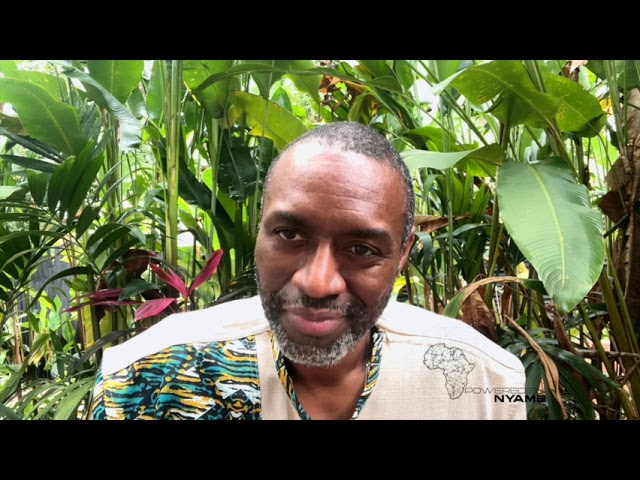


#kenya #president #ruto agreed multiple deals with #corrupt #warlords the #usa has serious implications for #kenyans, their neighbours, #haitians and Africans across the continent. The deals suggest detrimental state crimes are being planned for Kenyans.




↓TRACKLIST↓ Vol.2
1. Douga : 00:00
2. Kedo : 12:38
3. Massane Cissé : 21:25
4. Toubaka : 27:52
5. Siiba : 31:49
6. Kemé Bourema : 41:59
7. Nina : 56:41
8. Malisadio : 01:00:02
9. Toutou Diarra : 01:04:25
10. Djandon : 01:18:50
↓TRACKLIST↓ Vol.1 ▷▷ http://bit.ly/2ys7LYY
1. N'na
2. Tara
3. Mikossaya
4. Djoliba
5. Conakry
6. Fouaba
7. Minawa
8. Souaressi
9. P.D.G. - O.E.R.S.
10. Hellaya
11. Touyendé
12. Namatimbaye
13. Tinkisso
14. Sakhodougou
↻ ÉCOUTEZ / TÉLÉCHARGEZ la compilation "Sory Kandia Kouyaté -
The Syliphone Years : La voix de la Révolution Vol.1" : http://smarturl.it/9pxc9o
↻ ÉCOUTEZ / TÉLÉCHARGEZ la compilation "Sory Kandia Kouyaté -
The Syliphone Years : La voix de la Révolution Vol. 2": http://smarturl.it/o2kjcj
Sory Kandia Kouyaté & L'Ensemble National Djoliba & Kélétigui Et Ses Tambourinis
Pays : Guinée
Label : Syliphone
Production : Syllart Records / Sterns Music
Année : 2012
The Syliphone Years
Au lendemain de la décolonisation de la Guinée, le nouveau président Sékou Touré s'affirme comme le promoteur d'une réhabilitation de l'authenticité africaine face au déni colonial des cultures colonisées. Dans une perspective d'unité nationale et panafricaine, les artistes obtiennent le statut de fonctionnaire d'état et sont encouragés par le gouvernement à composer et écrire de nouvelles chansons dans un style plus moderne, tout en puisant dans le répertoire des récits historiques et des musiques ancestrales de l'aire Mandingue. Le fer de lance de cette politique n'était autre qu'un label d'état, le label Syliphone, dont les enregistrements sont de formidables témoignages du dynamisme et des richesses culturelles d'un peuple à l'aube de son indépendance qui porte au monde la voix de sa révolution.
► Sory Kandia Kouyaté
Le chanteur guinéen est sans aucun doute celui qui aura permis à la musique mandingue de toucher les coeurs, au-delà des cultures. Fils, petit-fils et arrière-petit-fils de djéli, Sory Kandia a appris les arts du verbe et du ngoni, luth traditionnel. Il a aussi appris tous les contes et légendes, tous les mythes fondateurs des royaumes du Mandé, de Soundiata Keïta l’empereur infirme, à Sadio, la fille à l’hippopotame.
Son prestige, cependant, il l’a tiré de l’outil dont il se sert le mieux : sa voix. Claire, forte, parfaitement maîtrisée. Et aussi de sa capacité à moderniser les chants anciens.
Conteur privilégié du parti de l’indépendance, il se voit confier directement par le président Sékou Touré la direction de l’Ensemble instrumental et choral de la ’’Voix de la Révolution’’ créé le 4 janvier 1961. La mission de l’Ensemble est claire : composer, adapter, orchestrer et interpréter les airs populaires, pour que demeure en mémoire l’histoire de la patrie. L’expérience apparait comme un véritable laboratoire de la musique traditionnelle africaine et Sory Kandia devient la ’’Voix de l’Afrique’’ avant Miriam Makéba !
Sur cet opus de 2 CD, nous présentons deux facettes de sa musique, la contemporaine et la traditionnelle pour expliquer pourquoi aujourd’hui, près de quarante ans après sa mort, il reste un artiste aimé et respecté.
(Texte : J.Dayan / Syllart Records - Source : Jeune Afrique)
↻ ÉCOUTEZ / TÉLÉCHARGEZ la compilation "Sory Kandia Kouyaté -
The Syliphone Years : La voix de la Révolution Vol.1" : http://smarturl.it/9pxc9o
↻ ÉCOUTEZ / TÉLÉCHARGEZ la compilation "Sory Kandia Kouyaté -
The Syliphone Years : La voix de la Révolution Vol. 2": http://smarturl.it/o2kjcj
▷ Abonnez-vous à Syllart Records : http://bit.ly/2vGqE5i
✔ Likez #Syllart sur FACEBOOK - https://facebook.com/Syllartrecords

On the Sea Islands along the coasts of South Carolina and Georgia, a painful chapter of American history is playing out again. These islands are home to the Gullah or Geechee people, the descendants of enslaved Africans who were brought to work at the plantations that once ran down the southern Atlantic coast. After the Civil War, many former slaves on the Sea Islands bought portions of the land where their descendants have lived and farmed for generations. That property, much of it undeveloped waterfront land, is now some of the most expensive real estate in the country.
But the Gullah are now discovering that land ownership on the Sea Islands isn’t quite what it seemed. Local landowners are struggling to hold on to their ancestral land as resort developers with deep pockets exploit obscure legal loopholes to force the property into court-mandated auctions. These tactics have successfully fueled a tourism boom that now attracts more than 2 million visitors a year. Gullah communities have all but disappeared, replaced by upscale resorts and opulent gated developments that new locals — golfers, tourists, and mostly white retirees — fondly call “plantations.”
Faced with an epic case of déjà vu, the Gullah are scrambling for solutions as their livelihood and culture vanish, one waterfront mansion at a time.
Subscribe to VICE News here: http://bit.ly/Subscribe-to-VICE-News
Check out VICE News for more: http://vicenews.com
Follow VICE News here:
Facebook: https://www.facebook.com/vicenews
Twitter: https://twitter.com/vicenews
Tumblr: http://vicenews.tumblr.com/
Instagram: http://instagram.com/vicenews
More videos from the VICE network: https://www.fb.com/vicevideos


http://www.ted.com "I am a mathematician, and I would like to stand on your roof." That is how Ron Eglash greeted many African families he met while researching the fractal patterns hed noticed in villages across the continent.
TEDTalks is a daily video podcast of the best talks and performances from the TED Conference, where the world's leading thinkers and doers are invited to give the talk of their lives in 18 minutes -- including speakers such as Jill Bolte Taylor, Sir Ken Robinson, Hans Rosling, Al Gore and Arthur Benjamin. TED stands for Technology, Entertainment, and Design, and TEDTalks cover these topics as well as science, business, politics and the arts. Watch the Top 10 TEDTalks on TED.com, at
http://www.ted.com/index.php/talks/top10

What happened to all of the universe's antimatter? Can a particle be its own anti-particle? And how do you build an experiment to find out? In this program, particle physicists reveal their hunt for a neutrino event so rare, it happens to a single atom at most once every 10,000,000,000,000,000,000,000,000 years: far longer than the current age of the universe. If they find it, it could explain no less than the existence of our matter-filled universe.
PARTICIPANTS: Janet Conrad, Andrea Pocar, Lindley Winslow
MODERATOR: Natalie Wolchover
MORE INFO ABOUT THE PROGRAM AND PARTICIPANTS: https://www.worldsciencefestiv....al.com/programs/nuts
This program is part of the BIG IDEAS SERIES, made possible with support from the JOHN TEMPLETON FOUNDATION.
- SUBSCRIBE to our YouTube Channel and "ring the bell" for all the latest videos from WSF
- VISIT our Website: http://www.worldsciencefestival.com
- LIKE us on Facebook: https://www.facebook.com/worldscience...
- FOLLOW us on Twitter: https://twitter.com/WorldSciFest
TOPICS:
- Panelist Introductions 0:08
- How was antimatter discovered? 1:03
- Conditions required to detect antimatter 3:13
- What are Majorana particles? 4:57
- Who was Ettore Majorana? 7:27
- How would we know if a neutrino is a Majorana particle? 9:02
- Experiments for detecting neutrinoless double-beta decay 12:12
- When did we start looking for neutrinos? 15:02
- IceCube Neutrino Observatory 18:34
- Other types of neutrinos 21:35
- Detecting neutrinos from the sun 24:24
- How did we figure out how to detect neutrinoless double-beta decay?26:44
- How far are we from producing results from the research? 30:45
- GERDA experiment 32:38
- How big of a deal would it be if we detect neutrinoless double-beta decay? 35:38
- What would it mean if neutrinoless double-beta decay doesn’t exist? 42:05
- Are we at the limit of the size of our detectors? 46:00
- Running experiments underground 48:08
- Predictions of when the decay will be seen 53:10
- Is there any evidence of the annihilation of matter and antimatter? 55:12
PROGRAM CREDITS:
- Produced by Justin Weinstein
- Associate Produced by Laura Dattaro
This program was recorded live at the 2018 World Science Festival and has been edited and condensed for YouTube.

www.Farmers.co.ke is the site for authoritative multimedia agricultural and agribusiness content.
#FarmKenya
Visit us today for farming news, agribusiness tips, practical expert advice and industry updates.
SMS: 22071



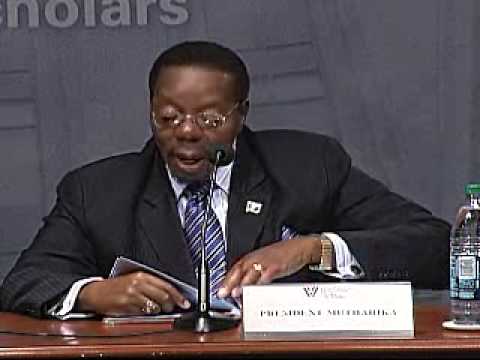
- In the very first episode of the show, Charlie talks to City College professor Leonard Jeffries about a controversial speech he delivered on July 20, 1991. -- Journalists Jerry Nachman, Utrice Leid, and Sam Roberts debate Professor Jeffries's contentious ideas. -- David Grubin discusses his four-hour PBS documentary about former President Lyndon Baines Johnson, "LBJ: The American Experience." --Charlie remembers jazz musician Miles Davis with performance clips of the legendary trumpeter. (Not Included because of music rights that we do not own or have permission to utilize) People in this videoUtrice LeidJerry NachmanDavid GrubinLeonard JeffriesMiles DavisSam Roberts** Link to program transcript https://charlierose.com/videos/28319Leonard Jeffries and his ideas about race, history, and cultural politics have caused a raging controversy both in the halls of academia and in American society at large. Vilified in some quarters as a racist and demagogue, Jeffries has also been hailed as an educator who uses his classroom to raise the consciousness of African Americans. His career as chairman of the Department of African-American Studies at the City College of New York has “given a sense of urgency to the notion of expanding African-American studies in classrooms everywhere,” according to Emerge correspondent Michael H. Cottman. “It also has highlighted the growing concern for … black scholars who are now subject to ridicule and branded as incompetents and anti-Semites, as well as being second-guessed by those who object to blacks reexamining world history and offering a dramatically different perspective on the African impact on society.”In his capacity as a college professor and also as a speaker in public forums, Jeffries has stood as an exponent of several controversial theories: that the presence of different levels of melanin—a skin coloration pigment—has caused biological and psychological differences between blacks and whites; that the slave trade was run and financed by wealthy Europeans, including Jews; and that Africa’s role as a force in the creation of modern Western civilization has been systematically undermined by white, Eurocentric historians.Leonard Jeffries was born and raised in Newark, New Jersey, the older of two sons in a close-knit blue-collar family. “It was an extraordinarily happy home,” he recalled in New York. “I grew up with the idea of becoming a lawyer to save the race in the civil-rights movement and to be mayor of Newark.” Like other black youngsters coming of age in the late 1940s and early 1950s, Jeffries faced racism from his white schoolmates as well as from some of his teachers, but he buried his rage and strove to excel. He was popular enough to be elected president of his grammar school class and later president of his high school class.Jeffries won a scholarship to Lafayette College and arrived there in 1955 as one of four black students on the campus that year. An honors student almost from the outset of his undergraduate years, he decided to pledge the only fraternity on campus that would accept black members: Pi Lambda Phi, the Jewish fraternity. He was accepted and spent the last three years at Lafayette rooming with Jewish friends and participating actively in the fraternity’s affairs. “The Jews in that frat operated on the African value system—communal, cooperative, and collective,” Jeffries recounted in New York. “It was us against the world. We had very strong relationships because I was the leader…. I was trying to make them men.”In his senior year Jeffries was named president of Pi Lambda Phi, the first black in history to hold that position in the fraternity. The honor further helped to defray his college expenses by paying for his food and lodging. It also provided Jeffries with an ironic title that amused him greatly. “They called the president a Rex—I had to go through college as king of the Jews,” he told New York. “But I managed it. I managed it. Me and my Jews knew what we were about.”Graduating with honors in 1959, Jeffries won a Rotary International fellowship to study at the University of Lausanne in Switzerland. Upon his return to New York in 1961 he enrolled in the graduate program at Columbia University’s School of International Affairs. As he worked toward his master’s and doctorate degrees, he supported himself by working for Operation Crossroads Africa, a private organization that developed community projects in Africa. Jeffries’s association with Operation Crossroads Africa provided him with opportunities to spend time in Guinea, Mali, Senegal, and the Ivory Coast. In 1965, the year he earned his master’s degree, he became the company’s program coordinator for West Africa.*** Read More about Professor leonard Jeffries Here https://www.encyclopedia.com/e....ducation/news-wires- https://www.c-span.org/person/....?35272/LeonardJeffri


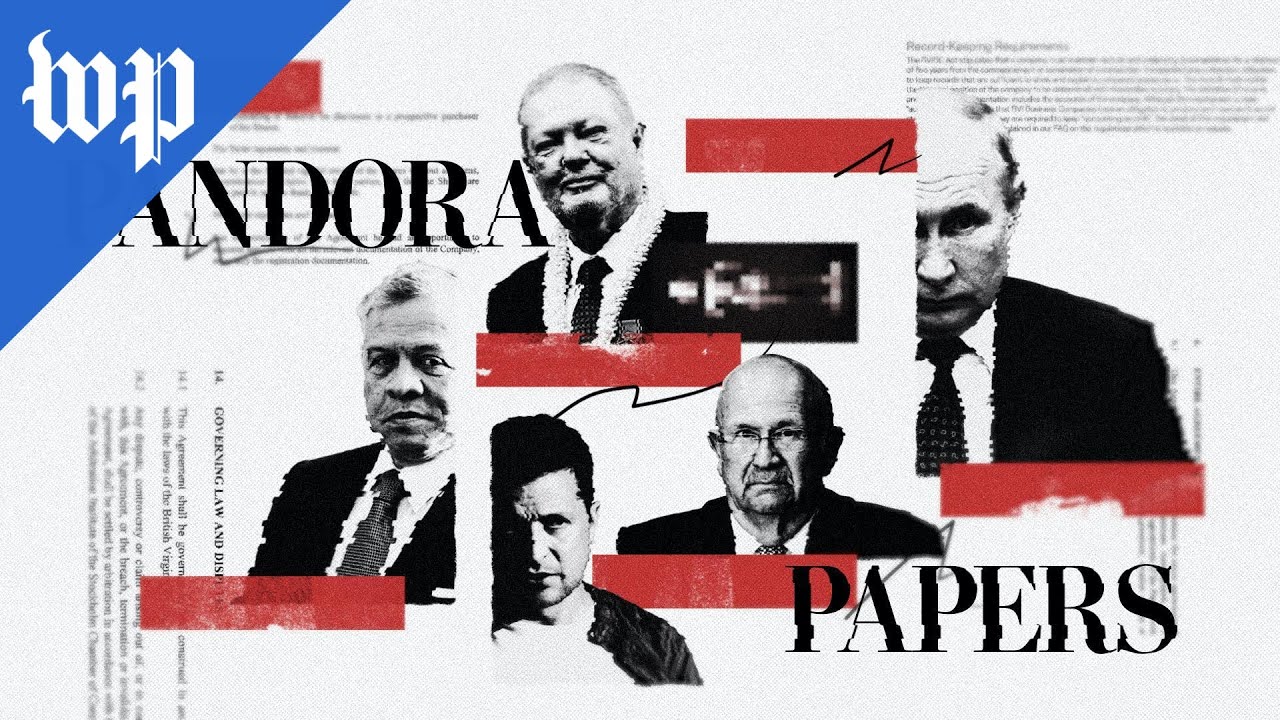

A massive trove of private financial records shared with The Washington Post exposes vast reaches of the secretive offshore system used to hide billions of dollars from tax authorities, creditors, criminal investigators and citizens around the world. Read more: https://wapo.st/3A0AVdi. Subscribe to The Washington Post on YouTube: https://wapo.st/2QOdcqK
Follow us:
Twitter: https://twitter.com/washingtonpost
Instagram: https://www.instagram.com/washingtonpost/
Facebook: https://www.facebook.com/washingtonpost/
#WashingtonPost #PostDocs #PandoraPapers