- General Videos
- Music
- Economics
- Health
- Travel & Events
- History
- Psychology
- Spirituality
- Movies
- News & Politics
- Kmtyw Combat Sciences
- Ɔbenfo Ọbádélé Kambon Videos
- Ɔbenfoɔ Kamau Kambon: Black Liberation Philosophy
- Science, Tech, Engineering and Math
- Permaculture
- Self-Sustainability
- Living Off Grid
- Yoruba Language Learning
- Education
- Mmɔfra Adesua
- Nana Kamau Kambon Playlist
- Livestream
- Komplementarity Kouples and Revolutionary Singles
- Abibitumi Film Series
- Decade of Our Repatriation
- Live
Top videos


Deep in central Mali, what was supposed to be harvest season for villagers has become a season of starvation, death and destruction.Mali's health ministry says so far hundreds of people have died from what it describes as a man-made famine, as farmers and herders fight over land.It is an ancestral conflict that takes place at the height of the dry season between the Dogon, who are traditional farmers and hunters, and the Fulani, the semi-nomadic herders of the Sahel.
The Dogon accuse the Fulani of overstepping on their farmland to feed their animals, while the Fulani accuse the Dogon of killing and stealing their cattle. And now they are killing each other.In one of the worst attacks, 160 Fulani villagers were killed in Ogossagou in March. Mamadou Togo, the chief representative of Mali's Dogon people, tells Al Jazeera the attack was not perpetrated by Dogon hunters. He says the Dogon have not attacked any Fulani villages, despite there being tensions between the two communities.However, he admits that "when other people come and attack the Dogon, they retaliate"."We cannot sit and watch people come and kill us and go back without anything. We said no, this is intolerable," he says. "When you come to kill me and I'm not dead, for instance, if I can I will kill you."
The two sides both accuse the other of being the aggressor.Mahmoud Dicko, a Fulani and a powerful leader of the High Islamic Council, blames the mutual mistrust on outside interference."I am convinced that there are other invisible, obscure forces that are planning to destabilise the entire subregion. And to succeed in this destabilisation, it is necessary to create a war between the different ethnic groups," he says.The violence is not limited to Mali, either. In neighbouring Sahelian countries, Fulanis have been in conflict with other tribes as well. Fuelling this conflict are armed groups - including al-Qaeda and Islamic State affiliates - who are stepping in and taking sides.
Some have been fighting in the war in Libya."This crisis in the centre of Mali started from the occupation of northern Mali by terrorist groups [in 2012]," says Tiebile Drame, the Malian minister of foreign affairs. "The Malian crisis is directly linked to the situation in Libya, to the collapse of Libya in 2011."Since 2013, the United Nations peacekeeping mission MINUSMA has been operating in Mali. There are currently 14,000 UN troops - among them British, Canadian and German soldiers - as well as 4,000 French combat troops and regional G5 Sahel forces in the country.Despite this, the violence is spreading, and spiralling out of control.Insurgent and rebel groups also directly target security forces, launching suicide attacks and car bombings.
MINUSMA is now the deadliest UN peacekeeping mission, with more UN troops dying in Mali than anywhere else, or at any time before. This also adds to the feeling shared by many Malians that the security forces are not a source of protection but a source of danger.Nevertheless, the $1bn a year MINUSMA mission has been renewed for another year, while Mali's government is calling for the creation of a coalition force like the ones seen in Iraq and Afghanistan to intervene in Mali.But the Dogon and Fulani leaders we spoke to are both sceptical about outside actors.
Dogon leader Togo believes France profits from the instability in the country, saying Mali's former colonial master "wants to recolonise again this country because of the wealth underground".Meanwhile, Fulani leader Dicko says the UN mission and international community are failing Mali, spending billions of dollars "for their own comfort"."I say to leave us alone, to leave the Sahelians between us," he says. "We are brothers, we have lived together for millennia. We have a mechanism to settle things between us. If we are left alone, we ourselves will find a solution to this problem."To examine who profits from Mali's state of instability, and how the violence can be brought to an end, Talk to Al Jazeera In The Field meets Dogon and Fulani leaders to try to understand this complex conflict.
Subscribe to our channel: http://aje.io/AJ
Check our website: https://www.aljazeera.com/

00:00 Yoolelle Maman
04:18 Miyaabele
08:11 Fa Laay Fanaan
13:04 Leydi Ma
16:51 Jamma Jenngii
21:15 Fanta
25:38 Laare Yoo
30:24 Senegaale Ngummee
35:27 Mamadi
40:27 Kowoni Maayo (Mi Yeewnii)
46:16 Allah Addu Jam
Recorded at Studio Nbunk, Toubab Dialaw and Real World Studios, Box.
Mixed at Real World and Abbey Road Studios.
℗ & © 2001 Palm Pictures Ltd.
Credits
Design – Michael Nash Associates
Engineer [Assistant] – Carlos Seck, Chris Clark (4), Marco Migliari
Executive Producer – D.A. "Jumbo" Vanrenen
Mastered By – Adam Nunn
Photography – Eddie Monsoon
Producer, Mixed By – John Leckie
Recorded By – Ben Findlay, John Leckie
Written-By – Baaba Maal, Barou Sall (tracks: 7), Kaouding Cissokho* (tracks: 6), Mansour Seck (tracks: 10)
-----------------
Baaba Maal has partnered with charity: water to reissue his critically acclaimed album, The Traveller. All proceeds go towards bringing clean, safe drinking water to people in developing countries. Download here: https://lnk.to/BaabaMaal-CharityWaterID
The reissue exclusively features a new 50-minute documentary of his annual Blues Du Fleuve Festival in Senegal as well as a 12-minute short film featuring Baaba performing acoustically and talking about his involvement with the charity.
View the full 50 minute documentary, and receive a download of Baaba’s album “The Traveller” with a contribution to charity: water via this link: https://lnk.to/BaabaMaal-CharityWaterID
-----------------
Subscribe : https://goo.gl/BV2SJb
Like our Facebook page : https://goo.gl/Fu74E1
Follow Us on Twitter : https://goo.gl/uv8zdj
Visit our website : http://goo.gl/LaHHZt
The Palm Channel will present some of the highlights from our catalogue, an eclectic mix of original short films, interviews from our archives exploring the roots and branches of Jamaican music, and much more.
Created by Island Records founder Chris Blackwell (Bob Marley, U2, Grace Jones etc.). Palm Pictures has always pushed musical boundaries and encouraged unlikely collaborations. Since the late 90's it has been a leader in the convergence of music and film, producing and distributing music documentaries, arthouse & foreign cinema, and music videos.


"The pygmies traditionally lived in the forest. They were mobile, semi-nomadic and relatively far from the tracks while farmers had chosen to develop their villages along the tracks. Then because of the attraction of the tracks, the pygmies finally arrived along the road too and their numbers increased. So their habitat finally became structured and developed. Moangue-Le Bosquet, which interests us because of the large population, is also interesting as regards cultural evolution. We're in a town! There's a school, a hospital, shops... So tomorrow's way of life is already starting here."
Alain Froment – Doctor of Medicine, Anthropologist - IRD Director of Research.
"It is agreed that growth is similar in all modern populations of humans. It must be remembered that growth is a change in dimensions until the adult size is attained. If the size differs between populations, this means that the processes responsible for this size are also different.
This difference in size and difference in growth reveal very rich and substantial human biological diversity.
In the case of the Pygmies, we assume that small size is an adaptation to their environment, to the forest. But what interests us is how adult size becomes established.
Six years of data gathering means that we can now sketch a growth curve for the Baka. And its immediate usefulness—seen very clearly this year—is proof that all the data that we are collecting are applicable."
Fernando Ramirez Rozzi – Anthropologist, Biologist – CNRS Director of Research.
-------------------
http://maget.maget.free.fr/A-K....ALO/Baka-cueillette.


In a shocking video recorded in Itaúna Brazil, a white man paid a black man to allow him to whip his shirtless back with a belt. With Brazil's three and a half centuries long institution of slavery, the video shocked everyone that watched it.
Please Visit our Website to get more information: https://blackbraziltoday.com/
🔔Explore the true narrative of Brazil – Subscribe to Black Brazil Today for insightful discussions on race, culture, and media.🔍
=============================
✅ About Black Brazil Today.
Welcome to Black Brazil Today, a channel that explores black Brazilians' vibrant and diverse experiences✊. Get into our in-depth race, culture, and media discussions, highlighting Brazilian society's significant strides and challenges.
Join us as we dissect racial dynamics, celebrate black Brazilian culture, and amplify voices often unheard. From music and movies to social movements, we bring you the real stories shaping black Brazil's narrative. Subscribe to be part of a community committed to truth, representation, and change. 🎥🌍💬
🔔 Let's Explore the untold stories – Subscribe to Black Brazil Today for the latest on black Brazilians in news, music, and entertainment. 🎵📰
https://www.youtube.com/@black....braziltoday3316/tuto
=================================
#violence #slaveryinbrazil #racebrazil #slaverystillexists #terriblejokes #blackbrazilians #afrobrazilians #slaveera #slaveryinbrazil #blackconsciousness
⚠DISCLAIMER: We do not accept any liability for any loss or damage incurred from you acting or not acting as a result of watching any of our publications. You acknowledge that you use the information we provide at your own risk. Do your research.
Copyright Notice: This video and our YouTube channel contain dialogue, music, and images that are the property of Black Brazil Today. You are authorized to share the video link and channel and embed this video in your website or others as long as a link back to our YouTube channel is provided.
© Black Brazil Today
Merch coming soon 🔥


Don't forget to subscribe: https://bit.ly/2Hb8hjx
Watch more interesting videos: https://bit.ly/34ogCaw
Follow Channels Television On:
Facebook: https://www.facebook.com/channelsforum/
Twitter: https://twitter.com/channelstv
Instagram: https://www.instagram.com/chan....nelstelevision/?hl=e
Get more news on our website: https://www.channelstv.com/
#ChannelsTv

Greening Deserts is an economical, educational, cultural, social, scientific and sustainable project to reduce desertification and global warming. http://www.greening-deserts.com
Greening Deserts sustainable agriculture and greenhouse farming projects using classical greening or gardening methods but also new and alternative techniques like hydroponics, permaculture and vermaculture.
Greening Deserts projects are for arid or dry, hot or cold regions. We offer also professional greening services and solutions for coastal, subtropical, cold and semi-arid areas nearby water sources like lakes, rivers, seas or oceans!
Download the official press releases and media package:
http://www.greeningdeserts.com..../greeningdeserts_med
Feel free to use and share the material.
The project is in development, non profit, NGO (at the moment) and needs any support in this stage! If you can’t spend money but want help a bit, you can share, like and comment, give constructive advises, recommendations or suggestions.
General information:
Greening Deserts or dry areas with sustainable irrigation and renewable energy. Using filtered ocean water, sharing systems overground and underground. Special desert plants can produce fast topsoil and create partwise shadows for plants around. Another great idea is to use bamboo water pipelines to reach dry areas or far regions. We have long time this idea now it is time to realise! We want to start everywhere it’s possible to get back topsoil, especially in dry countries like Egypt, Libya, Algeria, Tunisia, Morocco, Spain, Lebanon, Syria, Saudia Arabia, Qatar, UAE, Iran, Pakistan, India, China, etc.
To accelerate the process professional greenhouses will be installed and newest sustainable cultivation techniques like permaculture will be used. The project starts primarily near coasts with building Greening Camps, a kind of farm with greenhouses and containers, tents or huts. We do not just want to build Greening Camps, parks and whole woods, we also doing scientific research and want to develop better irrigation and cultivation techniques in our lab and on site.
Greening Deserts projects are also good for refugee camps. Refugees can be integrated into the greening process, building greenhouses for food, medicine and forestation of parks and woods. They could create their own healthy environment and supply. We wrote detailed articles about this theme.
The fields of horticulture, agriculture and forestry play a special role in the Greening Deserts research projects of the greening camps and research camps, so these areas are not only researched and developed but also documented and mediated. On the basis of practical and theoretical work and examples, old and new possibilities for opencast mining and post-mining landscapes are presented, improved and further developed. The first set-up of the greening campaign in the opencast mine area of Leipzig (opencast mining desert), is to create a multi-layered garden and park with test fields for regional, domestic and country-specific plant species and special species from all over the world. In greenhouses, in addition to plant breeding (young plants, cuttings or seedlings), possible environmental and climatic conditions are also simulated, in separate areas, rooms or boxes.
As also described in other parts of the concept, the focus is on the research and optimization of different types, types of bodies, lighting and irrigation methods. The improvement of soil production, soil quality and plant growth is another important focus.
The processes (irrigation, light and nutrient distribution) can be further optimized through effective and economical energy and resource consumption. These are also tasks and objectives for the sustainable greening and management of all sorts of barren and dry areas or landscapes.
Since pioneer plants populate the landscape relatively quickly in most open-cast mining plants, thus loosening and ventilating the soils, it is easier to create new plantings such as garden plants, parks and mixed forests (mixed forests). This also results in further possibilities for future landscape design, such as, for example, experimental gardening, gardening, creative and artistic design of green areas and landscape parks.
Visit the official pages for more information. Support also other sustainable projects like Desert Rice Cultivation, Desert Bamboo Project und Green Ring Africa.
We can do much more greening services, also in cities, check our connected projects and contact us for more information or if you are really interested to work with us. Maybe you want to join our reseach team?

When Moammar Gadhafi’s regime collapsed in 2011, Libya was left leaderless. In the ensuing years, rebel militias have battled one another for control of the country in a series of deadly bombings and shootouts. With fighting unavoidable and no end in sight, Libyan civilians are picking up AK-47s and rocket-propelled grenades (RPGs) to protect their families from the militias.
Of course, they don't have to look far. Libya’s parliament estimates that 15 million weapons—many left over from Gadhafi’s massive caches—are circulating within the country. That’s two and a half weapons per person. Times being what they are, many use social media to source their household arms. Since the beginning of the year, Vocativ has been monitoring Facebook and other online activity in Libya to track this phenomenon. What we discovered was a virtual arms market, complete with dealers claiming to live in Tripoli, advertised prices and hagglers in the comment section.
In a video report from on the ground in Tripoli, Vocativ producer Lindsay Snell meets with an arms dealer who refers to himself as “Batsha.” Squatting over his collection of ammunition and firearms, Batsha selects a weapon and demonstrates how to load it. “This is a Kalashkinov. It is the most popular weapon in Libya. It costs $1,200,” he says as he cocks the rifle. After rattling off a list of the other guns and missiles up for sale (their prices range from $800 to $5,000), he says, “Everyone in Libya is armed. Everyone has a weapon.”
After speaking with a handful of civilians during our visit to Tripoli, Batsha’s claim that virtually all of Libya packs heat checks out. “Everyone has to be armed. We don’t trust the militias, we don’t trust the government, we don’t trust anyone,” says university student Ahmed Klisel, AK-47 in hand. "It’s really easy to obtain weapons in Libya. An AK-47 is a necessity in every household. More households have more than one. Or they have an AK-47 and a few pistols, handguns.”
And it’s not just men who carry weapons. Fidgeting with a small handgun, single mother Hind Ahmed Benghagab says, “We never thought we would see the day where Libyan women would need guns.”
With the massive surplus of military-grade weapons and the ease of purchase, deadly armaments often wind up in the wrong hands. According to a recent U.N. report, violent militant groups from Boko Haram in Nigeria to jihadis in Syria have obtained guns and other arms from Libya. While strife and chaos is Gadhafi's endowment to the nation he ruled with an iron fist, it's the second lives of the weapons he amassed and left behind that may be his lasting and violent global legacy.
http://voc.tv/1rxGA4D
Subscribe! http://www.youtube.com/subscri....ption_center?add_use
See more on our website: http://www.vocativ.com
Follow us on Twitter: https://twitter.com/vocativ
Like us on Facebook: https://www.facebook.com/Vocativ


Sistah Iminah is an Educator, Cultural Strategist, Singer/Songwriter, Dancer, Media Personality and Oakland native, with roots in Jamaica, Texas, Nigeria, and the African world.
Her life journey can best be themed rising “From Ghetto to Goddess”. As a youth, she overcame many trials that trap young Black women in the sex trafficking & school prison pipeline. A product of Oakland’s African-centered schools and OUSD, she has dedicated her life to inspire excellence and activate achievement in the youth of today.
As an Educational activist, Sistah Iminah has been heavily influential in implementing key policies and initiatives aimed at amplifying youth voice and improving life outcomes for students of color throughout the SF Bay Area. Her life's mission is to uplift the educational and life experience for African girls and women worldwide.
* In 2016 she led the Valuing Girls Voices movement to introduce a new sexual harassment policy in the Oakland Unified School District, which was unanimously approved by the school board & implemented district-wide.
*
* In 2017 she partnered with OUSD to launch the 1st ever district-wide initiative in the nation, focused on the advancement of Black female students, the African American Female Excellence initiative (AAFE), serving as the lead consultant.
*
* In 2018 she co-created the 1st ever A-G approved African American Women's Heritage social studies course in the nation, in partnership with the San Francisco Unified School District & Stanford University.
*
* In 2019 she returned to Oakland to lead the African American Female Excellence Initiative of OUSD’s Office of Equity, as Program Manager, with the goal of improving the educational experiences and life outcomes for Black female students.
She graced the DT show to share her story on her Journey to AFRICA...
YT: https://www.youtube.com/user/fromGhetto2Goddess
IG: @queen_iminah
FB: @iminahrising


In this video, we Bla Xit meet up with Lecturer and Pan-African Activist Dr Kambon. He shares his life journey and his experience of repatriation to Africa.
This video was edited by Makonnen Sankofa. Subscribe to Makonnen's YouTube channel https://www.youtube.com/channe....l/UCiP8DHZ_eEFLJdOn7
We're appealing for donors, sponsors and paid endorsements so we can continue to produce content. bopcollective@yahoo.com
Thanks to all our Bla Xit donors.
Become a Bla Xit Messenger (Subscribers only) by sending your video clip to blaxithome@gmail.com
Special thanks to our friend and YouTube Vlogger Wode Maya for helping to set-up the Bla Xit channel. You can follow him on YouTube too https://www.youtube.com/user/MrGhanaBaby
Check out the following links:
https://www.bla-xit.com
http://www.abibitumi.tv/home
https://sankofajourney.com
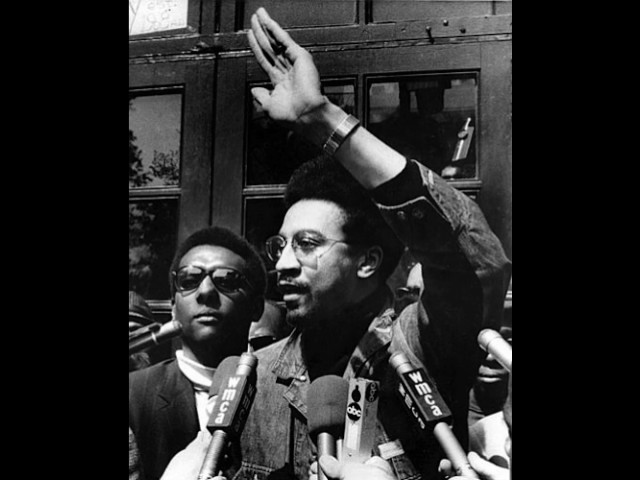

Harvard University released a 134-page report this week that detailed the school’s extensive ties to slavery and pledged $100 million for a fund for scholars to continue to research the topic. The report documents dozens of prominent people associated with Harvard who enslaved people, including four Harvard presidents. Harvard commissioned the study in 2019 as part of a wave of schools reckoning with their pasts and the ongoing legacy of racial discrimination. “Harvard’s ties to slavery begin with the founding of the institution,” says MIT historian Craig Steven Wilder, author of “Ebony & Ivy: Race, Slavery, and the Troubled History of America’s Universities.” Wilder says that while this history is not new, Harvard worked for decades to erase its complicity in slavery. “We’re really only beginning to reconcile and to really struggle with the deep ties that this institution has to slavery,” he says.
#DemocracyNow
Democracy Now! is an independent global news hour that airs on nearly 1,400 TV and radio stations Monday through Friday. Watch our livestream 8-9AM ET: https://democracynow.org
Please consider supporting independent media by making a donation to Democracy Now! today: https://democracynow.org/donate
FOLLOW DEMOCRACY NOW! ONLINE:
YouTube: http://youtube.com/democracynow
Facebook: http://facebook.com/democracynow
Twitter: https://twitter.com/democracynow
Instagram: http://instagram.com/democracynow
SoundCloud: http://soundcloud.com/democracynow
iTunes: https://itunes.apple.com/podca....st/democracy-now!-au
Daily Email Digest: https://democracynow.org/subscribe