- General Videos
- Music
- Economics
- Health
- Travel & Events
- History
- Psychology
- Spirituality
- Movies
- News & Politics
- Kmtyw Combat Sciences
- Ɔbenfo Ọbádélé Kambon Videos
- Ɔbenfoɔ Kamau Kambon: Black Liberation Philosophy
- Science, Tech, Engineering and Math
- Permaculture
- Self-Sustainability
- Living Off Grid
- Yoruba Language Learning
- Education
- Mmɔfra Adesua
- Nana Kamau Kambon Playlist
- Livestream
- Komplementarity Kouples and Revolutionary Singles
- Abibitumi Film Series
- Decade of Our Repatriation
- Live
Top videos




please donate https://www.paypal.com/cgi-bin/webscr?cmd=_s-xclick&hosted_button_id=ZPEYVFR698EKA buy books/dvds below
dvd for white side http://amzn.to/2EnJt2S
DVD for black Polgar 3 set http://amzn.to/2DJMl8N
dvd on Nadjorf http://amzn.to/2DJqvCs
DVD danny king on Najdorf http://amzn.to/2rNopAb
DVD on English for white side http://amzn.to/2GjpOl2
DVD for black side http://amzn.to/2FkZENz
Top book on english both/sides http://amzn.to/2Ee8eOA


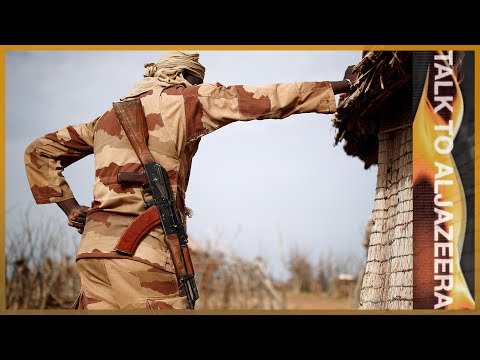

Deep in central Mali, what was supposed to be harvest season for villagers has become a season of starvation, death and destruction.Mali's health ministry says so far hundreds of people have died from what it describes as a man-made famine, as farmers and herders fight over land.It is an ancestral conflict that takes place at the height of the dry season between the Dogon, who are traditional farmers and hunters, and the Fulani, the semi-nomadic herders of the Sahel.
The Dogon accuse the Fulani of overstepping on their farmland to feed their animals, while the Fulani accuse the Dogon of killing and stealing their cattle. And now they are killing each other.In one of the worst attacks, 160 Fulani villagers were killed in Ogossagou in March. Mamadou Togo, the chief representative of Mali's Dogon people, tells Al Jazeera the attack was not perpetrated by Dogon hunters. He says the Dogon have not attacked any Fulani villages, despite there being tensions between the two communities.However, he admits that "when other people come and attack the Dogon, they retaliate"."We cannot sit and watch people come and kill us and go back without anything. We said no, this is intolerable," he says. "When you come to kill me and I'm not dead, for instance, if I can I will kill you."
The two sides both accuse the other of being the aggressor.Mahmoud Dicko, a Fulani and a powerful leader of the High Islamic Council, blames the mutual mistrust on outside interference."I am convinced that there are other invisible, obscure forces that are planning to destabilise the entire subregion. And to succeed in this destabilisation, it is necessary to create a war between the different ethnic groups," he says.The violence is not limited to Mali, either. In neighbouring Sahelian countries, Fulanis have been in conflict with other tribes as well. Fuelling this conflict are armed groups - including al-Qaeda and Islamic State affiliates - who are stepping in and taking sides.
Some have been fighting in the war in Libya."This crisis in the centre of Mali started from the occupation of northern Mali by terrorist groups [in 2012]," says Tiebile Drame, the Malian minister of foreign affairs. "The Malian crisis is directly linked to the situation in Libya, to the collapse of Libya in 2011."Since 2013, the United Nations peacekeeping mission MINUSMA has been operating in Mali. There are currently 14,000 UN troops - among them British, Canadian and German soldiers - as well as 4,000 French combat troops and regional G5 Sahel forces in the country.Despite this, the violence is spreading, and spiralling out of control.Insurgent and rebel groups also directly target security forces, launching suicide attacks and car bombings.
MINUSMA is now the deadliest UN peacekeeping mission, with more UN troops dying in Mali than anywhere else, or at any time before. This also adds to the feeling shared by many Malians that the security forces are not a source of protection but a source of danger.Nevertheless, the $1bn a year MINUSMA mission has been renewed for another year, while Mali's government is calling for the creation of a coalition force like the ones seen in Iraq and Afghanistan to intervene in Mali.But the Dogon and Fulani leaders we spoke to are both sceptical about outside actors.
Dogon leader Togo believes France profits from the instability in the country, saying Mali's former colonial master "wants to recolonise again this country because of the wealth underground".Meanwhile, Fulani leader Dicko says the UN mission and international community are failing Mali, spending billions of dollars "for their own comfort"."I say to leave us alone, to leave the Sahelians between us," he says. "We are brothers, we have lived together for millennia. We have a mechanism to settle things between us. If we are left alone, we ourselves will find a solution to this problem."To examine who profits from Mali's state of instability, and how the violence can be brought to an end, Talk to Al Jazeera In The Field meets Dogon and Fulani leaders to try to understand this complex conflict.
Subscribe to our channel: http://aje.io/AJ
Check our website: https://www.aljazeera.com/
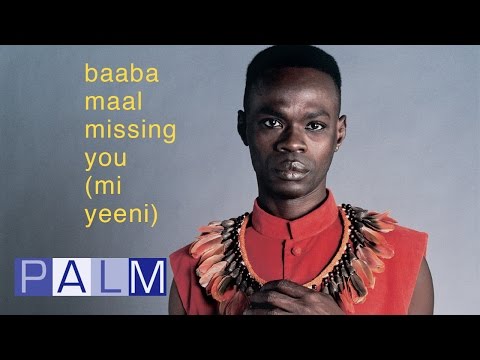
00:00 Yoolelle Maman
04:18 Miyaabele
08:11 Fa Laay Fanaan
13:04 Leydi Ma
16:51 Jamma Jenngii
21:15 Fanta
25:38 Laare Yoo
30:24 Senegaale Ngummee
35:27 Mamadi
40:27 Kowoni Maayo (Mi Yeewnii)
46:16 Allah Addu Jam
Recorded at Studio Nbunk, Toubab Dialaw and Real World Studios, Box.
Mixed at Real World and Abbey Road Studios.
℗ & © 2001 Palm Pictures Ltd.
Credits
Design – Michael Nash Associates
Engineer [Assistant] – Carlos Seck, Chris Clark (4), Marco Migliari
Executive Producer – D.A. "Jumbo" Vanrenen
Mastered By – Adam Nunn
Photography – Eddie Monsoon
Producer, Mixed By – John Leckie
Recorded By – Ben Findlay, John Leckie
Written-By – Baaba Maal, Barou Sall (tracks: 7), Kaouding Cissokho* (tracks: 6), Mansour Seck (tracks: 10)
-----------------
Baaba Maal has partnered with charity: water to reissue his critically acclaimed album, The Traveller. All proceeds go towards bringing clean, safe drinking water to people in developing countries. Download here: https://lnk.to/BaabaMaal-CharityWaterID
The reissue exclusively features a new 50-minute documentary of his annual Blues Du Fleuve Festival in Senegal as well as a 12-minute short film featuring Baaba performing acoustically and talking about his involvement with the charity.
View the full 50 minute documentary, and receive a download of Baaba’s album “The Traveller” with a contribution to charity: water via this link: https://lnk.to/BaabaMaal-CharityWaterID
-----------------
Subscribe : https://goo.gl/BV2SJb
Like our Facebook page : https://goo.gl/Fu74E1
Follow Us on Twitter : https://goo.gl/uv8zdj
Visit our website : http://goo.gl/LaHHZt
The Palm Channel will present some of the highlights from our catalogue, an eclectic mix of original short films, interviews from our archives exploring the roots and branches of Jamaican music, and much more.
Created by Island Records founder Chris Blackwell (Bob Marley, U2, Grace Jones etc.). Palm Pictures has always pushed musical boundaries and encouraged unlikely collaborations. Since the late 90's it has been a leader in the convergence of music and film, producing and distributing music documentaries, arthouse & foreign cinema, and music videos.


"The pygmies traditionally lived in the forest. They were mobile, semi-nomadic and relatively far from the tracks while farmers had chosen to develop their villages along the tracks. Then because of the attraction of the tracks, the pygmies finally arrived along the road too and their numbers increased. So their habitat finally became structured and developed. Moangue-Le Bosquet, which interests us because of the large population, is also interesting as regards cultural evolution. We're in a town! There's a school, a hospital, shops... So tomorrow's way of life is already starting here."
Alain Froment – Doctor of Medicine, Anthropologist - IRD Director of Research.
"It is agreed that growth is similar in all modern populations of humans. It must be remembered that growth is a change in dimensions until the adult size is attained. If the size differs between populations, this means that the processes responsible for this size are also different.
This difference in size and difference in growth reveal very rich and substantial human biological diversity.
In the case of the Pygmies, we assume that small size is an adaptation to their environment, to the forest. But what interests us is how adult size becomes established.
Six years of data gathering means that we can now sketch a growth curve for the Baka. And its immediate usefulness—seen very clearly this year—is proof that all the data that we are collecting are applicable."
Fernando Ramirez Rozzi – Anthropologist, Biologist – CNRS Director of Research.
-------------------
http://maget.maget.free.fr/A-K....ALO/Baka-cueillette.


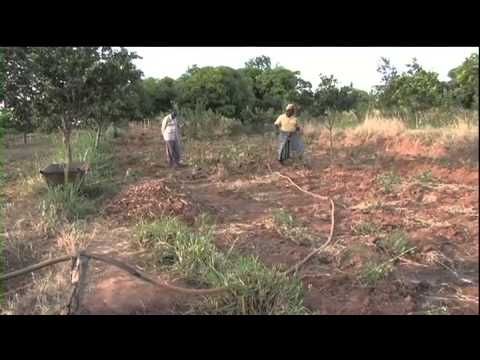

📢 “Agroecology is more than the production... it’s about our relationship with the environment and community.” For #IGrowYourFood, organic farmer Roberto Carlos tells us why planting banana trees is important for a coffee grower 🇧🇷
Find out more about the global action day: https://campaigns.ifoam.bio/igrowyourfood
🤗 Support our ORGANISATION:
https://ifo.am/Donate
🤝 Become our PARTNER:
https://ifo.am/JoinIFOAM
📩 Sign up to our NEWSLETTER:
https://ifo.am/Newsletter
▶️ Subscribe to our YOUTUBE channel:
https://ifo.am/YouTube
👍 Stay connected on FACEBOOK:
https://ifo.am/Facebook
👩💻 Join the conversation on TWITTER:
https://ifo.am/Twitter
👨💻 Follow us on LINKEDIN:
https://www.linkedin.com/compa....ny/ifoamorganicsinte

Subscribe to Our Channel
For more news visit http://www.ntv.co.ug
Follow us on Twitter http://www.twitter.com/ntvuganda
Like our Facebook page http://www.facebook.com/NTVUganda