- General Videos
- Music
- Economics
- Health
- Travel & Events
- History
- Psychology
- Spirituality
- Movies
- News & Politics
- Kmtyw Combat Sciences
- Ɔbenfo Ọbádélé Kambon Videos
- Ɔbenfoɔ Kamau Kambon: Black Liberation Philosophy
- Science, Tech, Engineering and Math
- Permaculture
- Self-Sustainability
- Living Off Grid
- Yoruba Language Learning
- Education
- Mmɔfra Adesua
- Nana Kamau Kambon Playlist
- Livestream
- Komplementarity Kouples and Revolutionary Singles
- Abibitumi Film Series
- Decade of Our Repatriation
- Live
Top videos


Don't forget to subscribe: https://bit.ly/2Hb8hjx
Watch more interesting videos: https://bit.ly/34ogCaw
Follow Channels Television On:
Facebook: https://www.facebook.com/channelsforum/
Twitter: https://twitter.com/channelstv
Instagram: https://www.instagram.com/chan....nelstelevision/?hl=e
Get more news on our website: https://www.channelstv.com/
#ChannelsTv

Stuff happens. The weather forecast says it’s sunny, but you just got drenched. You got a flu shot—but you’re sick in bed with the flu. Your best friend from Boston met your other best friend from San Francisco. Coincidentally. What are the odds? Risk, probability, chance, coincidence—they play a significant role in the way we make decisions about health, education, relationships, and money. But where does this data come from and what does it really mean? How does the brain find patterns and where can these patterns take us? When should we ditch the data and go with our gut? Join us in a captivating discussion that will demystify the chancy side of life.
This program is part of the Big Ideas Series, made possible with support from the John Templeton Foundation.
The World Science Festival gathers great minds in science and the arts to produce live and digital content that allows a broad general audience to engage with scientific discoveries. Our mission is to cultivate a general public informed by science, inspired by its wonder, convinced of its value, and prepared to engage with its implications for the future.
Subscribe to our YouTube Channel for all the latest from WSF.
Visit our Website: http://www.worldsciencefestival.com/
Like us on Facebook: https://www.facebook.com/worldsciencefestival
Follow us on twitter: https://twitter.com/WorldSciFest
Original Program Date: June 2, 2011
MODERATOR: Marcus du Sautoy
PARTICIPANTS: Amir Aczel, Gerd Gigerenzer, Leonard Mlodinow, Josh Tenenbaum
Josh Tenenbaum and an experiment in ESP. 00:00
Risk, Probability, and Chance. 02:54
Marcus du Sautoy's Introduction. 06:32
Participant Introductions. 07:27
Are we good or bad at interpreting numbers? 09:45
The Monty Hall problem. 16:00
The fight or flight math means we understand numbers? 21:50
The "numbers are important" experiment. 25:33
VerizonMath: Verizon doesn't know Dollars from Cents. 29:30
If you play a lottery and there is 1 winner in a 1000, what is your percent of winning? 35:30
How well are our brains tuned for evidential data. 39:33
What is the birthday problem? 45:15
The way probability's are phrased are as important as the numbers. 53:31
Do we have a conception of a million? 01:03:28
What is a prior? 01:09:05
Josh Tenenbaum ESP experiment results. 01:15:19
"Numbers are important" experiment results. 01:20:45
How do we get a statistical society? 01:25:25


![Oluwa [Many Rains Ago] - Quincy Jones · Letta Mbulu · The Wattsline Choir | 1977](https://i.ytimg.com/vi/A5Lnjs1r16w/hqdefault.jpg)


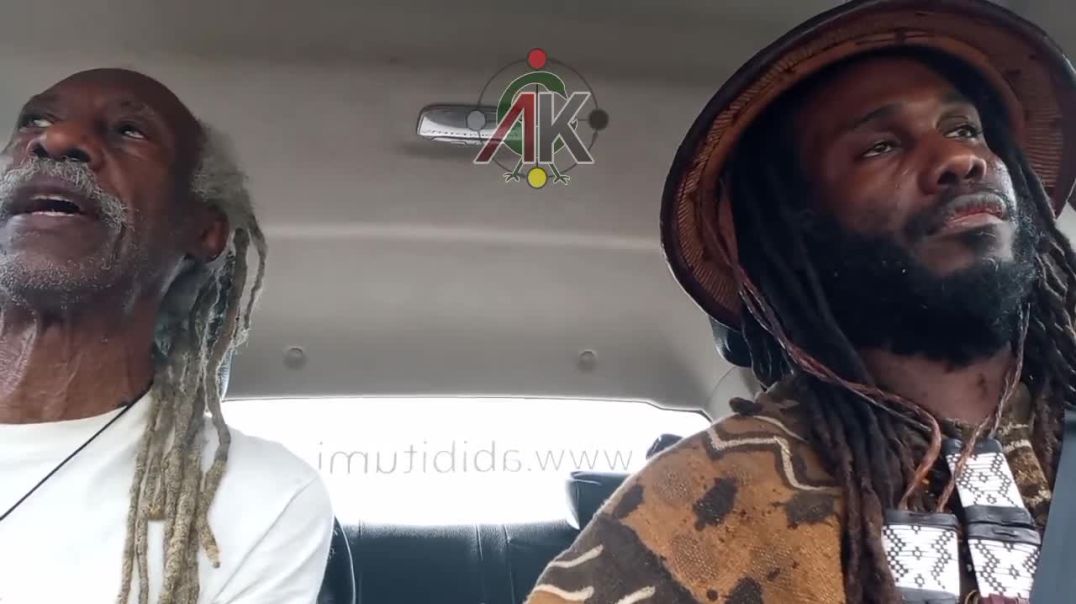
In this video, we meet up with Mamadou "Futty" Danso who is a Gambian professional footballer and he tours us around his house.
This video was recorded and edited by Makonnen Sankofa. Subscribe to Makonnen's YouTube channel https://www.youtube.com/channe....l/UCiP8DHZ_eEFLJdOn7
We're appealing for donors, sponsors and paid endorsements so we can continue to produce content. bopcollective@yahoo.com
Thanks to all our Bla Xit donors.
Become a Bla Xit Messenger (Subscribers only) by sending your video clip to blaxithome@gmail.com
Special thanks to our friend and YouTube Vlogger Wode Maya for helping to set-up the Bla Xit channel. You can follow him on YouTube too https://www.youtube.com/user/MrGhanaBaby


When in doubt, don't hesitate to ask
When something is not clear, you should go back and listen again.
The storyteller
Noah Mensah Konkorn
More from this storyteller: Interview with Noah mensah Konkorn (b)
When in doubt, don't hesitate to ask (Twi)
Once upon of time, God asked: 'Who could go to the devil and bring certain things from him?' But he wouldn't say what those things were. Nobody came forward except Kwaku Anansi. He went on his way, but had not been told what to collect. He went to a flock of birds to reason with them. He asked the birds to give him one feather each, and that he would reward them for them later. They granted him his request. He put on the feathers and Anansi became a beautiful bird. He flew back to the tree where God always sat and overheard him say that what he wanted form the devil were his sandals and staff. As soon as Anansi heard this he went on his way to the devil. The devil gave him a place to rest when he arrived. Anansi asked the devil for his staff to kill the big mosquitoes and asked him for his sandals so they wouldn't bit him in his feet. The devil gave him what he requested and as soon as he left, Anansi ran away. God asked him how he had known what to bring back. Anansi asked him about the beautiful bird and God replied he didn't know its name. Anansi answered: 'His name is: If something isn't clear, go back and listen again.'
Story type: Story
Duration:
Keywords: devil; sandals; God; instructions; mosquito; Anansi; staff; birds
Copyright video recording: © Foundation Vista Far Reaching Visuals
www.anansimasters.net
Related videos: Interview with Noah mensah Konkorn (b)
The Anansi Masters project is a digital platform developed by Vista Far Reaching Visuals and partners. At the website http://www.anansimasters.net you can find information about the story character of Anansi or Nanzi and especially many stories. The stories originated in Africa and were exported to other parts of the world through slave trade and migration where they developed independently. In Anansi Masters, the similarities and differences between the stories and storytellers can be found. Anansi Masters initiates different activities all over the world where stories from this oral tradition can be found. Anansi Masters collaborates with writers, theatre makers, filmmakers, researchers, schools and of course with many many storytellers. Discover all the results on the Anansi Masters website!
[B16]
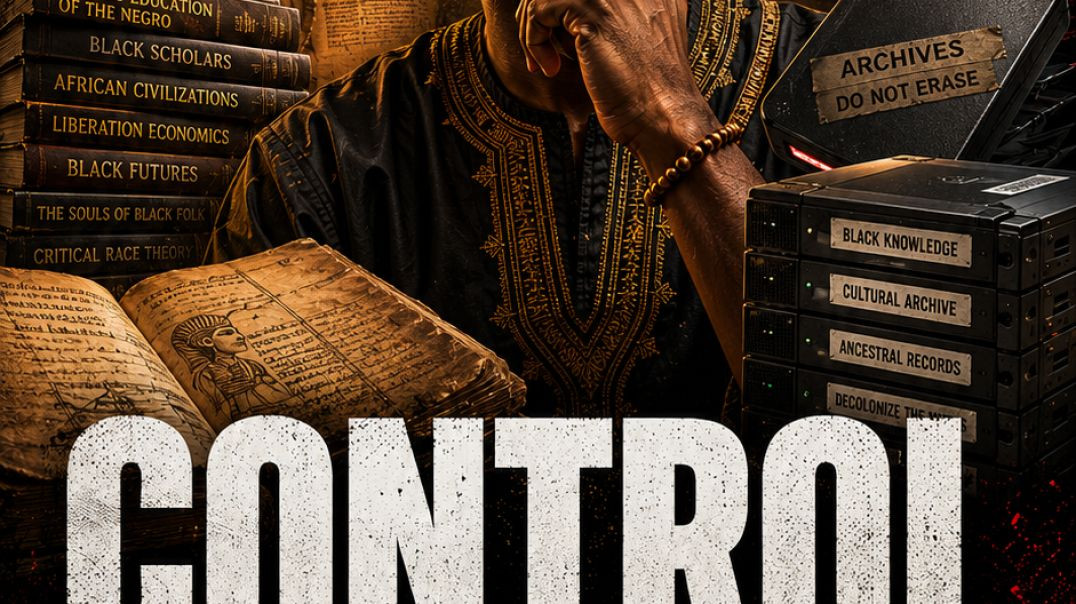

🎙 From Shoot the Breeze on the Bitter Medicine Podcast.
What happens when Black history, Black lectures, and Black books become digital-only — and then disappear? 📚⚠
Watch the full episode here: https://youtube.com/live/UvIROVXv6tI
Drop your thoughts below 👇🏾
Subscribe for Pan-African talk, Black empowerment, and nation-building. 🔔
#blackhistory #blackbooks #amoswilson #digitalcontrol #bittermedicinepodcast
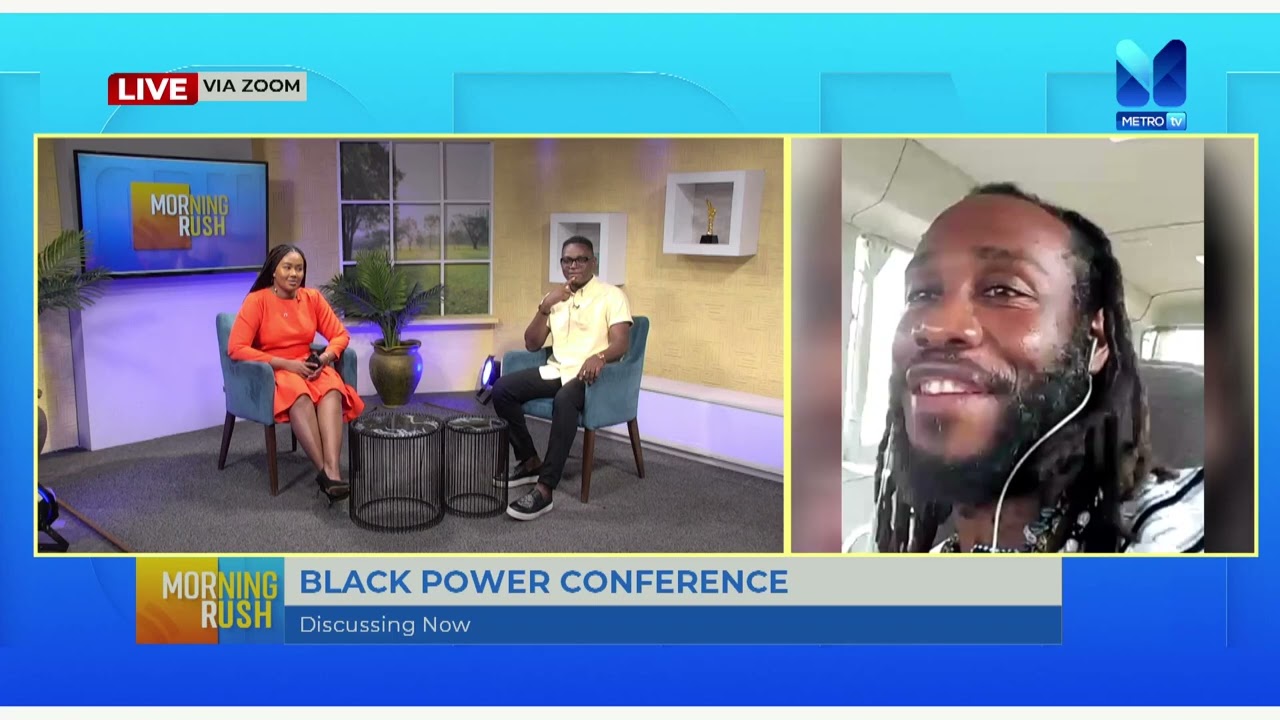

Discussing BLACK POWER CONFERENCE with OBADELE KAMBON PhD | #morningrush #metrotv
facebook: Metro TV Ghana
Instagram: @metrotv_gh
Twitter: @metrotvgh
Tiktok: @metrotvgh
Telegram: @metrotvonline
Subscribe for more videos:
https://www.youtube.com/channe....l/UCxIRHsgOnO7-bLaIf
Click this for more news:
https://www.metrotvonline.com/
![Mhenga Malcolm X: Speaks to SNCC Workers [31 December 1964]](https://i.ytimg.com/vi/v6VXaUwMC2I/hqdefault.jpg)


San Basilio de Palenque, Colombia, was declared Masterpieces of the Oral and Intangible Heritage of Humanity by UNESCO, and is also considered the first free town in America.
Explore its inspiring history and cultural legacy during your Spanish course in Colombia!
Music: Kombilesa Mi - Ma Kuagro / Son Palenque - Yo me voy
Interested in learning Spanish in Colombia? https://www.centrocatalina.com/contact.html


Scientists are attempting to map the wiring of the nearly 100 billion neurons in the human brain. Are we close to uncovering the mysteries of the mind or are we only at the beginning of a new frontier?
PARTICIPANTS: Deanna Barch, Jeff Lichtman, Nim Tottenham, David Van Essen
MODERATOR: John Hockenberry
Original program date: JUNE 4, 2017
WATCH THE TRAILER: https://youtu.be/lX5S_1bXUhw
WATCH THE LIVE Q&A W/ JEFF LICHTMAN: https://youtu.be/h14hcBrqGSg
Imagine navigating the globe with a map that only sketched out the continents. That’s pretty much how neuroscientists have been operating for decades. But one of the most ambitious programs in all of neuroscience, the Human Connectome Project, has just yielded a “network map” that is shedding light on the intricate connectivity in the brain. Join leading neuroscientists and psychologists as they explore how the connectome promises to revolutionize treatments for psychiatric and neurological disorders, answer profound questions regarding the electrochemical roots of memory and behavior, and clarify the link between our upbringing and brain development.
MORE INFO ABOUT THE PROGRAM AND PARTICIPANTS: https://www.worldsciencefestiv....al.com/programs/wire
This program is part of the Big Ideas Series, made possible with support from the John Templeton Foundation.
- Subscribe to our YouTube Channel for all the latest from WSF
- Visit our Website: http://www.worldsciencefestival.com/
- Like us on Facebook: https://www.facebook.com/worldsciencefestival/
- Follow us on Twitter: https://twitter.com/WorldSciFest
TOPICS:
- Mapping the Brain 00:00
- What is a connectome? 06:02
- Santiago Ramón y Cajal 10:18
- Is the brain signal electricity? 17:09
- Who inspired you to do this work? 25:56
- Brain development in youth 29:45
- Do the maps we have now help us explain the brain? 32:43
- A series of subtraction and progressive processes. 39:17
- What is a Von Neumann machine 46:08
- How can we develop new synapse responses in an adult brain? 50:45
This program was recorded live on 6/4/17 and has been edited and condensed for our YouTube channel. Watch the original full livestream here: https://youtu.be/VBa3BYNTA8E