- General Videos
- Music
- Economics
- Health
- Travel & Events
- History
- Psychology
- Spirituality
- Movies
- News & Politics
- Kmtyw Combat Sciences
- Ɔbenfo Ọbádélé Kambon Videos
- Ɔbenfoɔ Kamau Kambon: Black Liberation Philosophy
- Science, Tech, Engineering and Math
- Permaculture
- Self-Sustainability
- Living Off Grid
- Yoruba Language Learning
- Education
- Mmɔfra Adesua
- Nana Kamau Kambon Playlist
- Livestream
- Komplementarity Kouples and Revolutionary Singles
- Abibitumi Film Series
- Decade of Our Repatriation
- Live
Top videos



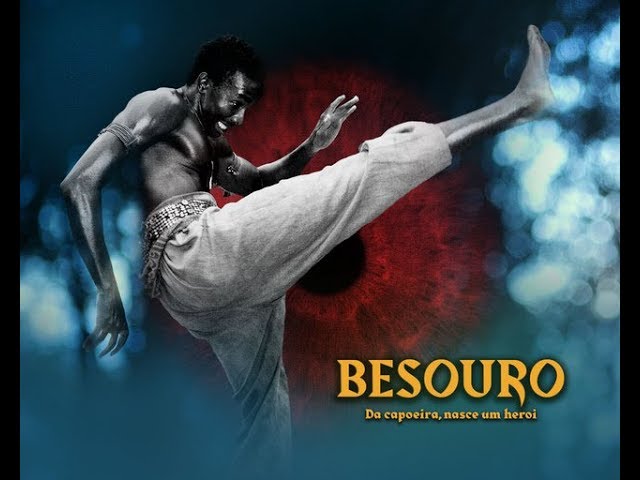



Subject: Exciting News: Ɔbenfo (Professor) Ọbádélé Kambon Wins Prestigious Publication Award!
Dear Abibitumi Community,
We are thrilled to share some wonderful news with you! Our esteemed colleague, Ɔbenfo (Professor) Ọbádélé Kambon, has been honored with the 2024 Provost’s Publication Award for the Late-Career Best Published Work Category. This recognition is for his outstanding paper titled “400 Years? Ancestors Disappear! Historical Misorientation and Disorientation in The Year of Return and the 400 Years Narrative.”
The award was presented during the 3rd College Staff Awards ceremony held on July 12, 2024, at the ISSER Conference Hall, University of Ghana. This accolade celebrates Professor Kambon’s significant contributions to African Studies and his impactful research that continues to shape our understanding of historical narratives and their implications.
We extend our heartfelt congratulations to Ɔbenfo (Professor) Ọbádélé Kambon on this remarkable achievement. His dedication, scholarly excellence, and unwavering commitment to reclaiming and preserving African history are truly inspiring. This award is a testament to his tireless efforts and profound impact in the field.
Please join us in celebrating this prestigious honor and acknowledging the outstanding work of Ɔbenfo (Professor) Ọbádélé Kambon.
Register for the Abibitumi Abibifahodie Film Festival (November 28-30, 2025) here: https://filmfestival.abibifahodie.org
Register for the Abibitumi Virtual and Hybrid Conferences here (December 5-7, 2025 and December 12-14, 2025 respectively)
Read the award-winning article here: https://obadelekambon.com/pubs..../400-years-ancestors
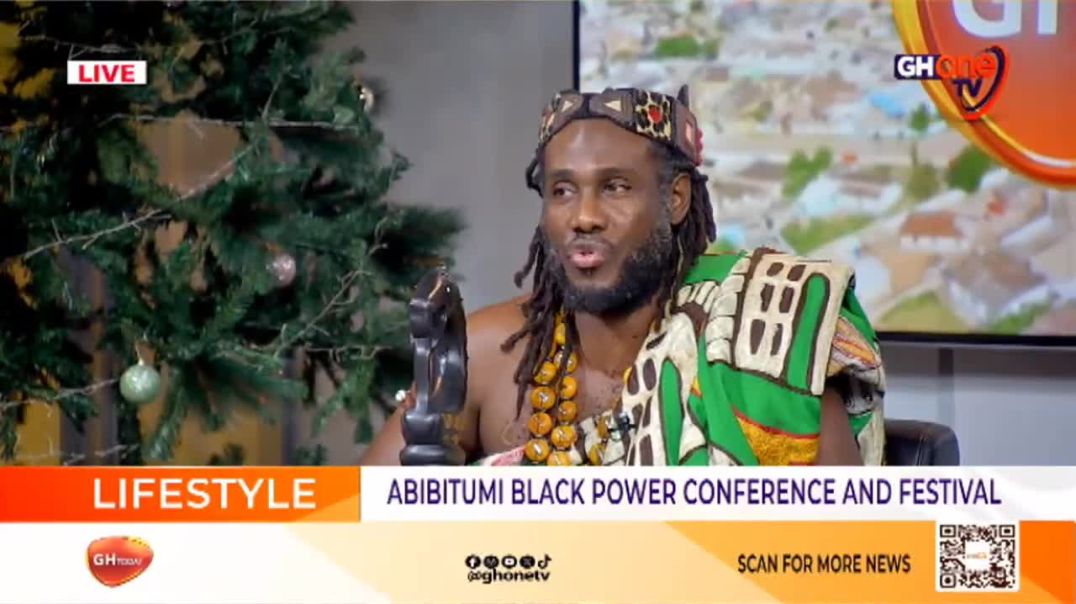
GHOne TV Interview on the Decade of Our Repatriation (DOOR) ft. Ɔbenfo Ọbádélé Kambon official lead organizer and spokesperson
Endorsed by the Office of the President, Diaspora Affairs
https://www.decadeofourrepatriation.com
https://www.abibitumi.com
![Terra D Governor - Black Power (Offical Music Video) "2020 Soca" [HD]](https://i.ytimg.com/vi/45JYRvVZofI/maxresdefault.jpg)

🔔Subscribe: https://marketing.julianspromos.com/soca2025 🔔Subscribe for New Music: https://ffm.link/2024soca
🎧Streaming Playlists: https://ffm.to/islandessentials ▶Note We have written permission and arrangements from all content owners to upload ALL content to our channel TV
#julianspromos #2020soca #subscribebelow Share your feedback; Like/Dislike, Comment + Share!!
----
Contact us for marketing:
▶Contact | Julianspromos@gmail.com or 1-917-767-6284
▶Instagram | https://Instagram.com/Julianspromos
▶Mailing List | https://ffm.link/mailinglist
▶Web | https://julianspromos.com
▶Note: We have permission from all content owners to feature this on our channel.
YouTube Channel Powered by ONErpm + Julianspromos LLC
#julianspromos #soca #subscribe

Ghana Citizenship Emergency Town Hall & Press Conference | 100 Years of Black History MonthHundreds of members of the Black diaspora—both in-person and online—gathered at the Institute of African Studies, University of Ghana to mark the 100th anniversary (centennial) of Black History Month with a Diaspora Town Hall + Press Conference focused on citizenship in Africa (especially Ghana) and what it means for diasporans.Organized by Decade of Our Repatriation (DOOR) in collaboration with the African-American Association of Ghana, Ghana Caribbean Association, and the Central Region African Ascendants Association of Ghana, the event opened with ancestral acknowledgements and moved into a press conference where organizers and stakeholders presented a joint resolution addressing concerns affecting diaspora applicants.Key issues raised include:DNA requirements and “proof burdens”High fees and fee reform (reductions/waivers)Compressed timelinesThe 2-year residence permit prerequisiteCalls for diaspora representation in institutions shaping diaspora policySpeaking at the engagement, Ɔbenfo (Professor) Ọbádélé Bakari Kambon emphasized moving from commemoration to practical action, linking citizenship discussions to historical knowledge, identity, and the ongoing struggle against miseducation.📌 Theme: “What does citizenship in Africa mean to me?”🎥 Report by Panafrican TV / Panaffrican News (Prosper Amedas)Timestamps0:00 Introduction0:07 Diaspora Town Hall & Press Conference (UG – Institute of African Studies)1:13 Key concerns from diasporans1:40 Action steps & government engagement plans1:46 Ɔbenfo (Professor) Ọbádélé Bakari Kambon on centennial Black History Month & practical action3:41 Stakeholders on clarity, fairness, and a workable pathway4:58 Resolution demands & reforms🔔 Subscribe for more diaspora news, repatriation updates, and on-the-ground coverage from Ghana.#blackhistorymonth #ghana #diaspora #citizenship #repatriation #panafrican #universityofghana #instituteofafricanstudies #door #blackpower