- General Videos
- Music
- Economics
- Health
- Travel & Events
- History
- Psychology
- Spirituality
- Movies
- News & Politics
- Kmtyw Combat Sciences
- Ɔbenfo Ọbádélé Kambon Videos
- Ɔbenfoɔ Kamau Kambon: Black Liberation Philosophy
- Science, Tech, Engineering and Math
- Permaculture
- Self-Sustainability
- Living Off Grid
- Yoruba Language Learning
- Education
- Mmɔfra Adesua
- Nana Kamau Kambon Playlist
- Livestream
- Komplementarity Kouples and Revolutionary Singles
- Abibitumi Film Series
- Decade of Our Repatriation
- Live
Top videos


HAPI Talks Special Edition: Critical Talk with Artists and Scholars: Making our new normal based on a Black African Narrative: Host: Zetha Nobles Guests: Dr. Wade Nobles, Prof. James Small, Dr. Joy DeGruy, Dr. Cheryl Grills, Dr. Molefi Asante, Tico Wells, Seun Kuti & Hawthorne James.
Please visit www.hapifilm.com to get a copy of the Groundbreaking documentary film HAPI and all the latest HAPI gear.
Don't forget to LIKE, SHARE & SUBSCRIBE to our channel so that we can continue to bring you excellent programming.
Cash app: $hapifilm


#African #MedicalApartheid #AfricanMedicine #Kemet
JOIN THE DISORD: https://discord.gg/cPdMNYkCsH
In this episode we read selections from "THE PHILOSOPHY OF AFRICAN MEDICAL PRACTICE" by Richard C. Onwuanibe of
Cleveland State University. Join Us to learn more.
This episode continues our drive to understanding the need for a new African-centered curriculum for Black children and family units. Ask Us how can you help.
** DONATE 2 THE SHOW: $bittermedz**
Follow Us on:
Twitter: https://www.twitter.com/bittermedz
Facebook: https://www.facebook.com/BitterMedici...
Instagram: https://www.instagram.com/thebmpodcast
Tumblr: https://www.tumblr.com/blog/bittermedz
Website: linktr.ee/bmpodcast
Follow KWAZ RADIO:
Facebook: https://www.facebook.com/KWAZRADIO/
Instagram: https://www.instagram.com/kwazradio
Twitter: http://www.twitter.com/kwazradio
YouTube: https://goo.gl/a6eXJZ
Website: https://www.kwazradio.com
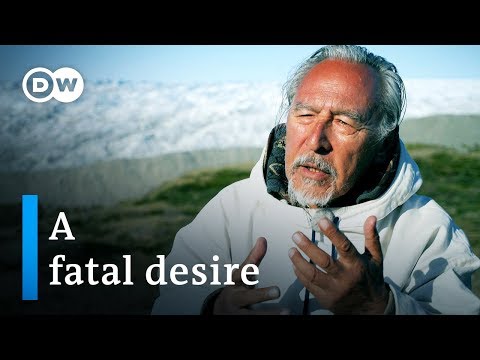
Can money and power ever make us happy? How much is enough? Our constant desire for more is part of our human nature.
Some call it a useful dowry of evolution, others a fault in the human genetic make-up: The old mortal sin Greed seems to be more ubiquitous than ever. Why can't people ever get enough, where is this self-indulgence leading - and are there any ways out of this vicious circle of gratification?
"People like to have a lot of stuff because it makes them the feeling of living forever," says American social psychologist Sheldon Solomon, who believes today's materialism and consumerism will have disastrous consequences.
Anyone who fails to satisfy his or her desires in this age of the Ego is deemed a loser. But with more than 7 billion people on the Earth, the ramifications of this excessive consumption of resources are already clear. Isn’t the deplorable state of our planet proof enough that "The Greed Program," which has made us crave possessions, status and power, is coming to an end? Or is the frenzied search for more and more still an indispensable part of our nature? We set off to look for the essence of greed. And we tell the stories of people who - whether as perpetrators or victims or even just as willing consumers - have become accomplices in a sea change in values.
Check out our web special:
http://www.dw.com/en/tv/greed/s-32898
_______
Exciting, powerful and informative – DW Documentary is always close to current affairs and international events. Our eclectic mix of award-winning films and reports take you straight to the heart of the story. Dive into different cultures, journey across distant lands, and discover the inner workings of modern-day life. Subscribe and explore the world around you – every day, one DW Documentary at a time.
Subscribe to DW Documentary:
https://www.youtube.com/channe....l/UCW39zufHfsuGgpLvi
For more information visit:
https://www.dw.com/documentaries
Facebook:
https://www.facebook.com/dw.stories

#PanAfricanDailyTV
Pan-African Daily TV -
www.AFROWORLD.TV
| Whatsapp: +49 1578 211 2379 |
Email: panafricandailytv@gmail.com |
DONATE gofundme@panafricandtv-Satellite-channel-funds |
Paypal
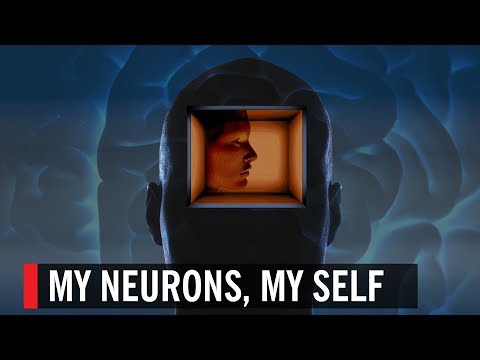
With ever more refined techniques for measuring complex brain activity, scientists are challenging the understanding of thought, memory and emotion–what we have traditionally called “the self.” How do electrical and chemical currents translate to self-awareness? And why does the brain produce consciousness at all? Join a discussion among eminent neuroscientists, philosophers and psychologists who are redefining what it means to be human.
This program is part of the Big Ideas Series, made possible with support from the John Templeton Foundation.
Original Program Date: June 5, 2016
MODERATOR: Bill Blakemore
PARTICIPANTS: Martha Farah, Joy Hirsch, Jesse Prinz, Daphna Shohamy
Subscribe to our YouTube Channel for all the latest from WSF.
Visit our Website: http://www.worldsciencefestival.com/
Like us on Facebook: https://www.facebook.com/worldsciencefestival
Follow us on twitter: https://twitter.com/WorldSciFest
Bill Blakemore's Introduction 00:00
Where Do You Locate Your Sense Of Self 4:30
Participant Introductions 8:20
Is there a Neurobiology of collective consciousness? 12:22
What happens when two brains are in a dialog with each other 17:00
How do brains differ from texting vs. face to face 21:38
What is TBJ? 25:40
What is the difference between awareness and attention? 26:09
How does memory define "self" 32:48
We make decisions NOT base on our experiences but based on our memories 41:15
When memories go does self go as well? 47:29
How human taste dictates our social groups 56:23
How actively we interrogate and seek information from others 1:02:26
What is Neuroskepticism? 1:09:35
Can we make determinations that consciousness is connected to the physical? 1:14:35
If we made a human clone would it have the same mind? 1:23:40
What does neuroscience have to say about freewill? 1:26:50
What parts of the brain are active while experiencing morality? 1:31:18
What is the connection between PTSD and the experience of memory? Can your brain be rewired? 1:34:14

Electromagnetism is one of the fundamental forces and is the glue that holds all matter together. Find out how photons, the charged particles that allow us to see the world around us, are at the heart of electromagnetism.
Catch new episodes of HOW THE UNIVERSE WORKS Tuesdays at 10/9c on Science! | http://science.discovery.com/t....v-shows/how-the-univ
Watch full episodes:
http://bit.ly/HTUWFullEpisodes
Subscribe to Science Channel:
http://www.youtube.com/subscri....ption_center?add_use
Check out SCI2 for infinitely awesome science videos. Every day.
http://bit.ly/SCI2YT
Download the TestTube app:
http://testu.be/1ndmmMq

✔️📚👉 Watch Full Free Course:- https://www.magnetbrains.com
✔️📚👉 Get Notes Here: https://www.pabbly.com/out/magnet-brains
✔️📚👉 Get All Subjects playlists:- https://www.pabbly.com/out/all-videos-playlist
===============================================
✅ In this video,
✔️ Class: 12th
✔️ Subject: Biology
✔️ Chapter: Organisms And Populations
✔️ Topic Name: Difference Between Exponential And Logistic Growth
===============================================
📢 🔥 Available (Kindergarten to 12th) all Video Subject wise Playlist https://www.pabbly.com/out/all-videos-playlist
Why study from Magnet Brains?
Magnet Brains is an online education platform that helps give You NCERT/CBSE curriculum based free full courses from Kindergarten to Class 12th so that you can perform well in any and all exams you give in your academic career.
👉 Contact us 🤑🤑
➡️ Connect with us : magnetbrainsbhopal@gmail.com
➡️ Website : https://www.magnetbrains.com/
➡️ Subscribe to us on YouTube: https://www.youtube.com/Magnet....BrainsEducation?sub_
➡️ Facebook : https://www.facebook.com/groups/MagnetBrains/