- General Videos
- Music
- Economics
- Health
- Travel & Events
- History
- Psychology
- Spirituality
- Movies
- News & Politics
- Kmtyw Combat Sciences
- Ɔbenfo Ọbádélé Kambon Videos
- Ɔbenfoɔ Kamau Kambon: Black Liberation Philosophy
- Science, Tech, Engineering and Math
- Permaculture
- Self-Sustainability
- Living Off Grid
- Yoruba Language Learning
- Education
- Mmɔfra Adesua
- Nana Kamau Kambon Playlist
- Livestream
- Komplementarity Kouples and Revolutionary Singles
- Abibitumi Film Series
- Decade of Our Repatriation
- Live
Top videos


When no one is looking, a particle has near limitless potential: it can be nearly anywhere. But measure it, and the particle snaps to one position. How do subatomic objects shed their quantum weirdness? Experts in the field of physics, including David Z. Albert, Sean Carroll, Sheldon Goldstein, Ruediger Schack, and moderator Brian Greene, discuss the history of quantum mechanics, current theories in the field, and possibilities for the future.
This program is part of the Big Ideas Series, made possible with support from the John Templeton Foundation.
Subscribe to our YouTube Channel for all the latest from WSF.
Visit our Website: http://www.worldsciencefestival.com/
Like us on Facebook: https://www.facebook.com/worldsciencefestival
Follow us on twitter: https://twitter.com/WorldSciFest
Original Program date: May 29, 2014
Host: Brian Greene
Participants: David Z. Albert, Sean Carroll, Sheldon Goldstein, Ruediger Schack
Brian Greene's Introduction. 00:00
The double-slit experiment 4:03
Waves of probability. 10:50
Participant Introductions. 17:55
The classic outlook changed forever. 19:41
The Norman Ramsey approach to quantum mechanics. 22:44
The quantum measurement problem. 28:45
Does there need to be a clear separation between the quantum description and the observer? 31:44
How does the double slit fit into this example? 38:49
The many worlds approach to quantum mechanics. 45:48
If we can't see the other worlds, isn't that equal to believing in god or angels? 50:45
Summing up the many worlds theory. 59:52
Spontaneous collapse theory. 1:00:04
How do you make this theory precise. 1:08:00
Tallying the votes for collapse theory. 1:13:27
What is Qbism? 1:14:00
Does cubism gives a description of the world that needs an observer? 1:19:25
Two equations vs one. 1:27:04
The final vote for Qbism. 1:30:20

http://www.ted.com "I am a mathematician, and I would like to stand on your roof." That is how Ron Eglash greeted many African families he met while researching the fractal patterns hed noticed in villages across the continent.
TEDTalks is a daily video podcast of the best talks and performances from the TED Conference, where the world's leading thinkers and doers are invited to give the talk of their lives in 18 minutes -- including speakers such as Jill Bolte Taylor, Sir Ken Robinson, Hans Rosling, Al Gore and Arthur Benjamin. TED stands for Technology, Entertainment, and Design, and TEDTalks cover these topics as well as science, business, politics and the arts. Watch the Top 10 TEDTalks on TED.com, at
http://www.ted.com/index.php/talks/top10
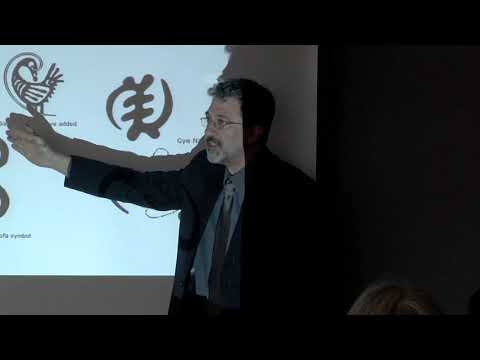

Video about an incredible mathematical formula explaining fractals. Several mathematicians and scientists explain this phenomenon in clear detail.
We are not the owners of these video clips nor do we claim to be. This video is for educational & entertainment purposes only. This is an extract from original videoclip that can be found here: https://www.youtube.com/watch?v=56gzV0od6DU
Fair Use Notice: This video might contain some copyrighted material whose use may or may not have not been authorized by the copyright owners. We believe that this not-for-profit, educational, and/or criticism or commentary use on the Web constitutes a fair use of the copyrighted material (as provided for in section 107 of the US Copyright Law). If you wish to use this copyrighted material for purposes that go beyond fair use, you must obtain permission from the copyright owner. In case, you own or reperesent someone who owns any of the material in this video, and would like us to remove your content, we will immediately comply with any copyright owner who wants their material removed or modified, wants us to link to their web site, or wants us to add their photo.

Thirty-five years ago string theory took physics by storm, promising the coveted unified theory of nature’s forces that Einstein valiantly sought but never found. In the intervening decades, string theory has brought a collection of mind-boggling possibilities into the lexicon of mainstream thinking—extra dimensions of space, holographic worlds, and multiple universes. Some researchers view these developments as symptoms of string theory having lost its way. Others argue that string theory, although very much still a work in progress, is revealing stunning new qualities of reality. Join leading minds in theoretical physics for a whirlwind ride through the twists and turns of string theory—its past, its future, and what it tells us about the search for the universe’s final theory.
PARTICIPANTS: Marcelo Gleiser, Michael Dine, Andrew Strominger
MODERATOR: Brian Greene
MORE INFO ABOUT THE PROGRAM AND
PARTICIPANTS: https://www.worldsciencefestiv....al.com/programs/loos
This program is part of the BIG IDEAS SERIES, made possible with support from the JOHN TEMPLETON FOUNDATION.
- SUBSCRIBE to our YouTube Channel and "ring the bell" for all the latest videos from WSF
- VISIT our Website: http://www.worldsciencefestival.com
- LIKE us on Facebook: https://www.facebook.com/worldsciencefestival
- FOLLOW us on Twitter: https://twitter.com/WorldSciFest
TOPICS
0:00 - Introduction
3:54 - Program introduction
5:40 - Marcelo Gleiser introduction
6:26 - Unification of electricity and magnetism
10:30 - Unification of space and time
13:49 - Einstein’s General Theory of Relativity
18:38 - Standard model of particle physics
21:56 - Supersymmetry
26:14 - The Island of Knowledge
32:01 - Godel’s Incompleteness Theorems
34:27 - String Theory explainer film
37:07 - Michael Dine introduction
38:35 - Supersymmetry and the spectrum of particles
42:18 - Large Hadron Collider
44:57 - Extra dimensions of space
50:34 - Dark energy and multiple universes
56:40 - Progress since the 1980s and the future of particle physics
59:55 - Andrew Strominger introduction
1:00:53 - Einstein and black holes
1:03:59 - The black hole information paradox
1:07:30 - Stephen Hawking’s insights into black holes
1:12:00 - Using string theory to understand black holes
1:19:33 - Conformal symmetry
1:22:48 - Andrew Strominger’s view of string theory
CREDITS
- Produced by Laura Dattaro
- Associate Produced by Peter Goldberg
- Editing and Animation by Josh Zimmerman
- Music provided by APM
- Additional images and footage provided by: Getty Images, Shutterstock, Videoblocks, Event Horizon Telescope
- Recorded at NYU Skirball Center

The multiverse hypothesis, suggesting that our universe is but one of perhaps infinitely many, speaks to the very nature of reality. Join physicist Brian Greene, cosmologists Alan Guth and Andrei Linde, and philosopher Nick Bostrom as they discuss and debate this controversial implication of forefront research and explore its potential for redefining the cosmic order. Moderated by Robert Krulwich and featuring an original musical interlude, inspired by parallel worlds, by DJ Spooky.
This program is part of the Big Ideas Series, made possible with support from the John Templeton Foundation.
The World Science Festival gathers great minds in science and the arts to produce live and digital content that allows a broad general audience to engage with scientific discoveries. Our mission is to cultivate a general public informed by science, inspired by its wonder, convinced of its value, and prepared to engage with its implications for the future.
Subscribe to our YouTube Channel for all the latest from WSF.
Visit our Website: http://www.worldsciencefestival.com/
Like us on Facebook: https://www.facebook.com/worldsciencefestival
Follow us on twitter: https://twitter.com/WorldSciFest
Original Program Date: June 13, 2009
MODERATOR: Robert Krulwich
PARTICIPANTS: Alan Guth, Brian Greene, Andrei Linde, Paul D. Miller, Nick Bostrom
Introduction with Brian Greene 00:00
Musical interlude 25:15
Participant Introductions 33:49
How do we know there was a Big Bang 35:50
How do we get from a single universe to a multiverse. 47:14
Is the universe expanding and how fast? 01:00:25
What does six dimensional space look like? 01:08:00
How do we know there is a multiverse? 01:13:48
Bryce DeWitt on the multiverse concept 01:24:40
What if we assume the universe is the simulation hypothesis? 01:37:14
This program is part of The Big Idea Series, made possible with support from the John Templeton Foundation.
Take a look into our current understanding of the function of the human brain and some of the important diseases that cause nervous system dysfunction. On this edition, Jason Satterfiled, director of behavioral medicine at UCSF, explores the emotions and health and the promise of mind-body medicine. Recorded on 05/24/2007. [10/2007] [Show ID: 13033]
Explore More Health & Medicine on UCTV
(https://www.uctv.tv/health)
UCTV features the latest in health and medicine from University of California medical schools. Find the information you need on cancer, transplantation, obesity, disease and much more.
UCTV is the broadcast and online media platform of the University of California, featuring programming from its ten campuses, three national labs and affiliated research institutions. UCTV explores a broad spectrum of subjects for a general audience, including science, health and medicine, public affairs, humanities, arts and music, business, education, and agriculture. Launched in January 2000, UCTV embraces the core missions of the University of California -- teaching, research, and public service – by providing quality, in-depth television far beyond the campus borders to inquisitive viewers around the world.
(https://www.uctv.tv)


For decades, biologists have read and edited DNA, the code of life. Revolutionary developments are giving scientists the power to write it. Instead of tinkering with existing life forms, synthetic biologists may be on the verge of writing the DNA of a living organism from scratch. In the next decade, according to some, we may even see the first synthetic human genome. Join a distinguished group of synthetic biologists, geneticists and bioengineers who are edging closer to breathing life into matter.
This program is part of the Big Ideas Series, made possible with support from the John Templeton Foundation.
Original Program Date: June 4, 2016
MODERATOR: Robert Krulwich
PARTICIPANTS: George Church, Drew Endy, Tom Knight, Pamela Silver
Subscribe to our YouTube Channel for all the latest from WSF.
Visit our Website: http://www.worldsciencefestival.com/
Like us on Facebook: https://www.facebook.com/worldsciencefestival
Follow us on twitter: https://twitter.com/WorldSciFest
Synthetic Biology and the Future of Creation 00:00
Participant Intros 3:25
Ordering DNA from the internet 8:10
How much does it cost to make a synthetic human? 13:04
Why is yeast the best catalyst 20:10
How George Church printed 90 billion copies of his book 26:05
Creating synthetic rose oil 28:35
Safety engineering and synthetic biology 37:15
Do we want to be invaded by bad bacteria? 45:26
Do you need a human gene's to create human cells? 55:09
The standard of DNA sequencing in utero 1:02:27
The science community is divided by closed press meetings 1:11:30
The Human Genome Project. What is it? 1:21:45
![The Secrets of Light and Energy [2019]](https://i.ytimg.com/vi/UTxsfUmhG3M/hqdefault.jpg)