- General Videos
- Music
- Economics
- Health
- Travel & Events
- History
- Psychology
- Spirituality
- Movies
- News & Politics
- Kmtyw Combat Sciences
- Ɔbenfo Ọbádélé Kambon Videos
- Ɔbenfoɔ Kamau Kambon: Black Liberation Philosophy
- Science, Tech, Engineering and Math
- Permaculture
- Self-Sustainability
- Living Off Grid
- Yoruba Language Learning
- Education
- Mmɔfra Adesua
- Nana Kamau Kambon Playlist
- Livestream
- Komplementarity Kouples and Revolutionary Singles
- Abibitumi Film Series
- Decade of Our Repatriation
- Live
Top videos
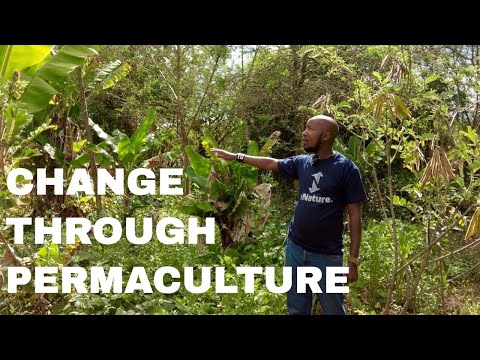


Over 45,000 hectares have re-greened in Senegal. This has led to an increase in animal biodiversity and soil fertility.
The benefits are very positive and Klorane Botanical Foundation strongly continues its commitment.
https://www.kloranebotanical.f....oundation/en/field-a
![Water Harvesting an African Rain Farmer: Design Guidelines for Regenerative Systems [2017]](https://i.ytimg.com/vi/D6_WZ789lpM/hqdefault.jpg)
“You must plant the rain before you plant a seed or tree!” proclaimed rain farmer Mr. Zephaniah Phiri Maseko of Zimbabwe. By doing just that, he and his family turned a wasteland into an oasis, raised groundwater and well levels even in dry years, reduced flooding in wet years, and enhanced the fertility of the soils. This inspiring story will be shared along with the strategies used, and more importantly, the guiding principles that informed the choice, placement, and implementation of these strategies into a more integrated and productive system. These principles work in any climate experiencing a dry season or drought. And they help us see and act more holistically by asking us questions that direct our attention to important aspects of water and fertility systems we might otherwise overlook.
Presenter: Brad Lancaster is a dynamic teacher, consultant, and designer of regenerative systems that sustainably enhance local resources and our global potential. He is the author of the award-winning, best-selling book series Rainwater Harvesting for Drylands and Beyond.
Download the presentation slide pdf here : http://edn.link/xfqc94
To see other videos from the Conference : http://edn.link/eiac-video-2016
For more information about ECHO, visit https://www.echocommunity.org
![The Water Harvester: A Film on Zephaniah Phiri [2014]](https://i.ytimg.com/vi/ieqYZaT0JwA/hqdefault.jpg)
![De Klerk - Mandela Pre-election Debate [14 Apr 1994] Rebroadcast [14 Apr 2019]](https://i.ytimg.com/vi/oTIeqLem67Q/hqdefault.jpg)
![Feeding The Soil or Feeding The Cow [2013]](https://i.ytimg.com/vi/hAQbfXvE8Ec/hqdefault.jpg)
A documentary about Conservation Agriculture in Africa. Where and how can it work? Conservation Agriculture (CA) as an approach to managing agro-ecosystems helps improve and sustain land productivity, increase profits and food security while preserving and enhancing the resource base and the environment. This documentary focuses on the situation in Kenya, Tanzania and Burkina Faso. Produced by Greendocs (www.greendocs.nl). Made by Melchert Meijer zu Schlochtern and Simone de Hek. Commissioned by The African Conservation Tillage Network (ACT).
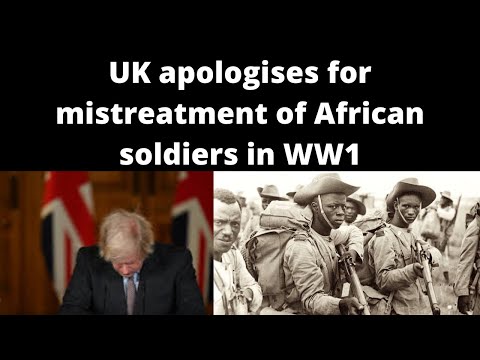

![Somalia: The Forgotten Story | Al Jazeera World [2016]](https://i.ytimg.com/vi/-io_RfLBpgc/hqdefault.jpg)
Somalia's modern history is a tale of independence, prosperity and democracy in the 1960s, military dictatorship in the 1970s and 1980s - followed by a desperate decline into civil war and chaos almost ever since.
The effect of the war has been to scatter the Somali people in their millions to refugee camps and neighbouring countries - and in their hundreds of thousands to the UK, Canada and the United States.
Somalia gained independence from Britain and Italy in 1960. It held free and fair elections and was ruled democratically from 1960 to 1969.
Once labelled the "Switzerland of Africa", Somalia enjoyed almost a decade of democracy. The first elected president of Somalia, uniting the former British and Italian territories, was Adam Abdullah Osman who reigned for seven years. He was succeeded, freely and peacefully, by Abdirashid Ali Sharmarke.
Sharmarke, however, was assassinated by one of his own bodyguards in 1969.
Speaker of the Somali Parliament Mukhtar Mohamed Hussein took over, but his brief, six-day tenure was cut short by a military coup led by General Siad Barre, ending Somalia's period of democratic government.
Whatever its faults - and there were many - Barre's 22-year rule effectively created modern Somalia, building one of Africa's strongest armies and massively improving the literacy of the population.
Yet Barre, who gained the support of the US and the Soviet Union, the superpowers of the day, also dissolved parliament, suspended the constitution, banned political parties, arrested politicians and curbed press freedom.
"From then, there was a downward trend. In everything. A disintegration. And every time things were going down, the military regime was becoming more brutal and more dictatorial," says Jama Mohamed Ghalib, a former Somali government minister.
But when Barre launched the Ogaden war in 1977 to take the Somali majority region from Ethiopia, it provoked serious international opposition, including that of the Soviet Union which had once supported Barre but now sided with Ethiopia. The Somali army was forced to withdraw.
But the other long-lasting outcome was civil war, with myriad competing factions and frequent intervention by foreign powers and neighbouring countries.
In 2006, the Islamic Courts Union split into several factions, one of which was Al Shabab. The radical group still controls large parts of the south of the country today.
- Subscribe to our channel: http://aje.io/AJSubscribe
- Follow us on Twitter: https://twitter.com/AJEnglish
- Find us on Facebook: https://www.facebook.com/aljazeera
- Check our website: http://www.aljazeera.com/
#AlJazeera #SomalianHistory #AlJazeeraWorld
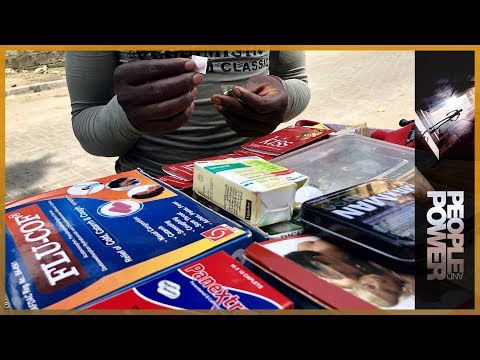
West Africa - and particularly its most populous nation, Nigeria - is battling an opioid abuse crisis. Medicines such as tramadol, legally and legitimately prescribed by doctors for pain relief, are also being taken in life-threatening doses by millions in search of a fix or a release from poverty, unemployment and lack of opportunity.
People & Power sent filmmakers Naashon Zalk and Antony Loewenstein to Nigeria to investigate how the drug is smuggled, traded and abused, as well as the widespread corruption that follows this illicit trafficking, and the appalling health consequences for those in its grip.
Read more: https://aje.io/9vjnr
-
- Subscribe to our channel: http://aje.io/AJSubscribe
- Follow us on Twitter: https://twitter.com/AJEnglish
- Find us on Facebook: https://www.facebook.com/aljazeera
- Check our website: https://www.aljazeera.com/