- General Videos
- Music
- Economics
- Health
- Travel & Events
- History
- Psychology
- Spirituality
- Movies
- News & Politics
- Kmtyw Combat Sciences
- Ɔbenfo Ọbádélé Kambon Videos
- Ɔbenfoɔ Kamau Kambon: Black Liberation Philosophy
- Science, Tech, Engineering and Math
- Permaculture
- Self-Sustainability
- Living Off Grid
- Yoruba Language Learning
- Education
- Mmɔfra Adesua
- Nana Kamau Kambon Playlist
- Livestream
- Komplementarity Kouples and Revolutionary Singles
- Abibitumi Film Series
- Decade of Our Repatriation
- Live
Top videos


Slave codes were a method of protecting the investment of white enslavers in the Colonies by restricting the lives of enslaved people in almost every imaginable way. The codes restricted enslaved people’s ability to move around, or engage in commerce that could make them financially independent - they restricted the very opportunities that would allow them to live with even relative freedom. Today, we'll learn about how Colonies put laws in place to restrict the movement and freedoms of both enslaved people and free Black people alike.
Watch our videos and review your learning with the Crash Course App!
Download here for Apple Devices: https://apple.co/3d4eyZo
Download here for Android Devices: https://bit.ly/2SrDulJ
Crash Course is on Patreon! You can support us directly by signing up at http://www.patreon.com/crashcourse
Check out Clint's book: https://bookshop.org/books/how....-the-word-is-passed-
Thanks to the following patrons for their generous monthly contributions that help keep Crash Course free for everyone forever:
Alexis B, Rene Duedam, Burt Humburg, Aziz, Nick, DAVID MORTON HUDSON, Perry Joyce, Scott Harrison, Mark & Susan Billian, Junrong Eric Zhu, Alan Bridgeman, Jennifer Smith, Matt Curls, Tim Kwist, Jonathan Zbikowski, Jennifer Killen, Sarah & Nathan Catchings, Brandon Westmoreland, team dorsey, Trevin Beattie, Eric Koslow, Indika Siriwardena, Khaled El Shalakany, Shawn Arnold, Siobhán, Ken Penttinen, Nathan Taylor, William McGraw, Laura Damon, Andrei Krishkevich, Sam Ferguson, Eric Prestemon, Jirat, Brian Thomas Gossett, Wai Jack Sin, Ian Dundore, Jason A Saslow, Justin, Jessica Wode, Mark, Caleb Weeks
__
VIDEO SOURCES
-Ira Berlin, Many Thousands Gone: The First Two Centuries of Slavery in North America (Cambridge: Harvard University Press, 1998).
-John Hope Franklin, From Slavery to Freedom: A History of Negro Americans (New York: Knopf, 1967).
-Claude M. Steele, Whistling Vivaldi: How Stereotypes Affect Us and What We Can Do (Reprint Edition ed. 2011).
-Black Codes and Slave Codes, Colonial, , Oxford African American Studies Center , http://oxfordaasc.com/view/10.....1093/acref/978019530
-Peter H. Wood, Black Majority: Negroes in Colonial South Carolina from 1670 through the Stono Rebellion (New York: W.W. Norton, 1974).
-Jennifer L. Morgan, Partus sequitur ventrem: Law, Race, and Reproduction in Colonial Slavery, 22 Small Axe: A Caribbean Journal of Criticism 1–17 (2018).
Want to find Crash Course elsewhere on the internet?
Facebook - http://www.facebook.com/YouTubeCrashCourse
Twitter - http://www.twitter.com/TheCrashCourse
Tumblr - http://thecrashcourse.tumblr.com
Support Crash Course on Patreon: http://patreon.com/crashcourse
CC Kids: http://www.youtube.com/crashcoursekids
#crashcourse #history #slavery


Awesome informative session with my brother Obadele Kambon. He has successfully repatriated to Ghana and assists others to do the same. Check him out at:
www.obadelekambon.com
www.amakambon.com
If you're pumped for more Native Borne content, hit the like button!
Be sure to subscribe. 😊
You can support the Native Borne Family via the following links:
Go Fund Me page here: https://www.gofundme.com/52rej-the-journey-continues&rcid=r01-155250640963-1c9702a0e9df4bea&pc=ot_co_campmgmt_w
Paypal Donation Link: Paypal.me/nativeborne
Support us monthly on Patreon: www.patreon.com/nativeborne
Send money order donations (Money Orders payable to John and Safiyyah Christian)
2885 Sanford Ave #38830, Grandville Michigan 49418
Buy some Merchandise from the Native Borne Store: https://teespring.com/stores/native-borne
Visit Our Website http://www.nativeborne.com
---------------------------------------------------------------------------------------------
★Want to learn more about Love and Relationships? Check out our relationship book here! http://goo.gl/r4MDeo
★Get the 90 Day “Her Inner Journey” digital journal for women and girls here! https://goo.gl/8KBZzs
Get the amazing detox and weight loss tea (IASO TEA). We drink this tea religiously; especially during our travels. www.totallifechanges.com/johnchristian
Wanna hear some inspirational music from John? Support by downloading his music here… http://bit.ly/2tfRYLw
------------------------------------------------------------------------------------------------------
Connect with us outside of Da Tube:
T W I T T E R: @Native Borne
I N S T A G R A M: @NativeBorne/@OfficialJohnChristian/ @SafiyyahFilms
F A C E B O O K: http://goo.gl/4CK41E
B L O G: http://www.nativeborne.com
C O N T A C T: ✉ Have a question or comment? Shoot us an email at nativeborne@gmail.com
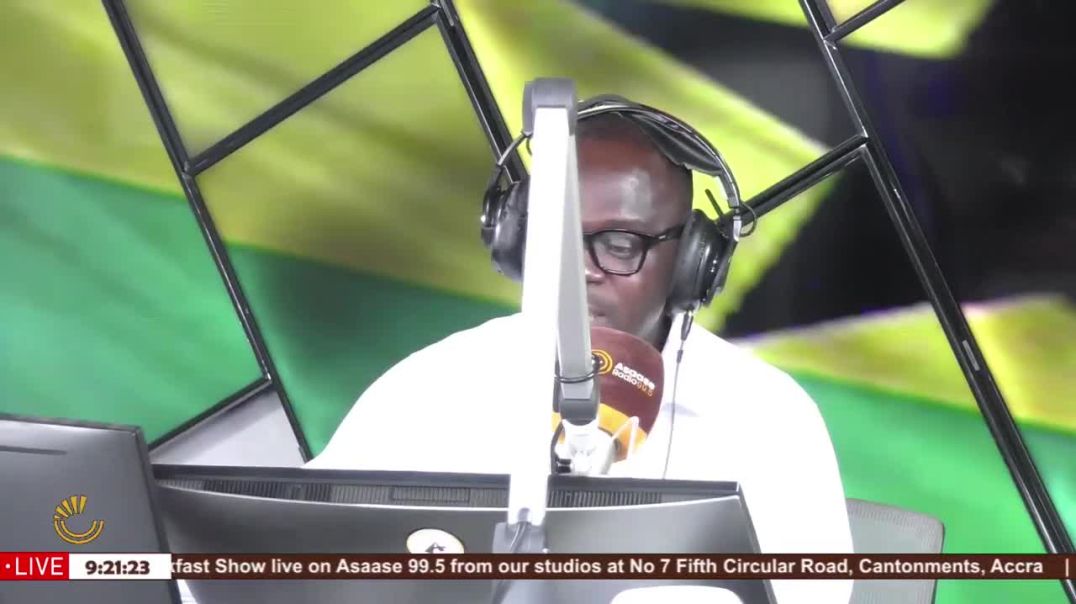
FULL INTERVIEW | Ɔbenfo Ọbádélé Kambon joins the Asaase Breakfast Show on Asaase 99.5 to discuss Open D.O.O.R. Dialogues, the Decade of Our Repatriation (2026–2036), self-reparations through repatriation, the global Black brain gain, and practical pathways for jobs, entrepreneurship and investment in Ghana.
The Open D.O.O.R. Dialogues Media Launch takes place Friday, 17 July 2026 at 10:00 AM in the Great Hall, University of Ghana. The main dialogue follows on 30 October 2026.
Learn more and RSVP:
https://www.door.events
https://www.decadeofourrepatriation.com/opendoor
Originally aired 14 July 2026 on Asaase 99.5.


Jamaican Funny Animated Cartoons
In this Yardie Runnings episode: Elders discuss their geriatric challenges.
Subscribe to my channel for new videos regularly:
https://www.youtube.com/LasMayTOONS
Links
Facebook: https://facebook.com/LasMayToons
Instagram: https://www.instagram.com/lasmaytoons/
Twitter: https://twitter.com/lasmaytoons


01. I Faram Gami I Faram
02. Mascaram Setaba
03. Shagu
04. One For Buzayhew
05. Alone In The Crowd
06. Almaz
07. Mulatu’s Hideaway
08. Askum
09. A Kiss Before Dawn
10. Playboy Cha Cha
11. The Panther (Boogaloo)
12. Konjit (Pretty)
13. Soul Power
14. Lover’s Mambo
15. Love Mood For Two
16. Jijiger
17. Girl From Addis Ababa
18. Karayu
19. Raina
Arriving after Astatke’s life-changing years studying at Berklee College in Boston, the albums were the rest experiments in his pioneering sound, fusing Ethiopian cultural music with Afro Latin and jazz forms. “I have always felt a deep connection between Latin and African music,” he explains. “I travelled to Cuba and listened to their musicians; the tempo, rhythm and feeling was very similar to different African forms. In the mid-‘60s, I formed a band called The Ethiopian Quintet in New York comprising Ethiopian, Latin and Afro-American musicians – the band included trumpeter and pianist Rudy Houston who later played with Yambu and Felix Torres who played with La Sonora Poncena.”
Supported by Worthy Records’ Gil Snapper who offered to record the quintet, Astatke began to experiment during two separate sessions: “We created a different feel and different arrangements. On the rst recording, I played an adaptation of an ancient Ethiopian warrior song, ‘I Faram Gami I Faram’ – the lyrics were translated so that the singer could sing it in Spanish. Some compositions were important steps for me: ‘Mascaram Setaba’ (‘Summer Is Coming’) ‘Shagu’ and ‘Almaz’. With the second album, a personal favourite is ‘Girl From Addis Ababa’ which worked very nicely as a fusion of Ethiopian modes and R&B rhythms.”
Astatke would start to perfect his Ethio jazz sound on his later album for Worthy in 1972, ‘Mulatu Of Ethiopia’ but the two volumes of ‘Afro Latin Soul’ stand as important recordings documenting his early career. “It was a very interesting time to be in New York during the mid-‘60s. I was there at the same time as Hugh Masekela, Miriam Makeba and Fela Kuti and we each tried to play our part in putting Africa on the map of contemporary jazz.”
http://www.strut-records.com


Kambale Musavuli from the Center for Research on the Congo breaks down the escalating conflict in the Democratic Republic of Congo between the Rwandan backed- M23 rebel group and the Congolese army (FARDC). Musavuli explains how proxy forces including Rwanda, which he calls “the Israel of Africa,” is waging a devastating war over the DR Congo’s vast mineral wealth: “The US cannot compete in AI without having access to raw materials and Rwanda are the proxy mercenaries for the West’s interests.”
#breakthroughnews


Check out the latest Amapiano sensation from *Scotts Maphuma, Kabza De Small & DJ Maphorisa feat. Dladla* in their official music video for *Babekethiwe ( #feloletee #mellowandsleazy #masmusiq #vigrodeep #demthuda #busta929 #majorleaguedjz #dj #kelvinmomo #djjaivane #mrjazziq #mduakatrp #youngstunna #focalistic #boohle #ladydu #daliwonga #sirtrill #murumbapitch #amaroto #zuma #reecemadlisa #amifaku #mpurampura #masterkg #djstokie #msaki #nkosazanadaughter #mashudu #2faced #amapiano2024newsongs #tiktok #trending #music #amapianomix #amapianomix2024 #latestmusic #youtubemusic

President John Mahama has called Ghana a "crime scene" following shocking revelations about mismanagement of funds by the previous administration and $21.1B in stolen state assets. Here is the story behind it and how comedian Michael Blackson got entangled in it. As ORAL embarks on the hunt for the stolen assets, I will continue to bring you updates on this story! Correction: Starting at 1:24, the video features President Nana Akufo-Addo delivering a speech. We mistakenly referenced the year as 2028; it should be 2018.#ghananews #ghanapolitics #news #africa #africanews #blacknewsfollow Host Sandra Babu-Boateng:Instagram: https://www.instagram.com/Sand....raBabuBoateng/Facebo https://www.facebook.com/SandraBBoateng TikTok: https://www.tiktok.com/@sandrababuboatengVisit https://face2faceafrica.com/ for the latest news and stories on the global Black diaspora.Visit Ghana: https://homecoming.tours/Social Links:» Subscribe to PanaGenius TV: https://www.youtube.com/@PanaGeniusTV» Subscribe to PanaGenius TV on Instagram: https://www.instagram.com/panageniustv---Visit https://face2faceafrica.com/ for the latest news and stories on the global Black Diaspora.» Follow Face2Face Africa on instagram: https://www.instagram.com/face2faceafrica» Follow Face2Face Africa on Facebook: https://www.facebook.com/Face2FaceAfrica» Follow Face2Face Africa on X (Twitter): https://x.com/face2faceafrica




2 LECTURES Steve cokely : Brotha Steve Cokely - The Black Boule http://www.youtube.com/watch?v=i3akC9P_rYQ Steve Cokely: White Finance of Black Leadership http://www.youtube.com/watch?v=nOJdbyNqG6Y
Internal enemiez..


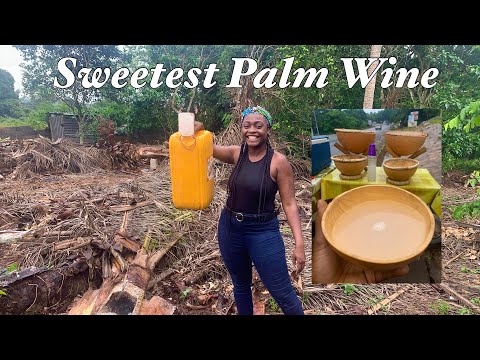

Hi Guys!!!!
We're back again Chaley. Todays video takes us to Aburi in the Eastern region, where palm wine is tapped.
As always, thanks for watching this video and i hope you enjoy watching as much or more than i enjoyed making it. Please remember to leave a 👍 if you liked it and if you loved it, smash that Subcribe button. Until the next one, Stay safe and love you all. 😘😘😘😘
Music in this video
================
Intro @ikson
Song: Ikson - Anywhere (Vlog No Copyright Music)
Music promoted by Vlog No Copyright Music.
Video Link: https://youtu.be/UY08PUqArZI
🔴Subscribe to become part of my youtube family. lets grow by liking,sharing &commenting.it really helps a lot!
https://www.youtube.com/channe....l/UCZfiSXIArf-qnOVHP
💲If you like to donate or support my channel:
Patreon: https://www.patreon.com/user/creators
Wave or Momo +233 553 863 712
For business enquires kindly contact me on
stellakafui@gmail.com
Follow me on
Instagram: https://www.instagram.com/
Twitter: https://twitter.com/stellashanelly1?s=2

Sex for Grades: School is supposed to be a place where children learn and grow in safety. But millions of girls in Africa are subjected to teachers demanding sex as a condition of giving them their exam grades. Kiki King went to Mozambique to investigate the disturbing phenomenon of sex for grades.
Subscribe to our channel for more Unreported World episodes https://www.youtube.com/unreportedworld.
This episode first aired on 02/12/2016.