- General Videos
- Music
- Economics
- Health
- Travel & Events
- History
- Psychology
- Spirituality
- Movies
- News & Politics
- Kmtyw Combat Sciences
- Ɔbenfo Ọbádélé Kambon Videos
- Ɔbenfoɔ Kamau Kambon: Black Liberation Philosophy
- Science, Tech, Engineering and Math
- Permaculture
- Self-Sustainability
- Living Off Grid
- Yoruba Language Learning
- Education
- Mmɔfra Adesua
- Nana Kamau Kambon Playlist
- Livestream
- Komplementarity Kouples and Revolutionary Singles
- Abibitumi Film Series
- Decade of Our Repatriation
- Live
Top videos
![Green Wall: How to Green the Sahara [2020]](https://i.ytimg.com/vi/YQ_HCVo1Pig/hqdefault.jpg)


In recent years, machines have grown increasingly capable of listening, communicating, and learning—transforming the way they collaborate with us, and significantly impacting our economy, health, and daily routines. Who, or what, are these thinking machines? As we teach them to become more sophisticated, how will they complement our lives? What will separate their ways of thinking from ours? And what happens when these machines understand data, concepts, and behaviors too big or impenetrable for humans to grasp? We were joined by IBM’s WATSON, the computer Jeopardy! champion, along with leading roboticists and computer scientists, to explore the thinking machines of today and the possibilities to come in the not-too-distant future.
The World Science Festival gathers great minds in science and the arts to produce live and digital content that allows a broad general audience to engage with scientific discoveries. Our mission is to cultivate a general public informed by science, inspired by its wonder, convinced of its value, and prepared to engage with its implications for the future.
Subscribe to our YouTube Channel for all the latest from WSF.
Visit our Website: http://www.worldsciencefestival.com/
Like us on Facebook: https://www.facebook.com/worldsciencefestival
Follow us on twitter: https://twitter.com/WorldSciFest
Original Program Date: June 4, 2011
MODERATOR: Faith Salie
PARTICIPANTS: Rodney Brooks, David Ferrucci, Eric Horvitz, Hod Lipson
Video Introduction: "Can Machines Think?" 00:13
Faith Salie's Introduction 02:40
Participant Introductions 04:13
Behavior based robotics. 08:14
Domo the robot. 10:34
Interacting with robots. 15:08
What is the Uncanny Valley Theory? 16:12
Why did Watson want to take on Jeopardy? 20:56
What has Watson gotten wrong? 29:24
Did Watson get faster at thinking? 36:40
Where are we on building real AI? 44:30
Using AI in the medical Field. 52:40
Weak AI vs Strong AI 58:50
Is there something different about a real human that a perfect replica of a human? 01:00:55
What does self awareness mean? 01:05:20
The challenge of teaching AI to problem solve. 01:12:47
The future is to get AI to ask questions. 01:18:40
What are the negatives of creating AI? 01:24:40


Scientists are attempting to map the wiring of the nearly 100 billion neurons in the human brain. Are we close to uncovering the mysteries of the mind or are we only at the beginning of a new frontier?
PARTICIPANTS: Deanna Barch, Jeff Lichtman, Nim Tottenham, David Van Essen
MODERATOR: John Hockenberry
Original program date: JUNE 4, 2017
WATCH THE TRAILER: https://youtu.be/lX5S_1bXUhw
WATCH THE LIVE Q&A W/ JEFF LICHTMAN: https://youtu.be/h14hcBrqGSg
Imagine navigating the globe with a map that only sketched out the continents. That’s pretty much how neuroscientists have been operating for decades. But one of the most ambitious programs in all of neuroscience, the Human Connectome Project, has just yielded a “network map” that is shedding light on the intricate connectivity in the brain. Join leading neuroscientists and psychologists as they explore how the connectome promises to revolutionize treatments for psychiatric and neurological disorders, answer profound questions regarding the electrochemical roots of memory and behavior, and clarify the link between our upbringing and brain development.
MORE INFO ABOUT THE PROGRAM AND PARTICIPANTS: https://www.worldsciencefestiv....al.com/programs/wire
This program is part of the Big Ideas Series, made possible with support from the John Templeton Foundation.
- Subscribe to our YouTube Channel for all the latest from WSF
- Visit our Website: http://www.worldsciencefestival.com/
- Like us on Facebook: https://www.facebook.com/worldsciencefestival/
- Follow us on Twitter: https://twitter.com/WorldSciFest
TOPICS:
- Mapping the Brain 00:00
- What is a connectome? 06:02
- Santiago Ramón y Cajal 10:18
- Is the brain signal electricity? 17:09
- Who inspired you to do this work? 25:56
- Brain development in youth 29:45
- Do the maps we have now help us explain the brain? 32:43
- A series of subtraction and progressive processes. 39:17
- What is a Von Neumann machine 46:08
- How can we develop new synapse responses in an adult brain? 50:45
This program was recorded live on 6/4/17 and has been edited and condensed for our YouTube channel. Watch the original full livestream here: https://youtu.be/VBa3BYNTA8E


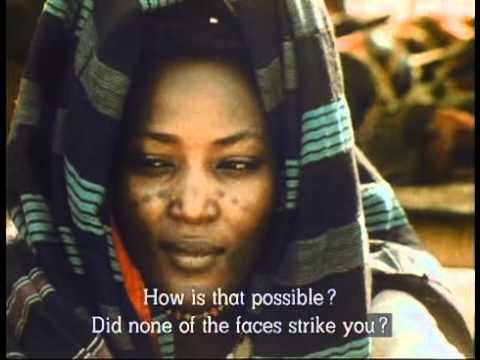
A rare example of Herzog tackling the "ethnographic" corner of the documentary genre, with wonderfully mystical results! Herdsmen of the Sun tells of the Wodaabe tribe, a nomadic African community (self-described as "the most beautiful people on earth") who annually practices a festival called Gerewol, in which females choose their mates from a lineup of super-elaborately adorned men with wild makeup, feathers and kaleidoscopic robes draping their seven-foot frames. Starting with the first scene, Herzog accentuates the ethereal nature of this rite further by layering early 20th-century recordings of opera on the soundtrack; the film's dreamlike depiction of a foreign people, very much at odds with the purist cinema vérité tradition of ethnography without adornment, is the embodiment of Herzog's own "Minnesota Declaration": that through "imagination and stylization", there can be such a thing as a poetic, ecstatic truth. Riverting, singular and totally heartfelt. Review source: http://tinyurl.com/7udrfh5


Here we will review the Yoro Dyao testimonies that describe post pharaohnic refugees who fled during the Persian invasion before arriving in Western Afrika.
SONS OF PHARAOHS FULL VIDEO: https://youtu.be/ll4EENfYzzY?si=jp02tOvjUSWVa9Cj
BIKO | Afrobeat Library | Music For Content Creators | Afrobeat | No Copyright Youtube:  • BIKO | Afrobeat Librar... Creative Commons — Attribution - CC BY-NC-ND 4.0 Affiliated YouTube channel |  / kaseembada