- General Videos
- Music
- Economics
- Health
- Travel & Events
- History
- Psychology
- Spirituality
- Movies
- News & Politics
- Kmtyw Combat Sciences
- Ɔbenfo Ọbádélé Kambon Videos
- Ɔbenfoɔ Kamau Kambon: Black Liberation Philosophy
- Science, Tech, Engineering and Math
- Permaculture
- Self-Sustainability
- Living Off Grid
- Yoruba Language Learning
- Education
- Mmɔfra Adesua
- Nana Kamau Kambon Playlist
- Livestream
- Komplementarity Kouples and Revolutionary Singles
- Abibitumi Film Series
- Decade of Our Repatriation
- Live
Top videos


A documentary on the Nubian Archers - Longbow-men of Africa.
In this Units of History documentary we explore the story of the Nubian Archers - Longbowmen of Africa. The episode begins with an introduction to the lands of the Nile, its geography, and the entwined development of both Egypt and Nubia. In this context it appears that the Nubian Archers existed from the very start as skilled hunters in southern civilization. Over time they would develop such a reputation that the ancient Egyptians would call the area of ancient Nubia, Tah-Seti, the Land of the Bow. Both the Egyptian Army and the Nubian Army would clash for centuries along the Nile. Such was the threat from Nubia that the Pharaohs began to fortify the region of the first cataract with a series of Egyptian Fortifications like the Buhen Fortress. Yet even still the Nubian Archers could not be stopped and their armies are said to have regularly managed to storm these bastions. The Egyptians recognized the military prowess of the Nubian Archers and quickly hired them as mercenaries in their own armies. This was a trend that would continue with later Empires that interacted with the Lands of Nubia. We talk specifically about what the equipment of these Nubian archers, how they were trained, how they were organized, and how they fought in battle. Finally the documentary concludes with an overview of their service history that would span hundreds of years through the Kingdom of Kerma, the Kingdom of Napata, and the Kingdom of Meroe. Stay tuned for more Units of History episodes and let us know what units you would like to see covered next! I'm excited to also cover more of the history of Nubia and African history in general! For now you can check out our previous episodes on Ancient Egypt and the Roman Invasion of Nubia.
Claim your SPECIAL OFFER for MagellanTV here: https://try.magellantv.com/invicta. Start your free trial TODAY so you can watch "The Story of Egypy" about the history of the Nile civilizations, and the rest of MagellanTV’s documentary collection: https://www.magellantv.com/ser....ies/the-story-of-egy and Suggested Reading:“The Kingdom of Kush: Handbook of the Napatan-Meroitic Civilization” by László Török“Aksum and Nubia: Warfare, Commerce, and Political Fictions in Ancient Northeast Africa” by George Hatke“Ancient Nubia” by Shinnie“Kerma Kushites." by Hansberry. W., & Johnson, E.“The Histories” by Herodotus“Ancient Egyptian Bows and Arrows and their Relevance for African Prehistory” by J. D. Clark “Wrestling in Ancient Nubia” by Scott T. Carroll Credits:Research = InvictaWriting = InvictaNarration = Guy MichaelsArtwork = Penta Limited#history#africa#documentary

Please check out the free in depth career guide at https://80000hours.org/fern (ad)
Residents of one Mexican city drink over 2 liters of soft drinks per day. This has catastrophic health consequences for the population. How could it come to this? And what role does Coca-Cola play?
Thanks to Dr. Jaime Page Pliego for his valuable insights.
Key reporting on this topic:
Unreported World - Mexico’s deadly Coca-Cola addiction https://youtu.be/hqnUohxXV0I
Journeyman Pictures - Coca-Cola's Corporate Takeover Of Mexico https://youtu.be/3wrpxfCJ_EA
New York Times - In Town With Little Water, Coca-Cola Is Everywhere. So Is Diabetes. https://www.nytimes.com/2018/0....7/14/world/americas/
All our sources:
https://docs.google.com/docume....nt/d/1Enn2fslnjOllUQ
0:00 Intro
3:50 1. Why is the water scarce?
7:00 2. Why is everyone drinking Coke?
10:38 3. How does it affect the population?
12:48 4. How did it come to this point?
17:13 Own opinion
Music:
Artlist
Brianna Tam - Intrepid; Circularity
Max H. - Conflicts; Back Home
Yestalgia - Flat White (feat. Mantrick)
Maya Belsitzman & Matan Ephrat - The Day Before
Tilman Sillescu - Wait And See
Yehezkel Raz - Deep Blue Sea (Instrumental Version); Corals Under The Sun (Instrumental Version); Morning Sunbeams
Charlie Ryan - Oscillating Form
Francesco D'Andrea - With Some Malice; Mad At The Ballet
Ardie Son - Aftershocks; Convolutions; Interlude Fury
Annie Zhou - Inner Canyon
Tomas Novoa - Vuelta Al Sol (Instrumental Version)
Red City Hero - After
Ian Post - Yule
Roger Louis Harmon - Pizzicato In The Jungle
Alon Peretz - Asturias
Tom Goldstein - Mirrors
G-Yerro - Value
Raz Burg - Back To Silence
Stanley Gurvich - Free Radicals
Theatre Of Delays - Distant Worlds
Mogli The Iceburg - Ghost (Instrumental Version)
Epidemic Sound
Eoin Mantell - Wonky Wayne
Alan Carlson-Green - No Turning Back
Rippled Stone - Blissful
Dark Fog; Floating Cities von Kevin MacLeod ist lizenziert unter CC BY 4.0.
https://incompetech.com/
CGI Snake von Chris Zabriskie ist lizenziert unter CC BY 4.0.
https://chriszabriskie.com
fern is a joint venture by:
@romulushoog
@simplicissimus
_____
Armchair documentaries, almost weekly


HQ interview download - http://www.mediafire.com/?dyhj3455cmrxe25
Honoring the legacy of Malcolm X
Malcolm X's birthday (May 19) is commemorated as "Malcolm X Day"
He has been described as one of the greatest and most influential African Americans in history.


Scott Joplin - Best Of Scott Joplin
Find the album here: https://spoti.fi/2uOQx3Y http://bit.ly/1ew0NUh http://apple.co/1SKBPOA http://bit.ly/2NwisO7 https://amzn.to/2NtLj5u https://amzn.to/2zSj5PM https://amzn.to/2NZLwyh https://spoti.fi/2uC2QkV http://bit.ly/1D4NZ3g
Join us on facebook : http://bit.ly/2jPvrLA
Considered to be the King of Ragtime, Scott Joplin spent most of his life in the American south, between Missouri and New Orleans. Joplin’s natural skills and a combination of gospel hymns, spirituals, dance music, classical music and work songs contributed significantly to the invention of a new style called “Ragtime”, giving America a genuine native music. Here are 27 marvellous rags from his songbook, played by Ania Safa, all dating back to the early 1900s. More than a century later, Scott Joplin’s music is still just as modern, dazzling and fresh.
Tracklist :
00:00 - Maple Leaf Rag
03:03 - Elite Syncopations
06:31 - The Easy Winners
10:05 - Felicity Rag
12:51 - The Entertainer
16:20 - The Strenuous Life
19:43 - Combination March
23:09 - Ragtime Dance
26:54 - Cascades
30:13 - Peacherine Rag
33:31 - Something Doing
36:37 - Country Club
40:13 - Scott Joplin New Rag
43:53 - Sunflower Slow Drag
47:10 - Paragon Rag
50:57 - Heliotrope Bouquet
54:25 - Swipesy
57:56 - Search Light
01:02:26 - Rose Leaf Rag
01:06:04 - Fig Leaf Rag
01:09:33 - Original Rags
01:13:24 - Pine Apple Rag
01:16:50 - Gladiolous Rag
01:21:16 - The Ragtime Dance
01:25:01 - Sugar Cane
01:28:20 - Palm Leaf Rag
01:31:31 - A Breeze from Alabama
Brought to you by The Wnts Jazz Education Program
--
JazzAndBluesExperience
♫ SUBSCRIBE HERE : http://bit.ly/10VoH4l
(Re)Discover the Jazz and Blues greatest hits !
♫ JazznBluesExperience is your channel for all the best jazz and blues
music. Find your favorite songs and artists and experience the best of jazz
music and blues music. Subscribe for free to stay connected to our channel and
easily access our video updates!
♫ Facebook FanPage : http://www.facebook.com/JazznBluesExperience
♫ Jazz & Blues on Deezer : https://lnk.to/JnB_Deezer
♫ Jazz & Blues on Spotify : https://lnk.to/JnB_Spotify
#scottjoplin #bestof #neworleans #WNTS



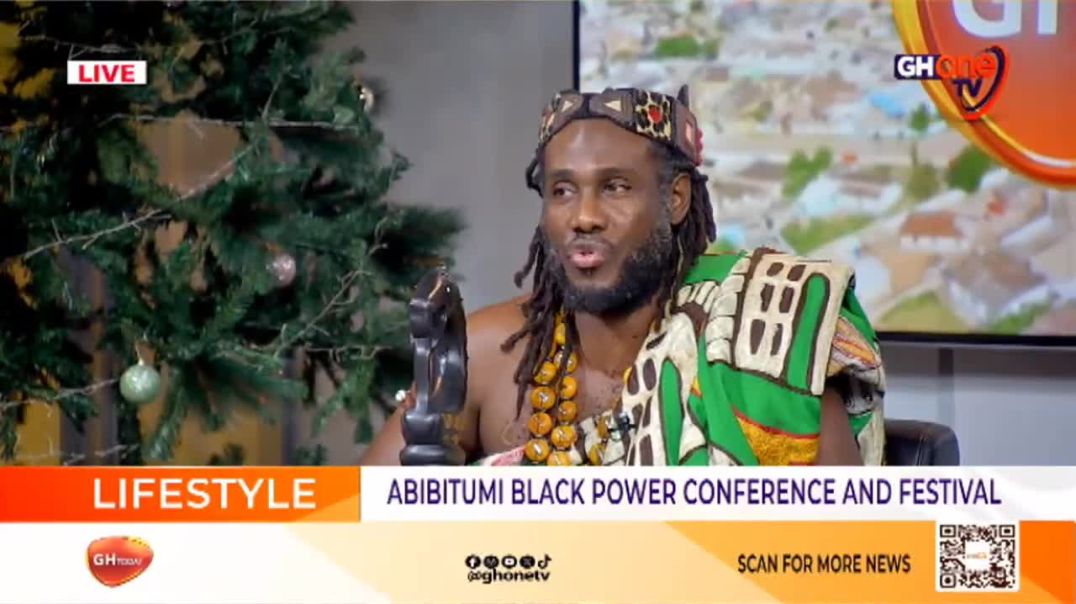

GHOne TV Interview on the Decade of Our Repatriation (DOOR) ft. Ɔbenfo Ọbádélé Kambon official lead organizer and spokesperson
Endorsed by the Office of the President, Diaspora Affairs
https://www.decadeofourrepatriation.com
https://www.abibitumi.com









Relocation can be challenging and unpredictable for many. In this video we spend some time with with our African American sister as she shares her experience briefly about life in the Gambia.
Check out our blogs at www.rebyts.com
CONTACT US FOR BUSINESS:
Email info@rebyts.com for house tours, serious inquires only.
Support us on Paypal
ramizemusik@gmail.com
Subscribe to Ma'at On The Mat here: https://www.youtube.com/channe....l/UC1QA2ii3Ocnh7sOMH
If you need secure land in The Gambia contact Biamo here:
info@biamogroup.com
#thegambia #queenjodiandap #gambia


![Malika - Warrior Queen Animated Pilot/Film [FULL]](https://i.ytimg.com/vi/4dBVuTbjy6I/maxresdefault.jpg)

Don't forget to SUBSCRIBE to our CHANNEL to be notified about EPISODE 2! Want more Malika? DOWNLOAD our App here: https://subscribe.youneekstudios.com to get access to ALL our comics/content PLUS bonus EXCLUSIVES for just $2.99/month.
FOLLOW US:
Facebook: https://www.facebook.com/YouNeekStudios/
Instagram: https://www.instagram.com/youneekstudios/
Twitter: https://www.twitter.com/youneekstudios/
ACTORS
Malika - Adesua Etomi-Wellington
Chief Dogbari - Femi Branch
King Bass/WindMaker - Deyemi Okanlowan
General Ras - Sambasa Nzeribe
Abdul - Blossom Chukwujekwu
CREW
Written, Directed & Produced by Roye Okupe
Executive Produced by Niyi Akinmolayan
Animation by Anthill Studios
Post-Production by YouNeek Studios
Music by Femi "Fem D" Agunbiade
Sound Design & Mixing by Aube Production (Patrick Ruane, Clement Ignace & Angel Ignace)
SYNOPSIS
Set in fifteenth-century West Africa, Malika: Warrior Queen follows the exploits of Queen and military commander, Malika, who struggles to keep the peace in her ever-expanding empire. Growing up as a prodigy, Malika inherited the crown from her father in the most unusual of circumstances, splitting the Kingdom of Azzaz in half. After years of civil war, Malika was able to unite all of Azzaz, expanding it into one of the largest empires in all of West Africa.
But expansion would not come without its costs. Enemies begin to rise within her council, and Azzaz grabbed the attention of the most feared superpower the world has ever known: the Songhai Empire. As Malika fights to win the clandestine civil war within the walls of her empire, she must now turn her attention to an indomitable and treacherous foe that plans to vanquish her entire people. From dragons to mythical relics, a feuding royal family and magical swords, the story of Malika: Warrior Queen stays true to the fantasy genre while adding something new by setting familiar concepts in an awe-inspiring African setting.