- General Videos
- Music
- Economics
- Health
- Travel & Events
- History
- Psychology
- Spirituality
- Movies
- News & Politics
- Kmtyw Combat Sciences
- Ɔbenfo Ọbádélé Kambon Videos
- Ɔbenfoɔ Kamau Kambon: Black Liberation Philosophy
- Science, Tech, Engineering and Math
- Permaculture
- Self-Sustainability
- Living Off Grid
- Yoruba Language Learning
- Education
- Mmɔfra Adesua
- Nana Kamau Kambon Playlist
- Livestream
- Komplementarity Kouples and Revolutionary Singles
- Abibitumi Film Series
- Decade of Our Repatriation
- Live
Top videos
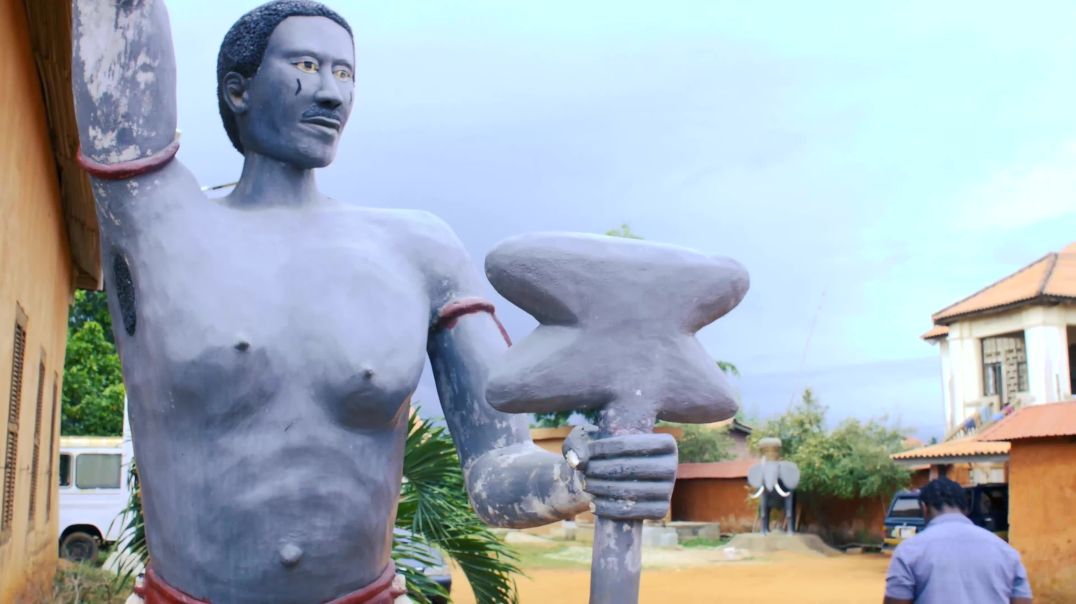

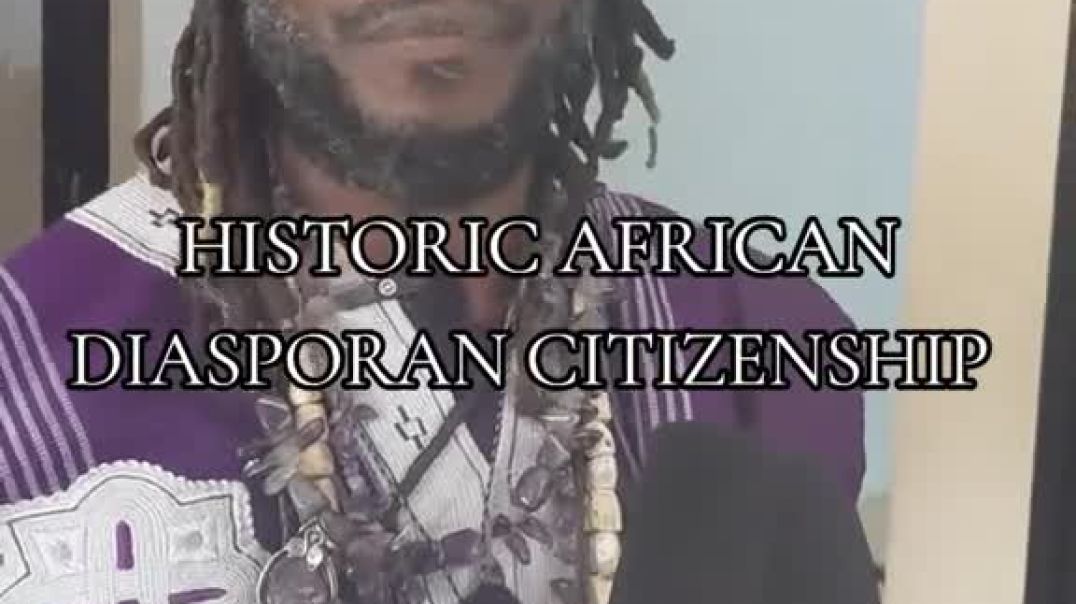

Historic diasporans seek more than symbolic gestures. They demand inclusion in decision-making, policy, and representation, with calls for parity in recognition and a dedicated MP for the 17th region. Visit https://www.decadeofourrepatriation.com, https://www.r2gh.com, https://www.abibitumi.com/shop for more. #diaspora #ghana #representation #repatriation #decadeofourrepatriation


The training is over. The real mission begins. 🕵🏾
We intercepted enemy intel—a letter to an Agent on the Motherland with a plan to keep Pan-Africanism stuck in the past. This semester, our scholars build the counter-strategy.
We have 72 hours.
72 hours until our counter-operation begins.
72 hours to enroll your scholar in Afrika's Army 2.
72 hours before the first class decrypts this letter and builds the strategy to break it.
This isn’t a game. It’s training for the future they’re trying to prevent.
Your scholar doesn’t need to just read history—they need to learn how to change it.
3 DAYS LEFT.
The mission is waiting.
The cohort is forming.
The link is here.
➡ https://kotokoacademy.info/afrikasarmy


Across ancient Kmt (Egypt) and early Christianity, sacred images carry hidden stories.
In this video, we explore the striking visual and symbolic parallels between Isis and Horus and Mary and Jesus—from posture and iconography to titles, theology, and cultural transmission.
Was the image of the Virgin Mary shaped by older Kmtyw (Egyptian) spiritual traditions?
What does “Aisat Mari Amen” mean, and why does it echo across time?
This is not an attack on faith, but a historical and symbolic exploration of how civilizations influence one another—and how ancient ideas are reborn in new forms.
Watch with an open mind as we trace how Isis became Mary.
#howisisbecamemary
#aisatmariamen
#africanhistory
#ancientegypt
#hiddenhistory
#comparativereligion
#esoterichistory
#egyptianspirituality
#originsofchristianity
#sacredfeminine
#isisandhorus
#maryandjesus
#africancivilization
#forgottenknowledge
#historyunfiltered
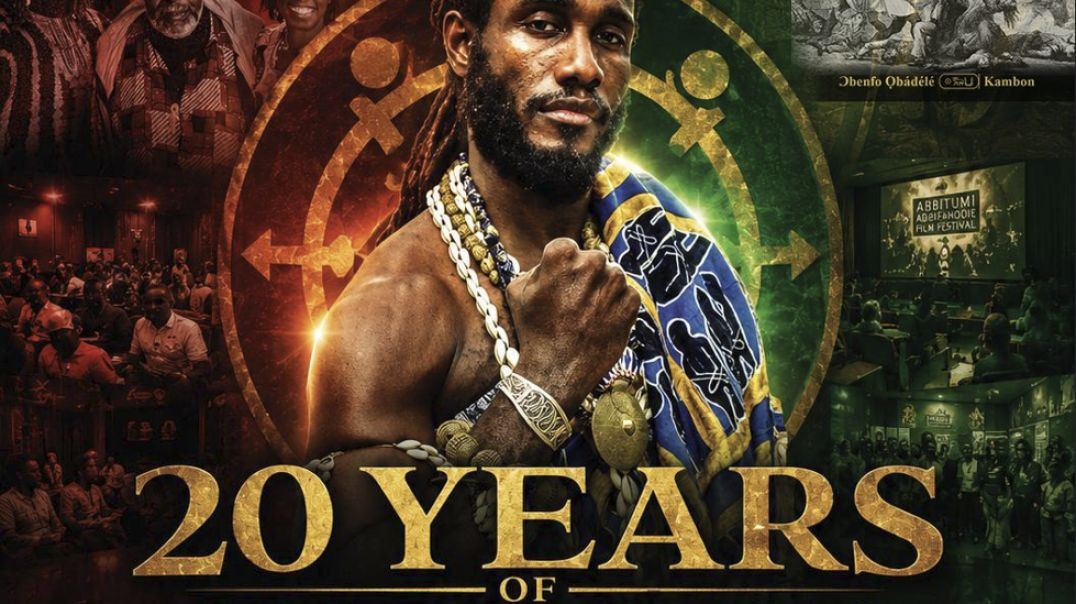
Join Abibitumi from June 11-14, 2026, for a 4-day series celebrating 20 years of building consciousness, community, and Black Power. Featuring film launches, discussions, and the release of 'Construction of Black Civilization.' Visit https://www.abibitumi.com/events to RSVP #abibitumi #blackcivilization #kemet #blackpower #communitybuilding #decadeofourrepatriation


In this video , a Ghanaian finds SHOCKING similarities between Jamaica's Kromanti, Patois and Ghana's Fantse/Twi. Dive into the remarkable life of Nanny of the Maroons, Jamaica's only female national hero.
The Moore Town Maroons of Jamaica - Maroon Kromanti Language
From her early days in Ghana to her legendary leadership of the Maroons, discover the legacy of a woman who fought for freedom against all odds. Don't forget to subscribe for more inspiring stories from history.
Kindly subscribe to this channel.
The Untold Story of Nanny of the Maroons: Jamaica's Fierce Freedom Fighter
PATREON: https://www.patreon.com/ekowsimpson
PAYPAL: https://paypal.me/eegyir
Email: ekespossibilityconsult@gmail.com
WhatsApp/Direct Contact: +233 246 30 2158
Mobile Money or WAVE: +233 246 30 2158
SOCIALS.....................
INSTAGRAM: instagram.com/ekowsimpson_
FACEBOOK: facebook.com/ekowesimpson
TWITTER: https://twitter.com/EkowESimpson


Africa is rich—rich in copper, oil, gold, diamonds, and people. But its wealth flows out while its people remain in poverty.
Stealing Africa
Release date: November 28, 2012 (Finland)
Director: Christoffer Guldbrandsen
Writer: Niels Borchert Holm
Stars: Christoffer Guldbrandsen, Bernhard Elsener, Ivan Glasenberg
Country of origin: Denmark
Language: English
Also known as: Plundringen av Afrika
Filming locations: Rüschlikon, Horgen, Kanton Zürich, Switzerland
Production companies: Guldbrandsen Film, The Why Foundation
Stealing Africa explores the mechanisms that keep the continent poor long after the end of formal colonial rule—revealing how modern multinational corporations, global tax havens, and unjust trade systems continue to extract resources and wealth on a massive scale.
At the center of the story is Zambia, home to the third largest copper reserves in the world, yet a country where 60% of the population survives on less than $1 a day and 80% are unemployed. Meanwhile, in the idyllic Swiss village of Rüschlikon, local government coffers overflow thanks to one resident: Ivan Glasenberg, CEO of Glencore, a commodities giant whose Zambian copper mines generate billions—but almost no tax revenue for Zambia.
Through extensive research and access to public financial records, the documentary uncovers how multinational corporations legally avoid paying taxes through transfer pricing, offshore shell companies, and favorable tax treaties. The result? For every dollar in aid Africa receives, ten dollars quietly vanish—spirited away through financial flows that benefit corporations and wealthy nations.
Stealing Africa is not just a film about economics—it’s about power, inequality, and accountability. It lays bare the modern architecture of plunder and asks the crucial question: What does it mean to be "post-colonial" when the money still flows in the same direction?
Produced by Steps International, this documentary is part of the “Why Poverty?” series and remains a vital watch for anyone interested in global justice, development, and the real cost of globalization.
SUPPORT US!
✘ Membership - https://bit.ly/3q5XPBh
MORE DOCS!
► Gold: https://bit.ly/2IRZ0OA
► World Economy: https://bit.ly/36QlhEM
► All Playlists: https://bit.ly/3lOiCll
#finance #documentaries #economy
copyright: All of the films published by us are legally licensed. We have acquired the rights (at least for specific territories) from the rightholders by contract. If you have questions please send an email to: info[at]moconomy.tv, Moconomy GmbH, www.moconomy.tv.


Museums have long been unwelcoming or intimidating spaces for many, particularly ordinary Africans. In this powerful talk, Kwame Akoto Bamfo reimagines the museum experience through the lens of African heritage and community engagement. By embracing change as a constant force, Kwame demonstrates how interactive art and inclusive spaces can serve as healing, dialogue, and transformation mediums.
Through his work, he challenges traditional perceptions of museums and invites communities to reconnect with their identity and heritage. This talk is a compelling exploration of how art can celebrate cultural freedom and inspire others to embrace their role in shaping change narratives. Kwame Akoto-Bamfo is a Ghanaian sculptor, educator, and activist renowned for his dedication to preserving African history and promoting restorative justice through art. He earned his Bachelor of Fine Arts (BFA) and Master of Fine Arts (MFA) in painting and sculpture from the Kwame Nkrumah University of Science and Technology.
His seminal work, the Nkyinkyim Installation, is an evolving art project comprising over 1,500 portraits of Africans in the diaspora. This installation pays homage to the victims of the Transatlantic slave trade and is prominently featured at the National Memorial for Peace and Justice in Montgomery, Alabama.
In 2017, Akoto-Bamfo gained international attention with his "Faux-Reedom" exhibition, which featured 1,200 sculpted heads representing Ghana's enslaved ancestors. This powerful display questioned Ghana's independence and highlighted neo-colonial legacies.
Beyond his installations, Akoto-Bamfo actively participates in public speaking, research, and lectures, focusing on archiving and promoting African history and cultural heritage. His work has been featured in various documentaries and miniseries, including "Enslaved" (2020) and "The Art of Healing" (2022).
His contributions to art and activism have earned him several accolades, such as the GUBA Influential Artist of the Year in 2019 and the inaugural Kuenyehia Prize for Contemporary Art.
Through his art, Kwame Akoto-Bamfo continues challenging historical narratives, fostering healing, and inspiring restorative justice across the African diaspora. This talk was given at a TEDx event using the TED conference format but independently organized by a local community. Learn more at https://www.ted.com/tedx

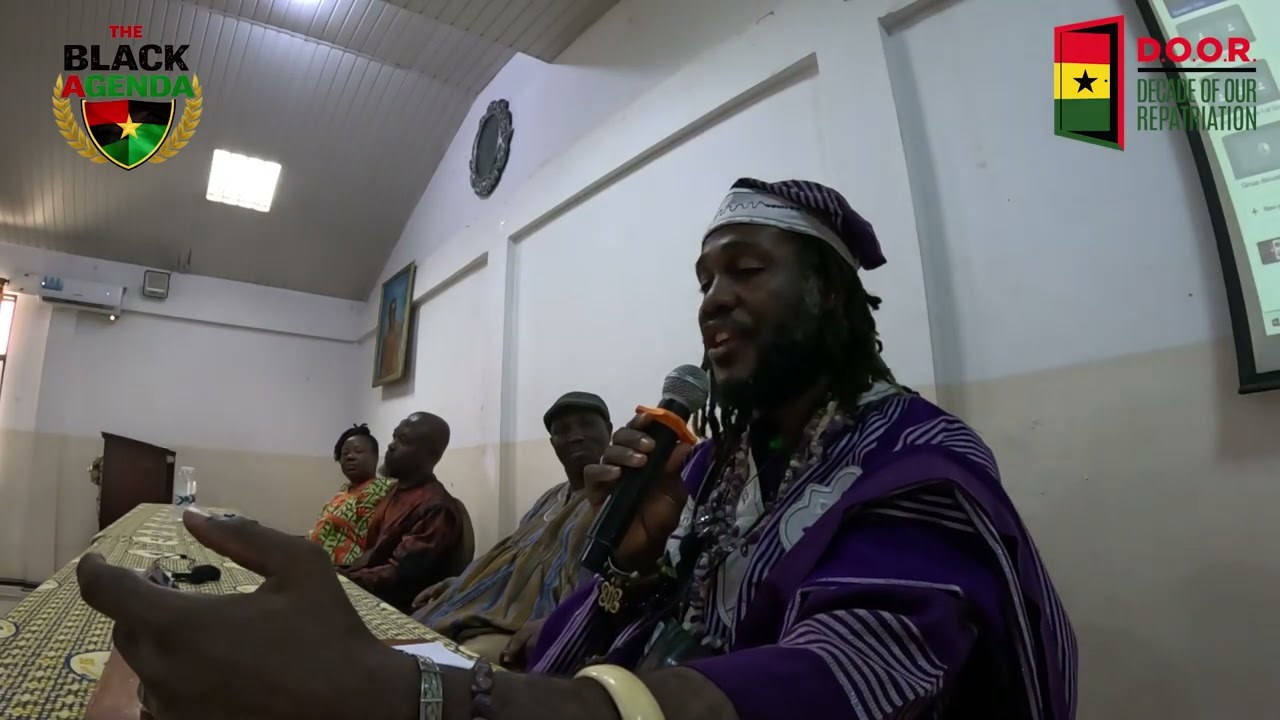
Panel 1 of the Black Agenda Town Hall on Citizenship tackles a major question: if Ghana speaks globally about reparative justice, what should that mean in practice for historic diasporans seeking repatriation, belonging, and citizenship? Moderated by Ɔbenfo Ọbádélé Kambon, this discussion brings together Prof. Adokarley Benedicta Lomotey, Prof. Nene Lomotey-Kuditchar, Dr. Nana Yaw Mireku Yeboah, and Kweku Darko Ankrah.The conversation examines citizenship fees, DNA requirements, documentation hurdles, underrepresentation of Latin America and the Caribbean, and what it would mean for historic diasporans to have real seats at the table in shaping the policies that affect their lives.#blackagenda #ghanacitizenship #reparativejustice #repatriation #diasporareturn #blackdiaspora #ghana #panafricanism

If you benefit from my content, my $cashapp is $obadelekambon
My links are:
https://conference.abibitumi.com
https://conference.abibitumi.com/quiet-warrior
https://www.abibitumi.com/shop
https://www.obadelekambon.com
https://www.sankofajourney.com
https://www.r2gh.com