- General Videos
- Music
- Economics
- Health
- Travel & Events
- History
- Psychology
- Spirituality
- Movies
- News & Politics
- Kmtyw Combat Sciences
- Ɔbenfo Ọbádélé Kambon Videos
- Ɔbenfoɔ Kamau Kambon: Black Liberation Philosophy
- Science, Tech, Engineering and Math
- Permaculture
- Self-Sustainability
- Living Off Grid
- Yoruba Language Learning
- Education
- Mmɔfra Adesua
- Nana Kamau Kambon Playlist
- Livestream
- Komplementarity Kouples and Revolutionary Singles
- Abibitumi Film Series
- Decade of Our Repatriation
- Live
Top videos


Forget what you think you know about dark matter. After a 30-year search for a single, as yet unidentified, species of dark matter particle that would make up some 25% of the mass of the universe, physicists are starting to consider novel explanations. Some envision invisible matter hiding within the folds of extra spatial dimensions. Others suggest not one kind of dark matter particle, but numerous species inhabiting a shadow universe. Others still conjecture that dark matter doesn’t exist, and instead propose that the laws of gravity need modification. We’ll bring together leading thinkers on dark matter—the revolutionary and conventional alike—for a distinctly unconventional discussion on the dark universe.
This program is part of the Big Ideas Series, made possible with support from the John Templeton Foundation.
Subscribe to our YouTube Channel for all the latest from WSF.
Visit our Website: http://www.worldsciencefestival.com/
Like us on Facebook: https://www.facebook.com/worldsciencefestival
Follow us on twitter: https://twitter.com/WorldSciFest
Original Program Date: June 2, 2016
MODERATOR: John Hockenberry
PARTICIPANTS: Katherine Freese, Justin Khoury, Stacy McGaugh, Neal Weiner, Lisa Randall
The discovery of Dark Matter 00:00
John Hockenberry introduction 3:50
Participant Introductions 8:10
What is dark matter? 9:59
Lets talk about WIMPs 15:15
How do we detect dark matter? 17:45
The standard model looks incomplete 28:46
So you want to take apart Newton and Einstein? 37:49
What role did dark matter play in the early universe? 48:00
Can dark matter be a super fluid? 55:15
Will we understand dark matter better if we know about its origins? 1:02:28
What is the headline for the next big dark matter discovery? 1:07:46

Often viewed as “spooky” or downright bizarre, quantum mechanics is fueling a powerful new era of amazing technology. In this program, today’s top quantum physicists discuss the information shake-up underway—and predict when we can expect a quantum computer of our own.
This program is part of the Big Ideas Series, made possible with support from the John Templeton Foundation.
Subscribe to our YouTube Channel for all the latest from WSF.
Visit our Website: http://www.worldsciencefestival.com/
Like us on Facebook: https://www.facebook.com/worldsciencefestival
Follow us on twitter: https://twitter.com/WorldSciFest
Original Program Date: May 31, 2015
Host: Bill Blakemore
PARTICIPANTS: Artur Ekert, Daniel Gottesman, Seth Lloyd, Eleanor Rieffel
Quantum Physics Is Everywhere: A Quantum Comedy. 00:00
Participant Introductions. 04:48
Quantum teleportation... Beam me up Scotty. 06:11
The record distance of teleportation. 11:33
What is post selection time travel? 15:45
How is our quantum data protected? 17:27
How would quantum codes be unbreakable? 20:28
Quantum computers how close are we? 25:09
Quantum tunneling is happening today. 31:30
The array of problems that quantum algorithms may solve. 36:24
Quantum computation and how it's different now. 40:08
What powers will quantum technology have ten years from now? 44:30
The amount of data we are collecting doubles every year. 47:15
Is it possible to have more than two particles entangled? 54:59

Music students download the technique of their favorite pianist or singer directly into their brains. Medical students download the skills of a seasoned surgeon or diagnostician. And each one of us routinely uploads our thoughts and memories to the digital cloud. While these scenarios still lie in the future, rudimentary versions of the necessary brain-to-brain technology exist today. But the ability to directly influence another person’s brain raises serious questions about human rights and individual freedoms. This program will present the latest technology and explore how the ethical implications of enhanced thinking go to the heart of consciousness itself.
This program is part of the Big Ideas Series, made possible with support from the John Templeton Foundation.
Our media partner for this program is Popular Science.
Footage of the brain-to-brain interface experiment provided by the University of Washington. For more information on the research:http://www.washington.edu/news..../2014/11/05/uw-study
Subscribe to our YouTube Channel for all the latest from WSF.
Visit our Website: http://www.worldsciencefestival.com/
Like us on Facebook: https://www.facebook.com/worldsciencefestival
Follow us on twitter: https://twitter.com/WorldSciFest
MODERATOR: John Donvan
PARTICIPANTS: Joseph Fins, Miguel Nicolelis, Chantel Prat, Andrea Stocco, Seung-Schik Yoo
Original Program Date: June 4, 2016
The Dawn of Brain-to-Brain Communication 00:00
John Donvan's Introduction to Brain to Brain communication. 2:22
Participant Introductions. 4:10
What to keep in mind when thinking about brain to brain communication. 6:22
How does one get into the mind business? 8:15
Aurora the monkey plays a game with just her brain.11:05
Transitioning to human brain to brain research. 18:41
Connecting the brains of two rats. 22:27
The tangled ball of neurons in our head is "us" 29:40
The puppet master describes linking two humans through their brains. 32:33
Using focused ultrasound to connect two human brains. 42:19
What are the contemplative factors in brain to brain communication? 49:50
If you can get two animals to communicate can you link 100? 54:09
The worry of people controlling your brain. 59:48
The risk of sharing thoughts from one brain to another. 1:02:54
How long until we can just download knowledge to our brains? 1:07:40
Giving credit to Arthur Clarke. 1:09:28
Is there any fear of brain damage from this technology? 1:10:20
Is it crazy to think we will all have chips in our brains? 1:13:01
What are the goals of brain to brain communication in the next 5 years? 1:17:33

Microbiome expands the genetic and functional capacity of its human host. Susan Lynch explains that human microbiome develops early in life and that gut microbes shape immune function and relate to disease outcomes in childhood. She also explores next-generation microbiome therapeutics and research. Recorded on 11/07/2019. [12/2019] [Show ID: 35240]
More from: Next: UCSF Scientists Outline What’s To Come
(https://www.uctv.tv/mini-med-next)
UCTV is the broadcast and online media platform of the University of California, featuring programming from its ten campuses, three national labs and affiliated research institutions. UCTV explores a broad spectrum of subjects for a general audience, including science, health and medicine, public affairs, humanities, arts and music, business, education, and agriculture. Launched in January 2000, UCTV embraces the core missions of the University of California -- teaching, research, and public service – by providing quality, in-depth television far beyond the campus borders to inquisitive viewers around the world.
(https://www.uctv.tv)

Black holes are gravitational behemoths that dramatically twist space and time. Recently, they’ve also pointed researchers to a remarkable proposal—that everything we see may be akin to a hologram. Alan Alda joins Kip Thorne, Robbert Dijkgraaf and other renowned researchers on an odyssey through one of nature’s most spectacular creations, and learn how they are leading scientists to rewrite the rules of reality.
The World Science Festival gathers great minds in science and the arts to produce live and digital content that allows a broad general audience to engage with scientific discoveries. Our mission is to cultivate a general public informed by science, inspired by its wonder, convinced of its value, and prepared to engage with its implications for the future.
Subscribe to our YouTube Channel for all the latest from WSF.
Visit our Website: http://www.worldsciencefestival.com/
Like us on Facebook: https://www.facebook.com/worldsciencefestival
Follow us on twitter: https://twitter.com/WorldSciFest
Original Program Date: June 3, 2010
MODERATOR: Alan Alda
PARTICIPANTS: Andrew Hamilton, Kip S. Thorne, Raphael Bousso, Robbert Dijkgraaf
Brian Greene's Introduction with Stephen Hawking. 00:00
Robbert Dijkgraaf talks about black holes.. 01:45
Participant Introductions with Alan Alda 09:19
Einsteins law of time warps. 15:08
Where black holes around when the universe was forming? 19:50
Hawking radiation is it coming from the black hole or off the black hole. 27:09
How are black holes formed at subatomic levels? 38:05
What does a black hole look like? 43:56
The panel travels into the black hole. 50:43
What you would see if you entered a black hole. 58:45
Space falls faster than light. 01:05:30
What is a hologram. 01:11:40
Black holes and information loss. 01:15:12
How much information can a black hole store? 01:23:30


How did scholars begin to decipher ancient scripts like the hieroglyphs?
Subscribe for regular science videos: http://bit.ly/RiSubscRibe
Buy Andrew's biography of Jean-François Champollion "Cracking the Egyptian Code": https://geni.us/WQwD
Very soon after the birth of the first written language - cuneiform - ancient Egypt developed its own writing: the hieroglyphic script, immortalised in the Rosetta Stone kept in the British Museum, which consists of a single royal edict, dated 196 BC, written in the hieroglyphic, demotic and Greek alphabetic scripts.
Andrew Robinson is the author of more than twenty-five books, issued by leading general and academic publishers. In addition to "Cracking the Egyptian Code", they include "The Last Man Who Knew Everything" (a biography of Thomas Young): https://geni.us/XIBXvR , and "Lost Languages: The Enigma of the World’s Undeciphered Scripts": https://geni.us/iqP0Q. A former literary editor of The Times Higher Education Supplement, he also writes reviews and features for newspapers, magazines and journals, in both the arts and sciences.
This talk was filmed in the Ri on 18 January 2019.
Watch the second talk on ancient codes, all about the cuneiform language by Irving Finkel: https://youtu.be/PfYYraMgiBA
---
A very special thank you to our Patreon supporters who help make these videos happen, especially:
Dave Ostler, David Lindo, David Schick, Erik Shepherd, Greg Nagel, Ivan Korolev, Joe Godenzi, Julia Stone, Lasse T. Stendan, Lester Su, Osian Gwyn Williams, Paul Brown, Radu Tizu, Rebecca Pan, Robert Hillier, and Roger Baker.
---
Subscribe for regular science videos: http://bit.ly/RiSubscRibe
The Ri is on Patreon: https://www.patreon.com/TheRoyalInstitution
and Twitter: http://twitter.com/ri_science
and Facebook: http://www.facebook.com/royalinstitution
and Tumblr: http://ri-science.tumblr.com/
Our editorial policy: http://www.rigb.org/home/editorial-policy
Subscribe for the latest science videos: http://bit.ly/RiNewsletter
Product links on this page may be affiliate links which means it won't cost you any extra but we may earn a small commission if you decide to purchase through the link.
CASE STUDY:
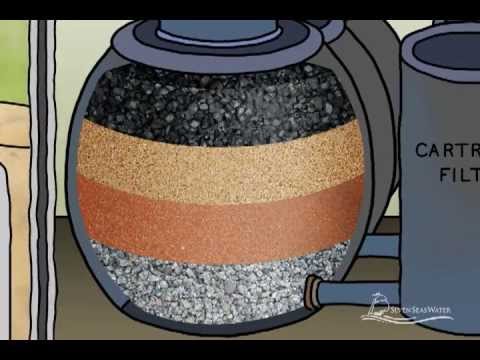
Desalination is a complicated process, the Seven Seas Corp.* approached DaVinci Studio to develop an animation that simplified the explanation of the process. Taking a cue from Seven Seas we started with squiggly style animation to give the technical looking components a non-technical look. Bottom line is to go from engineering-speak to the layman's level.
Desalination (also called "desalinization" and "desalting") is the process of removing dissolved salts from water, thus producing fresh water from seawater or brackish water. Desalting technologies can be used for many applications. The most prevalent use is to produce potable water from saline water for domestic or municipal purposes.
Desalination 101
IDA | International Desalination Association [http://www.idadesal.org]
*Seven Seas Water Corporation, a major player in the water treatment industry, with an expanded presence throughout the Bahamas, Curacao, Mexico, Sint Maarten, Turks and Caicos Islands, U.S.A. and the U.S. Virgin Islands.
[www.sevenseaswater.com]