- General Videos
- Music
- Economics
- Health
- Travel & Events
- History
- Psychology
- Spirituality
- Movies
- News & Politics
- Kmtyw Combat Sciences
- Ɔbenfo Ọbádélé Kambon Videos
- Ɔbenfoɔ Kamau Kambon: Black Liberation Philosophy
- Science, Tech, Engineering and Math
- Permaculture
- Self-Sustainability
- Living Off Grid
- Yoruba Language Learning
- Education
- Mmɔfra Adesua
- Nana Kamau Kambon Playlist
- Livestream
- Komplementarity Kouples and Revolutionary Singles
- Abibitumi Film Series
- Decade of Our Repatriation
- Live
Top videos


ORFC Global 2021 Session
West African Farmer Testimonies: How We Are Overcoming the Crisis of Climate Change in the Sahel Through Natural Regeneration of Trees on Our Farms
Small-scale farmers in the 16 countries of the Sahel in West Africa face a dual crisis to their livelihoods: climate change and land degradation.
For many generations, farmers had lived and farmed in equilibrium with the natural environment. They maintained soil fertility, water holding capacity and crop production through fallowing and other practices.
Today, population pressure, climate change, soil erosion, misuse of agrochemicals have reduced the resiliency and sustainability of the farming system. Farm communities have become highly vulnerable to drought. Hunger and chronic malnutrition have increased.
This session highlights the testimonies of farmers, men and women, from 4 countries in the Sahel in overcoming these problems. They represent a wider movement adapting the principles of “agroecology” (learning how to work with nature). This grassroots, farmer-led movement has achieved remarkable success in transforming landscapes, adapting to climate change, regenerating their soils, and improving their food security.
Their inspiring testimonies show how human determination, innovation, and collective action have brought hope to one of the most ecologically fragile, crisis prone areas in Africa.
Speakers:
Tsuamba Bourgou
Fatou Batta
Dan Banuoku
Chair:
Peter Gubbels
#ORFCGlobal
https://orfc.org.uk/

In this edition, at least 30 jihadists have been killed by #Rwandan forces who were deployed to #Mozambique. Rwanda is just one of several countries that sent troops to the country after a recent uptick in activity by Shabaab Islamist militants. Also, Tunisia has received foreign aid to help battle #Covid-19. This as hospitals are overwhelmed and running out of oxygen. And, France 24 speaks to Christine Amisi, one of Africa's top doctors in the efforts to help rape survivors.
Subscribe to France 24 now:
http://f24.my/youtubeEN
FRANCE 24 live news stream: all the latest news 24/7
http://f24.my/YTliveEN
Visit our website:
http://www.france24.com
Subscribe to our YouTube channel:
http://f24.my/youtubeEN
Like us on Facebook:
https://www.facebook.com/FRANCE24.English
Follow us on Twitter:
https://twitter.com/France24_en


This week, we're highlighting these three top stories: find out about how China is building the fastest train in the world which can reach speeds up to 431 KPH (268 MPH), learn why global chocolate demand is detrimental to forests and workers and how a Swiss company is fighting this by growing chocolate in a lab, and how a beer company is fighting their carbon output by using algae in their manufacturing process.
The World Economic Forum is the International Organization for Public-Private Cooperation. The Forum engages the foremost political, business, cultural and other leaders of society to shape global, regional and industry agendas. We believe that progress happens by bringing together people from all walks of life who have the drive and the influence to make positive change.
World Economic Forum Website ► http://www.weforum.org/
Facebook ► https://www.facebook.com/worldeconomicforum/
YouTube ► https://www.youtube.com/wef
Instagram ► https://www.instagram.com/worldeconomicforum/
Twitter ► https://twitter.com/wef
LinkedIn ► https://www.linkedin.com/compa....ny/world-economic-fo
TikTok ► https://www.tiktok.com/@worldeconomicforum
Flipboard ► https://flipboard.com/@WEF
#StoriesOfTheWeek #MaglevTrain #CarbonFootprint






![Black Liberation [1967]](https://i.ytimg.com/vi/-N0kPLKOuRs/hqdefault.jpg)
![Tanzania: The Quiet Revolution [1973] (2/2)](https://i.ytimg.com/vi/ipZUOAlxCnE/hqdefault.jpg)

HAPI Talks with HAPI Cast Member Dr. Leonard Jeffries about Economics, Politics and Culture.
Please visit www.hapifilm.com to get a copy of the Groundbreaking documentary film HAPI and all the latest HAPI gear.
Cash app: $hapifilm

The first and only successful slave revolution in the Americas began in 1791 when thousands of brutally exploited slaves rose up against their masters on Saint-Domingue, the most profitable colony in the eighteenth-century Atlantic world. Within a few years, the slave insurgents forced the French administrators of the colony to emancipate them, a decision ratified by revolutionary Paris in 1794. This victory was a stunning challenge to the order of master/slave relations throughout the Americas, including the southern United States, reinforcing the most fervent hopes of slaves and the worst fears of masters.But, peace eluded Saint-Domingue as British and Spanish forces attacked the colony. A charismatic ex-slave named Toussaint Louverture came to France’s aid, raising armies of others like himself and defeating the invaders. Ultimately Napoleon, fearing the enormous political power of Toussaint, sent a massive mission to crush him and subjugate the ex-slaves. After many battles, a decisive victory over the French secured the birth of Haiti and the permanent abolition of slavery from the land. The independence of Haiti reshaped the Atlantic world by leading to the French sale of Louisiana to the United States and the expansion of the Cuban sugar economy.Laurent Dubois weaves the stories of slaves, free people of African descent, wealthy whites, and French administrators into an unforgettable tale of insurrection, war, heroism, and victory. He establishes the Haitian Revolution as a foundational moment in the history of democracy and human rights.http://karonaj.com/Free webinar: http://bit.ly/2y3JkkLhhttp://g....raymatter.globalmone

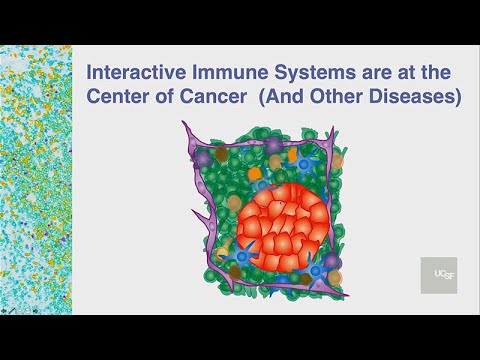
Interactive immune systems are at the center of cancer and other diseases. Dr. Matthew Krummel explores how the immune system can regulate cancer progression. Recorded on 10/31/2019. [12/2019] [Show ID: 35239]
More from: Next: UCSF Scientists Outline What’s To Come
(https://www.uctv.tv/mini-med-next)
UCTV is the broadcast and online media platform of the University of California, featuring programming from its ten campuses, three national labs and affiliated research institutions. UCTV explores a broad spectrum of subjects for a general audience, including science, health and medicine, public affairs, humanities, arts and music, business, education, and agriculture. Launched in January 2000, UCTV embraces the core missions of the University of California -- teaching, research, and public service – by providing quality, in-depth television far beyond the campus borders to inquisitive viewers around the world.
(https://www.uctv.tv)


**LINK BELOW FOR IN-CLASS USE INSTRUCTIONS**
Virtual Plant Cell: Into Aquaporins highlights the important role that aquaporin proteins play in shuttling water, carbon dioxide and other molecules vital to good plant health, into and out of plant cells.
See https://plantenergy.edu.au/outreach/resources for materials to support classroom use of VPC: Into Aquaporins. This is a curriculum-aligned resource that addresses topics including diffusion across membranes, transcription and translation. This video can also be used with the lesson plan resource: Planting Science: Classifying Systems in Cells (year 7-10), developed by the ARC Centre of Excellence for Translational Photosynthesis: http://photosynthesis.org.au/years7-10/
Virtual Plant Cell (VPC) is a suite of educational virtual reality experiences created by the ARC Centre of Excellence in Plant Energy Biology. Explore and learn about the sub-microscopic inner world of a plant. www.plantenergy.edu.au/VPC
Subtitled. Full transcript below.
CREDITS:
3D Modelling and Animations: Peter Ryan, Tail Art, www.peterryanart.com.au
Graphic and Logo Design: Chris Brown, Eyecue Design, www.eyecue.com.au
Music: Jim Kennedy, Audiosimian, www.audiosimian.com
Voice Over: Glenn Hall
Science from the ARC Centre of Excellence in Plant Energy Biology with support from the ARC Centre of Excellence for Translational Photosynthesis. Project led by Karina Price and the researchers of the ARC Centre of Excellence in Plant Energy Biology.
Funded by the Australian Research Council.
TRANSCRIPT:
Plants are amazing. They create energy from sunlight and they use this energy to create what we use for our food, fuel and fibre, and this takes us on a journey deep into the inner world of a plant cell.
Plant cells collect sunlight and use it to convert water and carbon dioxide into sugar. This process is called photosynthesis. Photosynthesis happens inside the many green chloroplasts found around a plant cell.
The movement of water, carbon dioxide and other molecules like nitrogen, sugars and salts are vital for good plant health.
But how do water and other solutes get into the cell? Aquaporins are here to help. Aquaporins are tiny protein channels that are created in plant cells. They facilitate diffusion, the movement of important solutes, across cell membranes.
Aquaporins can be found in different membranes of the cell.
Water, carbon dioxide, and more is moved across these membranes, via aquaporin channels, as required.
Let’s see how plant cells create aquaporins when needed.
Proteins like aquaporins are coded for by genes. This is a sequence of information within a cell’s DNA. A message, called RNA, is first created from a gene through a process called transcription.
Messages move out of the nucleus to the ribosome. Here, the RNA message is “read” to create an aquaporin protein. This process of building a protein from an RNA message is called translation.
Aquaporins, like all proteins in a cell, have a unique structure. An aquaporin’s main function is to act as a channel that sits in a membrane. The aquaporin’s structure reflects this role.
Through research we can come to understand how aquaporins work, and how they work best. We can apply this knowledge to produce higher yielding crop plants by maximising their photosynthesis, improving their salt tolerance and enhancing their ability to survive challenging environmental conditions. And more efficient and resilient crops will ensure a secure food future.


#NewBlackDaddy Diary 5: Children Choose Their Parents
In this reflection I explore the relationship of learning & teaching between Parents & Children.
To stay tuned, check out the channel YouTube.com/ShakaRaSpeaks
Watch All Reflections: https://www.youtube.com/watch?v=HLprLQX3Dms&list=PL-gMpPbGvuj1ydTRKKF4qTSeEhYz6zp8o
...........................
Subscribe: https://www.youtube.com/shakar....aspeaks/?sub_confirm
https://twitter.com/ShakaRaSpeaks
Facebook: https://www.facebook.com/ShakaRaSpeaks/
Instagram: https://www.instagram.com/shakaraspeaks/